




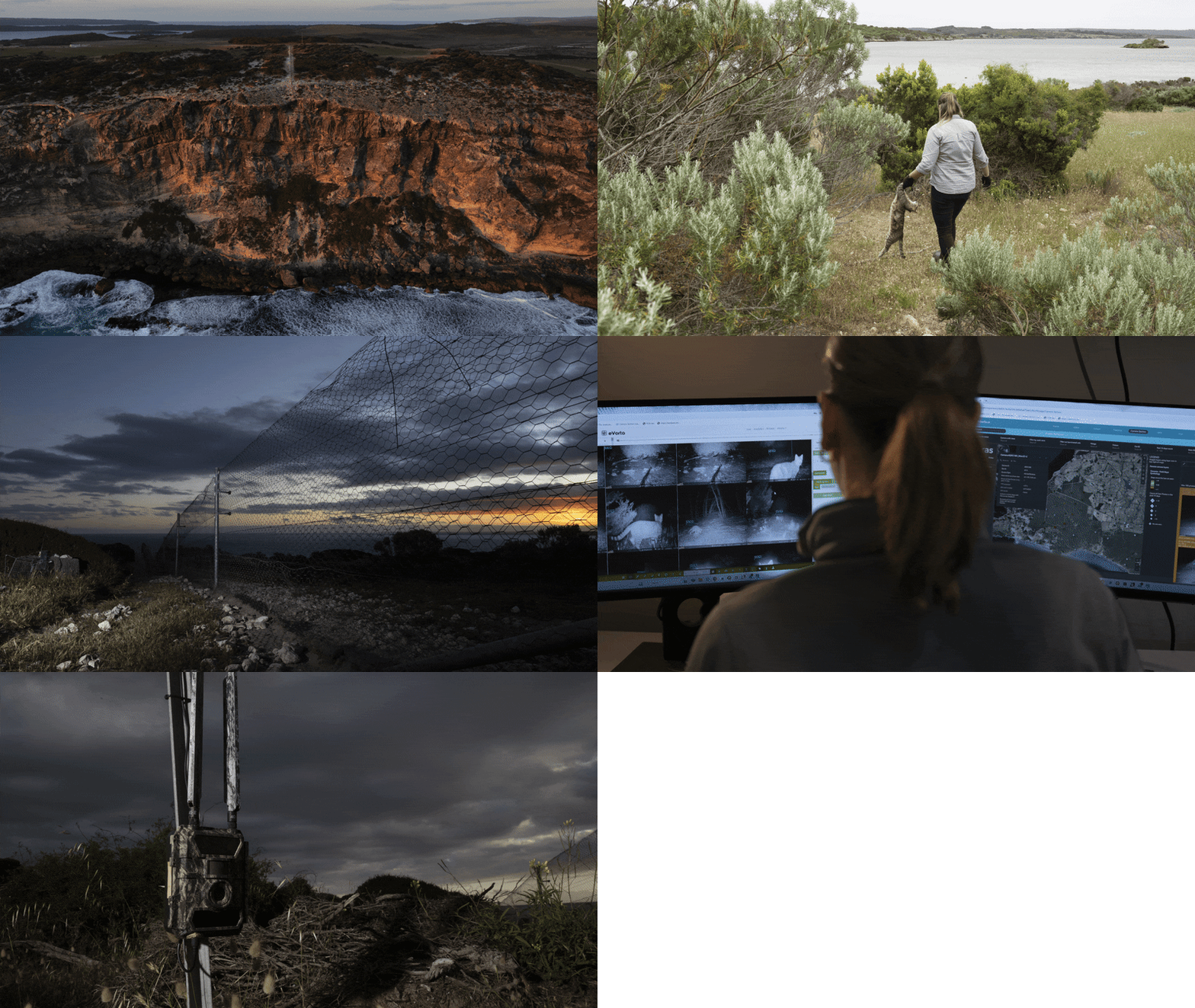
In a bold move to protect its unique ecosystem, Kangaroo Island has embarked on an ambitious project to eradicate feral cats, drawing inspiration from successful island conservation programs worldwide. This initiative aims to restore the island’s biodiversity, which has been severely impacted by invasive species.
The announcement comes as the island’s landscape board implements cutting-edge technology and innovative methods to tackle the feral cat problem. With the support of the federal government, which has provided $3.1 million since 2023, the eradication program is targeting the Dudley Peninsula, a critical area for native wildlife.
Lessons from the Galapagos: A Historical Perspective
One of the earliest successful island conservation programs was the project to remove goats from the Galapagos Islands in Ecuador. Pirates, whalers, and fishermen introduced goats to the archipelago in the 1800s, leading to ecological devastation by the late 20th century. The goats overran the islands, particularly affecting the northern part of Isabela Island, where they destroyed habitats vital for giant tortoises.
Project Isabela, which ran from 1997 to 2006, successfully eradicated goats, pigs, and donkeys from the Galapagos. Utilizing a combination of ground and aerial hunting, as well as innovative techniques like “Judas goats,” the project removed tens of thousands of goats, allowing the vegetation and native species to recover.
“The Galapagos Conservancy describes how the vegetation recovered as goat populations declined. Small trees began regenerating from the stumps and many rare species of plants and birds became abundant.”
Innovative Techniques on Kangaroo Island
Inspired by these successes, Kangaroo Island’s landscape board has embraced technology to tackle the feral cat issue. The program employs 750 traps, 280 4G cameras, and cloud-based AI-enabled software to analyze 35,000 images nightly. This has significantly reduced the need for manual checks, allowing for an expansion in the number of traps and cameras.
Additionally, methods such as “felixers,” which detect cats and spray a toxic gel, and the use of trained dogs and thermal drones, are part of the comprehensive strategy. Night hunter Brenny Florance, a veteran of previous eradication efforts, employs Bluetooth speakers and audio lures to exploit the cats’ curiosity.
“Cats don’t have much of a weakness – they’re a pain in the arse, but curiosity does kill the cat,” Florance says.
Community Support and Challenges
The initiative has garnered strong community support, with locals like sheep farmer Jayne Bates and Penneshaw Penguin Centre owner Renee Daniell witnessing positive changes. Bates reports a resurgence of birds and geckos on her property, while Daniell notes a significant increase in little penguin chicks fledging each season.
However, the project faces challenges, primarily financial. A feasibility study estimated that an additional $1.9 million is needed to achieve a 95% reduction in cat numbers, or $6.2 million for complete eradication. The Albanese government’s recent pledge of $1.61 million provides a much-needed boost, yet concerns remain about long-term funding and maintaining public support.
“If it becomes a multiyear program, it will end up costing more,” warns program manager Paul Jennings. “The other worry is that the social licence might wane.”
Broader Implications and Future Prospects
The move represents a significant step in global conservation efforts, aligning with broader initiatives to eradicate invasive species on islands worldwide. The Invasive Species Council has proposed a $400 million national island eradication fund, emphasizing the cost-effectiveness of such interventions.
As Kangaroo Island continues its battle against feral cats, the program’s success could serve as a model for similar efforts globally. The potential for ecological recovery is immense, offering hope for the island’s unique wildlife and setting a precedent for future conservation projects.
The story of Kangaroo Island’s fight against feral cats is not just about preserving a local ecosystem; it is a testament to human ingenuity and determination in the face of ecological challenges. As the program progresses, the world will be watching, hopeful for a triumphant outcome that could inspire conservation efforts far beyond Australia’s shores.