




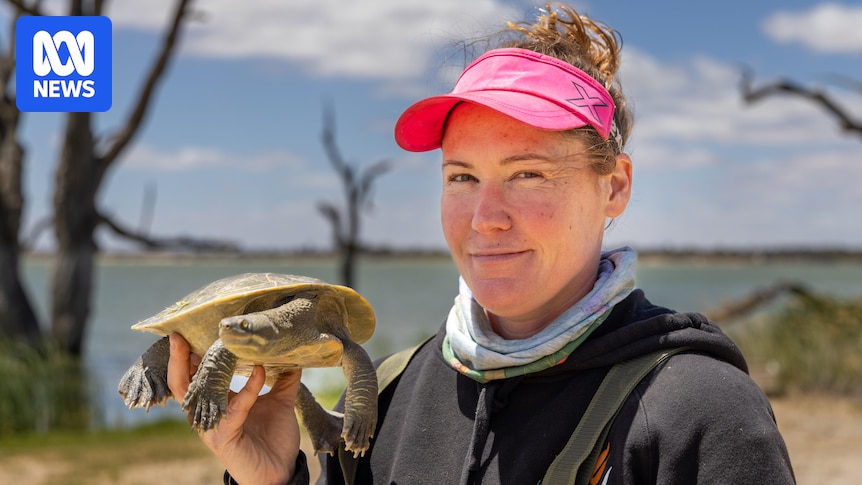
In a groundbreaking effort to protect South Australia’s vulnerable freshwater turtles, environmental experts are teaming up with conservation detection dogs and focusing on educating the younger generation. This initiative marks the state’s first comprehensive turtle management strategy aimed at stabilizing declining populations.
Ecology and zoology associate professor Deborah Bower from the University of New England has been at the forefront of researching the grim outlook for these species. “One in three Australian freshwater turtles is threatened with extinction,” she stated, highlighting the urgent need for conservation efforts. Bower emphasized that turtles have historically been overlooked compared to economically significant animals like fish, leading to significant knowledge gaps.
The Role of Turtles in Ecosystems
Native turtles, often referred to as “the vacuum cleaners of the river,” play a crucial role in maintaining healthy freshwater ecosystems. They consume dead animals and algae, cycling nutrients and keeping waterways clean. Research from the University of Sydney and Western Sydney University underscores their importance, revealing that turtle scavenging can remove fish carcasses up to five times faster than natural decomposition, significantly enhancing water quality.
Without turtles, water bodies would be murkier, and algal blooms could increase due to the accumulation of decomposing animal matter.
The River Murray is home to three native freshwater species: the Murray short-necked turtle, the eastern long-necked turtle, and the broad-shelled turtle. In South Australia, two of these species are listed as vulnerable, facing severe population declines due to habitat loss, river regulation, drought, and predation by foxes.
Collaborative Efforts for Conservation
Amid the state’s turtle management strategy, a coalition of environmentalists, Indigenous rangers, and scientists is working together to share knowledge and fight for the species’ survival. Sylvia Clarke, a senior project officer with the Murraylands and Riverland Landscape Board (MRLB), noted that predation is a major threat to turtle populations, raising concerns about limited juvenile survival and habitat loss hindering development.
For First Nations people from the River Murray and Lower Lakes areas, turtles hold significant cultural importance. Ngintait and Ngangaruku woman Aunty Sheryl Giles described turtles as the knowledge keepers of their land and waters. “Turtles were a part of the food, a part of our dreaming, a part of the law,” she shared.
Detection Dogs: An Unlikely Ally
To assist in monitoring turtle nests, the MRLB has partnered with conservation detection dog handlers. These dogs are trained to sniff out turtle nests, allowing for protection measures before predators can reach the eggs. Fiona Jackson, co-director of Skylos Ecology, works with six dogs along the River Murray, emphasizing their incredible olfactory capabilities.
“They have this incredible technology on the end of their nose — estimates are their sense of smell is between 10,000 to 100,000 times better than ours,”
Jackson explained, underscoring the dogs’ potential to make a real difference in conservation efforts.
Educating the Next Generation
The strategy also includes educating young people about the importance of turtles in the ecosystem and how they can contribute to conservation efforts. Ngarrindjeri woman Lucy Sumner, a junior ranger at the River Murray and Mallee Aboriginal Corporation, is passionate about sharing her knowledge of the Thukabi (turtle).
“I want students to walk away with the knowledge of turtles and why it’s important we keep their wetlands and any area they inhabit and breed in,” Sumner said. She stressed the importance of raising awareness among the youth, given the turtles’ long lifespan and late breeding age.
For students like Evan, a year 6 student at Ramco Primary School, learning about turtles during a school excursion was eye-opening. He felt privileged to gain insights into turtle conservation at Lake Bonney, known by its Aboriginal name Barmera, meaning “place of large water.”
The state’s comprehensive turtle management strategy, which will guide future actions, is set to be published in June 2027. This initiative represents a significant step forward in ensuring the survival of South Australia’s native freshwater turtles.