




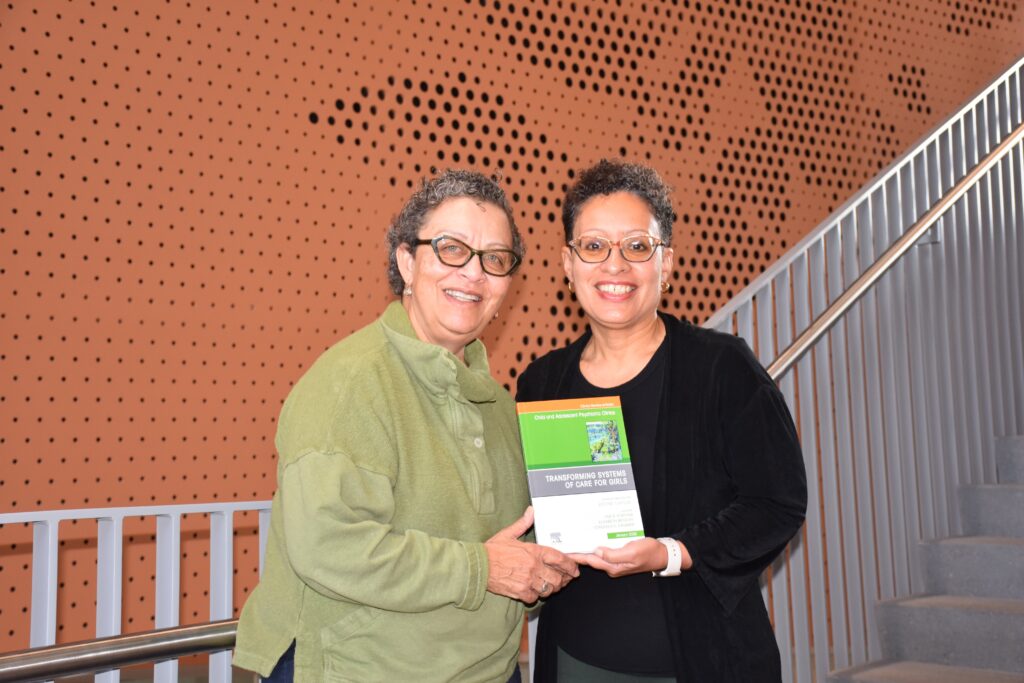
A special issue of the journal Child and Adolescent Psychiatric Clinics of North America is challenging clinicians, educators, and policymakers to rethink their approach to girls’ mental health. Titled “Transforming Systems of Care for Girls,” the issue emphasizes the importance of supportive systems and was inspired by an annual institute hosted by the American Academy of Child and Adolescent Psychiatry (AACAP).
Dr. Lisa Fortuna, co-chair of AACAP’s Systems of Care Committee and a professor at the UC Riverside School of Medicine, highlighted the journal collaboration as a natural extension of the institute’s focus. “Rather than looking at just individual diagnoses and treatments, we wanted to broaden the conversation to consider how systems respond to girls’ needs,” Fortuna explained. The special issue, co-edited by Fortuna and colleagues, aims to explore how gender and intersecting identities influence experiences in various settings.
Exploring Intersectionality and Systemic Challenges
The special issue comprises 13 review articles, each offering clinical recommendations and summarizing current literature on topics related to girls’ mental health. A central theme is intersectionality, examining how race, disability, immigration status, and socioeconomic background intersect with gender to affect access to care and mental health outcomes.
Dr. Michelle Porche, a contributor and professor in-residence at the UCR School of Medicine, emphasized the need to address the diversity of girls’ experiences. “Systems often overlook how multiple identities influence risk, resilience, and access to services,” she noted.
Impact of Social Media and Timely Interventions
The issue also tackles the impact of social media on body image, depression, and suicidality. One article explores interventions that empower girls to engage with social media in healthier ways. According to Fortuna, the timing is crucial, as rates of anxiety, eating disorders, and self-harm among girls reportedly rose during the COVID-19 pandemic.
“Clinicians and researchers can’t ignore the realities girls are living. Even when discussion of gender becomes controversial, the lived experiences of children don’t disappear,” said Fortuna.
Holistic and Trauma-Informed Approaches
In the preface, Fortuna and her co-editors describe a growing mental health crisis among adolescent girls in the United States, characterized by rising rates of anxiety, depression, suicidality, and trauma. They argue for a shift away from fragmented approaches toward holistic, collaborative, trauma-informed, and justice-oriented systems of care.
Porche and co-authors open the issue with an article on implementing trauma-informed policies and practices, highlighting the disproportionate burden of trauma that many girls face. They advocate for trauma-responsive approaches that actively promote healing.
Addressing Educational and Cognitive Diversity
In a closing article, Porche and another contributor call for greater recognition of neurodivergent girls, whose educational and cognitive needs are often overlooked. The piece discusses the intersection of educational and cognitive diversity factors for girls impacted by the carceral system.
Advocacy for Immigrant and Refugee Girls
Fortuna collaborates on two companion articles examining the mental health challenges faced by immigrant and refugee girls. These articles explore how migration, displacement, bicultural identity, and policy barriers shape mental health, offering culturally grounded strategies for more equitable care systems.
Fortuna and Porche hope the issue will not only inform clinicians but also influence broader systems to better meet girls’ unique needs. “We want this to be eye-opening,” Porche said. “It’s about recognizing where systems fall short and thinking creatively about how to do better.”
The print issue is officially dated January 2026 and is available through institutional subscriptions, academic libraries, and the journal website.