




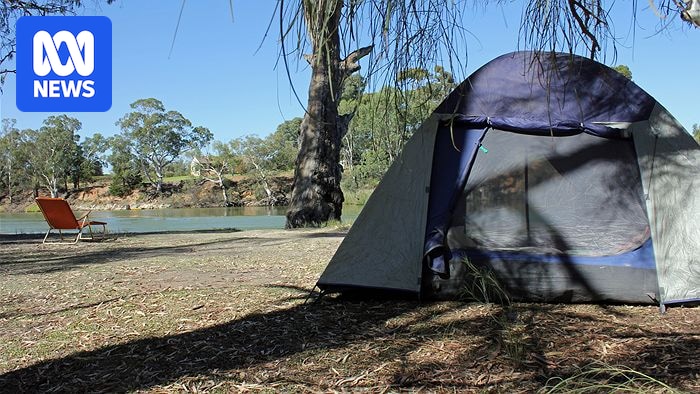
A row of unattended caravans parked along a popular free riverside campsite has sparked renewed debate about fair access to public camping spots during peak holiday periods. The footage, shared online by traveler Ciaran Shields through the account No Place To Go But Everywhere, reveals caravans lined up along the Murray River on the New South Wales-Victoria border, with no sign of occupants.
Mr. Shields described the scene as unprecedented in their months of traveling across Australia in a converted bus. “The first time we came to that beach, we met a family camping there who told us about people parking their vans there for Christmas,” he recounted. “They said one of the guys had parked their van right in front of their tent, which we thought was a bit rude.”
Debate Over Public Space Use
The campsite, known as Davis Beach, located on the Victorian side of the Murray River at Tocumwal, is a favored spot for swimming and camping, especially during school holidays. Although Mr. Shields and his family did not plan to camp there, they visited the area last month so their children and dogs could enjoy the water.
The video, showcasing nine unattended caravans in what Mr. Shields described as “prime spots” along the river, quickly went viral, amassing hundreds of thousands of views and sparking a heated debate online. Many accused caravan owners of effectively “reserving” public campsites by leaving vehicles unattended for extended periods—a practice widely criticized as inconsiderate, even if not always illegal. Conversely, some defended the practice, arguing that people should have the freedom to come and go during extended holiday stays.
Regulatory Challenges and Public Reactions
The stretch along the Murray River is managed by Parks Victoria, which acknowledges the practice as common during this time of year. “The maximum time someone can camp at one of the Murray River Reserve sites, like Davis Beach, is six weeks,” a spokesperson noted. “If people encounter issues with behavior or facilities at one of our campsites, they can report them.”
However, the issue extends beyond camping. Goulburn-Murray Water (GMW), responsible for managing recreational water storages across northern Victoria, warns against reserving sections of public foreshore for exclusive use. “Our storages are fantastic places to visit, but it is important that everyone plays their part to ensure they remain this way,” stated Jon McKeown, GMW’s general manager of water storage services. “During busy times, we do see people looking to reserve inlets or parts of the foreshore for exclusive use by installing gazebos, inflatable pontoons, and other structures before their visit.”
Under the Water (Recreational Area) Regulations 2023, individuals can be fined for leaving temporary structures unattended on the foreshore.
Historical Context and Broader Implications
Mr. Shields expressed surprise at the behavior, noting it was something his family had never encountered before. “We used to live in the South West of WA and have been traveling around in our converted school bus since March 2024,” he said. “We have never seen anything like this on our travels before or around our hometown in WA for that matter. But judging by the comments, it happens here quite regularly for Christmas and Easter.”
This situation highlights a broader issue of fair access to public spaces, a topic that has been debated for years. As outdoor recreation becomes increasingly popular, especially post-pandemic, managing public spaces equitably has become a pressing challenge for authorities. The balance between individual freedom and communal access remains delicate, requiring ongoing dialogue and adaptive management strategies.
Looking forward, the ongoing debate over campsite access at Davis Beach and similar locations may prompt authorities to reconsider regulations and enforcement strategies. As more people seek to enjoy natural spaces, ensuring fair access for all remains a critical issue for community cohesion and environmental stewardship.