


Standing beneath the imposing stone walls of one of the most ancient and revered sites in the West Bank, Yishai Fleischer was blunt in his assessment of its significance in modern times. “It’s something that should be bringing people together, but oftentimes places like this actually make people jealous and tear them apart,” he said.
Mr. Fleischer wanted to meet the ABC at the Tomb of the Patriarchs in the city of Hebron, south of Jerusalem. The site is said to be the burial place of the prophet Abraham, a significant figure in Judaism, Islam, and Christianity, and is considered one of the holiest places in all three religions. Control of the building has been wrested between conquering forces for centuries, and the structure today, which sits over the cave where Abraham and his family are buried, is half synagogue and half mosque.
His description of the place was a simple summation of a problem dogging this part of the world, but belies the severity of the situation facing the West Bank as his fellow Israeli settlers demand control over areas where millions of Palestinians live. “It’s a Jewish building on top of Jewish tombs, and the Jewish people have been living at this town and praying here at this tomb for the last 3,500 years,” he argued.
Settler Movement and Political Dynamics
The belief that all the land west of the Jordan River is Jewish land has spurred some within Benjamin Netanyahu’s coalition, often referred to as the most right-wing government in Israel’s history, to push for legislation formally annexing the West Bank. Despite his backing of Israel on a range of other matters, that has been a step too far for the former US President Donald Trump, who in September told journalists, “I will not allow Israel to annex the West Bank.”
However, many believe it is something of an academic argument—that annexation has already happened as a result of Israel’s vice-like control of the West Bank and its government’s support for Jewish settlers. Earlier this week, Israel approved 19 new settlements in the occupied West Bank, including re-establishing two settlements that were dismantled two decades ago.
“The Jewish people are resettling this land, this is the heartland of our story, this is the DNA of our people-hood,” Mr. Fleischer said.
Palestinian Perspective and International Reactions
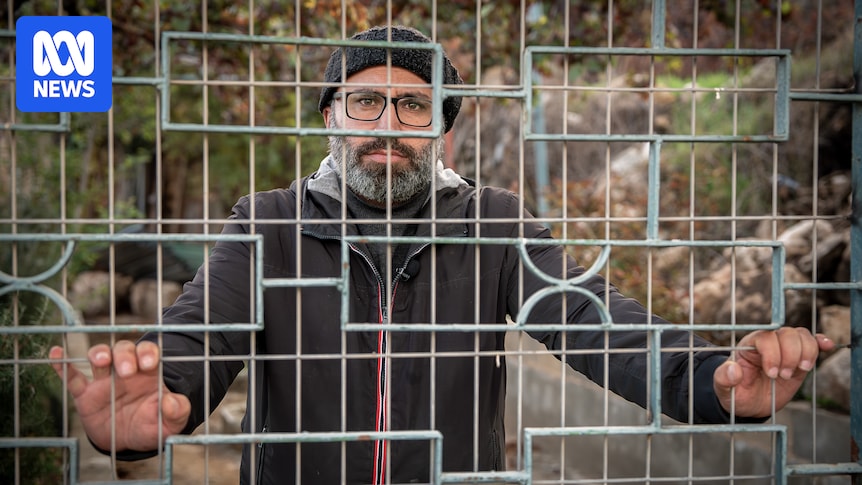
On a hill overlooking the Tomb, anti-settlement activist Issa Amro’s house is encased in tall fencing, which he argued was necessary to protect him from settler attacks—everything from rock throwing to fire bombings. “My neighbourhood is caged, my city is caged and my country is caged,” he lamented.
The 45-year-old said he had never felt free in the West Bank, labeling Israel’s control of the territory as “apartheid.” He said the situation had deteriorated significantly since October 7, 2023. “Israeli soldiers got all the support to do whatever they can, because they can do it without any accountability, without anybody saying this is wrong or this is bad,” Mr. Amro said.
Meanwhile, Israeli Finance Minister Bezalel Smotrich and National Security Minister Itamar Ben-Gvir have led the charge for annexation, despite international sanctions against them for their rhetoric towards Palestinians. Mr. Fleischer criticized Australia’s sanctions against these ministers, calling it “misunderstanding and antisemitism.”
“To have Australia getting in our business without clearly understanding, and eroding our sovereignty by sanctioning our people … is an abhorrent act of sabotage,” Mr. Fleischer argued.
Annexation and Its Implications
Moves to impose Israeli sovereignty on the West Bank have been underway for decades, but the issue has taken on a different tone and tempo in recent months. In October, the Israeli parliament gave preliminary approval to a bill that would effectively annex the West Bank, just as US Vice-President JD Vance was wrapping up his visit to Israel.
Issa Amro said the Trump intervention meant very little to people living in the West Bank. “The Israeli government would not be able to maintain the occupation for that long without applied support of many, many Western countries,” he said.
Michael Sfard, one of Israel’s leading human rights lawyers, said, “It has to be acknowledged and it has to be confronted that Israel … has annexed the territory and is treating it as its sovereign territory.”
Rising Violence and International Law
Across the West Bank, there are roughly half a million Jewish settlers living in around 140 settlements and up to 300 outposts. While the settlements are considered unlawful under international law, they are supported by Israeli legislation. Violence by settlers towards Palestinians has also surged in recent months. In October, the United Nations recorded the highest number of cases since it began keeping records in 2006, with 264 attacks.
Yishai Fleischer, armed with a rifle during his interview with the ABC, downplayed the settler violence. Instead, he blamed Palestinians for fueling conflict across the West Bank. “As in all societies, we have members of the society that are more aggressive and maybe take it to illegal actions,” he said.
Michael Sfard argued, “We have the most radical government Israel has ever had, with the settler movement basically a very powerful element of this government.”
The situation in the West Bank remains tense, with international attention focused on the actions of the Israeli government and the responses from global leaders. As the debate over annexation continues, the implications for peace and stability in the region hang in the balance.