




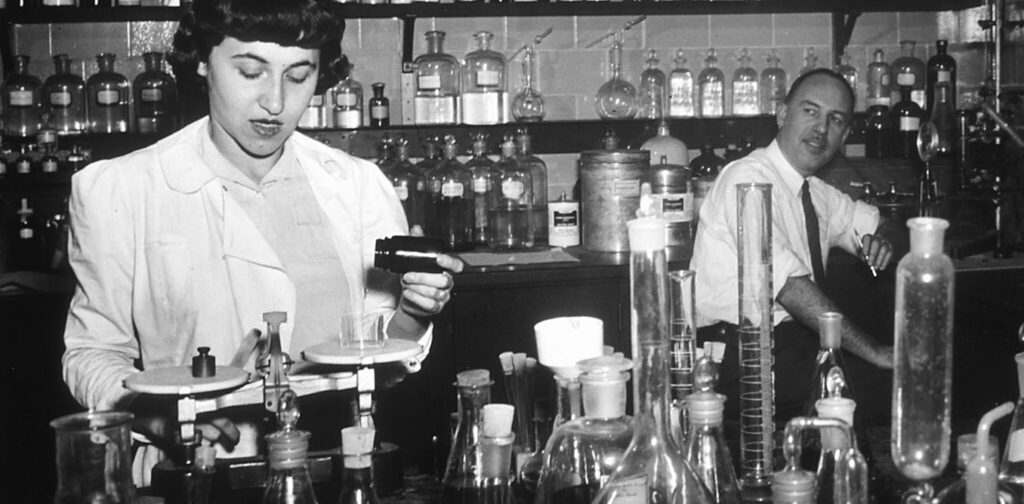
As a young medical student in 1975, I walked into a basement lab at the National Institutes of Health (NIH) in Bethesda, Maryland, to interview for a summer job. This encounter marked the beginning of a lifelong affiliation—initially as a trainee, later as a grantee running a university laboratory, and now as a researcher of economics and public policy studying the agency’s impact on healthcare and the national economy.
On that initial visit nearly 50 years ago, I witnessed the NIH’s mission firsthand: to harness the vast potential of basic science to enhance human health and medical care. Throughout my career, I observed the agency fulfill this mission in ways that have brought immense value to the country. NIH funding has trained a legion of biomedical scientists, produced countless therapies that form the backbone of modern medicine, and catalyzed the launch of the biotechnology industry.
However, recent disruptions to federal funding and widespread grant terminations in 2025 have left scientists who rely on NIH support in a precarious position. A proposed 40% cut to the NIH budget for 2026 by the White House further threatens the agency’s future.
The Origins and Growth of the NIH
The NIH was established through the Ransdell Act of 1930, which transformed the former Hygienic Laboratory of the Marine Hospital Services into the foundation of a new government institution. Originally founded in 1887 to develop public health measures, diagnostics, and vaccines for diseases like cholera, yellow fever, and smallpox, the laboratory was reimagined as the National Institute of Health with the act’s passage.
Senator Joseph Ransdell of Louisiana envisioned the NIH as an agency with a broader mandate to translate scientific advances into improved human health. In 1929, he championed the creation of the new institute by citing a New York Times editorial that lamented the lag in health improvements compared to other scientific advancements. The editorial highlighted the economic losses due to widespread illness and advocated for a coordinated national effort to prevent diseases.
In 1945, the report “Science – The Endless Frontier” by Vannevar Bush underscored the government’s pivotal role in supporting science, pointing to wartime innovations like nuclear energy, radar, and penicillin as models for economic growth and disease prevention. The NIH became central to this vision, with its budget expanding significantly during and after World War II, and again following the launch of Sputnik in 1957, which spurred a renewed commitment to science.
NIH’s Role in Modern Medical Advancements
Today, the NIH serves as the backbone of efforts to improve health and healthcare, supporting each step from preliminary discovery to clinical advancement. This progression mirrors the career path of individual scientists.
In my own career, I experienced this trajectory. After establishing my first independent laboratory with a grant for early-stage researchers, an R01 grant funded our work identifying genes causing inherited metabolic diseases in newborns. These grants are the primary mechanism for supporting innovative research in U.S. academic biomedical science.
Subsequent NIH Program Project grants allowed us to explore how these genes could be used to treat children. A General Clinical Research Center grant supported the hospital facilities necessary for clinical research and patient care. Additional grants helped train medical students and fellows and apply our research to areas like child health and gastroenterology.
As our gene therapy research advanced, NIH Small Business grants facilitated the founding of a company that raised $200 million in investments and partnerships, creating hundreds of jobs in Houston. Such grants continue to play a crucial role in helping universities commercialize discoveries.
Evaluating the NIH’s Effectiveness
For the past decade, I have led a research center focused on the drug development process. Our work, independent of NIH funding, demonstrates that a strong foundation of basic research on the biology underlying health and disease is crucial for successful drug development, with most of this research conducted in public institutions.
NIH funding supported basic or applied research related to about 99% of newly approved medicines, clinical trials for 62% of these drugs, and patents governing about 10% of these products.
Studies also show that NIH funding saves the industry nearly $3 billion per drug in development costs. Over the past decade, there has been $800 billion in new investment in biotechnology, with the U.S. biopharmaceutical industry directly supporting over 1 million jobs.
Medicines enabled by NIH funding have significantly increased life expectancy and health, reducing deaths from heart disease and stroke, improving cancer outcomes, controlling HIV infection, and easing psychiatric conditions.
The Future of NIH Amidst Funding Challenges
The Trump administration has questioned the role of science in maintaining the nation’s health, economy, and global standing. Yet, the NIH stands as a testament to the vision articulated by its early architects. At its core is the belief that science benefits society, that sustained investment in basic research is vital for technological advances serving the public interest, and that the nation’s health and economy thrive from developments in biology.
As the NIH faces potential budget cuts, the scientific community and policymakers must consider the agency’s historical contributions and its pivotal role in future innovations. The decisions made today will shape the landscape of American medical research and its impact on global health and economic prosperity.