



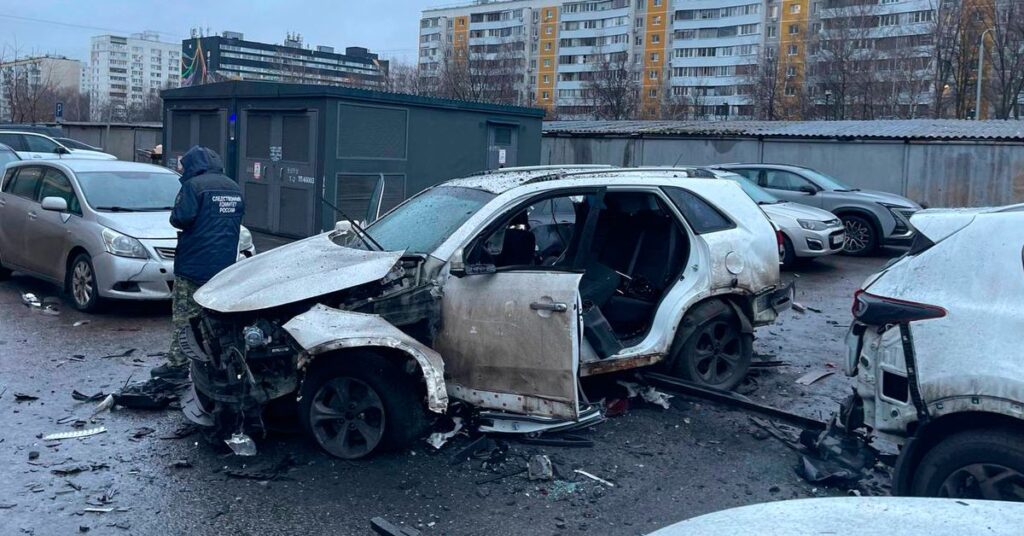
A car bomb exploded in Moscow on Monday, killing Lieutenant General Fanil Sarvarov, marking the third assassination of a high-ranking Russian military officer within a year. The incident has raised suspicions of Ukrainian involvement, according to Russian investigators.
Svetlana Petrenko, spokesperson for Russia’s Investigative Committee, confirmed the death of Sarvarov, who was the head of the Operational Training Directorate of the Russian Armed Forces’ General Staff. “Investigators are pursuing numerous lines of inquiry regarding the murder. One of these is that the crime was orchestrated by Ukrainian intelligence services,” Petrenko stated.
The announcement comes as tensions between Russia and Ukraine remain high, nearly four years after Russia’s military intervention in Ukraine. Russian authorities have frequently accused Ukraine of orchestrating assassinations of military officers and public figures within Russia, with Ukraine claiming responsibility for some but remaining silent on others, including Sarvarov’s death.
Pattern of Targeted Attacks
The killing of Sarvarov is not an isolated incident. Just over a year ago, Lieutenant General Igor Kirillov, the chief of the military’s nuclear, biological, and chemical protection forces, was killed by a bomb hidden on an electric scooter outside his apartment building. The attack also claimed the life of Kirillov’s assistant. Ukraine’s security service admitted to orchestrating the attack, leading to the arrest of an Uzbek man charged with carrying out the assassination on their behalf.
“Investigators are pursuing numerous lines of inquiry regarding the murder. One of these is that the crime was orchestrated by Ukrainian intelligence services.” – Svetlana Petrenko
In April, another senior Russian military officer, Lieutenant General Yaroslav Moskalik, was killed by an explosive device placed in his car near his residence outside Moscow. A suspect was quickly apprehended, but Ukraine has neither confirmed nor denied involvement.
Reactions and Implications
Kremlin spokesman Dmitry Peskov reported that President Vladimir Putin was immediately informed of Sarvarov’s assassination. The Defence Ministry highlighted Sarvarov’s military service, including his participation in conflicts in Chechnya and Syria, underscoring his significance within the Russian military hierarchy.
Meanwhile, Putin previously described the killing of Kirillov as a “major blunder” by Russian security agencies, urging them to learn from past mistakes and enhance their operational efficiency. The repeated targeting of high-ranking officials has put pressure on Russian security services to address potential vulnerabilities.
Historical Context and Analysis
This development follows a pattern of high-profile assassinations that have plagued Russia in recent years. The ongoing conflict with Ukraine has been marked by a series of covert operations and retaliatory strikes, often resulting in the deaths of key military figures. The strategic elimination of these individuals is seen as a tactic to destabilize Russian military operations and morale.
According to military analysts, the targeted killings of senior officers could have significant implications for Russia’s military command structure and operational capabilities. The loss of experienced leaders like Sarvarov, Kirillov, and Moskalik may hinder strategic planning and execution, particularly in complex operations.
“Justice inevitably comes,” Ukraine’s President Volodymyr Zelenskyy remarked following the death of Moskalik, though he did not specifically mention the general’s name.
Looking Ahead
As the investigation into Sarvarov’s death continues, the potential involvement of Ukrainian intelligence services remains a focal point. The incident underscores the ongoing hostilities between the two nations and the broader geopolitical tensions in the region.
Experts suggest that the Russian government may intensify security measures for high-ranking officials and increase counterintelligence efforts to prevent further attacks. The assassinations have highlighted the vulnerabilities within Russia’s security apparatus and the need for heightened vigilance.
As the situation develops, the international community will be closely monitoring the responses from both Moscow and Kyiv, as well as the broader implications for regional stability and security.