


Matilda Kaylock, a third-year international studies student at the University of Wollongong (UOW), faced an unexpected hurdle when her language major was abruptly discontinued. “I contacted my lecturer directly [and] she said that she would no longer be working there as the major had been cut,” Kaylock explained.
To complete her degree, Kaylock was advised to pursue the unit through a different provider. “I ended up starting second trimester at the University of New England via distance, but I dropped it and decided to discontinue the course entirely,” she admitted. “Working across multiple universities with different holiday and session times was too challenging.”
Widespread Impact of Course Cuts
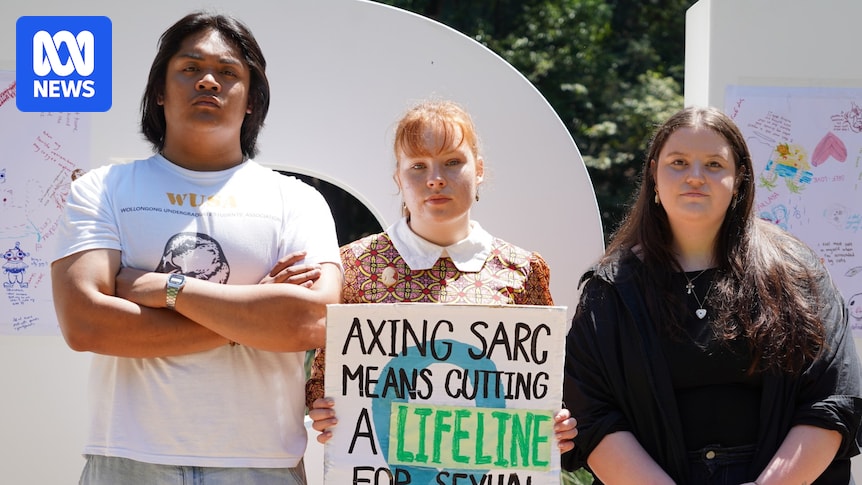
Kaylock’s experience is not isolated. During a recent inquiry by the NSW Upper House into the university sector, other UOW students shared similar stories. Hanzel-Jude Pador, general secretary of the Wollongong Undergraduate Student Association (WUSA), testified that courses listed in the handbook were “mysteriously cut” post-enrollment, affecting many students.
UOW was among the first Australian universities to announce significant job losses in 2024, a consequence of the federal government’s stricter international student visa regulations. The cuts included languages such as Japanese and Mandarin, alongside cultural and science and technology studies, deemed financially unviable.
In response, a UOW spokesperson stated that some language disciplines remain available and denied that students were unable to complete their degrees due to these changes. “Where particular language disciplines have been affected, students are supported through teach-out plans or approved alternatives to meet degree requirements, and no student is required to change degrees as a result,” the spokesperson asserted.
Concerns Over Academic Stability
WUSA president Caitlin Veigel expressed concerns at the inquiry, highlighting the expectation that students should be able to complete their chosen subjects throughout their degree. “The fact that this is no longer an option for almost every student at Wollongong is concerning … [and] a serious issue,” she stated.
Labor MLC Anthony D’Adams accused UOW of “kind of false advertising,” a claim the university has “strongly rejected.”
Financial Transparency and Student Fees
The controversy extends beyond academic offerings to financial management. The union accused UOW management of using “obstructionist, deceitful and intimidatory tactics,” particularly concerning the Student Services Amenity Fees (SSAF).
As of January 2024, institutions charging SSAF must allocate at least 40% of these fees to democratically elected, student-led organizations. However, Veigel claimed UOW delayed approving necessary administrative changes for WUSA to access these funds and withheld details of its transition plan.
“They’ve gone around the only democratically led and elected student body on campus and created a new subcommittee that is made up of students to manage SSAF because they don’t want to give us control of that money,” Veigel said.
UOW responded that SSAF funding changes are part of a three-year transition plan, with student-led organizations like WUSA invited to apply for funding. “Funding recommendations are developed through a student-led subcommittee that includes elected student representatives, and all allocations are published publicly,” a spokesperson noted.
Looking Ahead: The Future of Higher Education
The situation at UOW reflects broader challenges within the Australian higher education sector. As universities grapple with financial constraints and policy shifts, students face uncertainty about their academic futures. The outcome of the NSW Upper House inquiry could influence institutional practices and student experiences nationwide.
For students like Kaylock, the disruption has already taken a personal toll. As the sector navigates these turbulent times, the balance between financial viability and educational integrity remains a critical issue for stakeholders.