




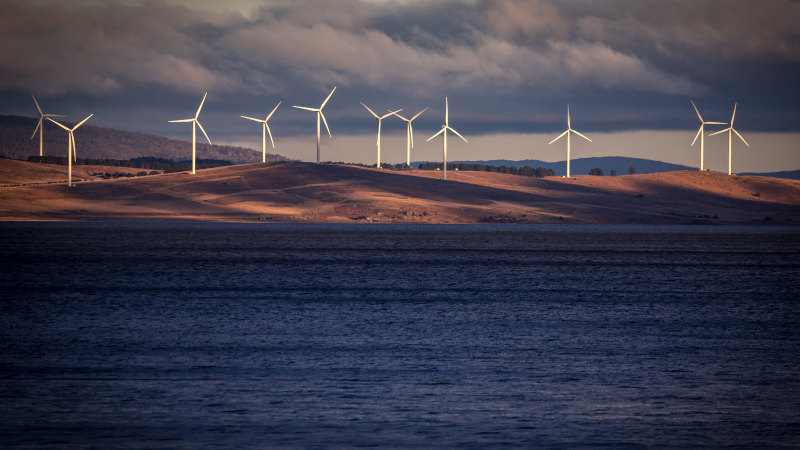
A new report by Australia’s Commonwealth Scientific and Industrial Research Organisation (CSIRO) reveals that a combination of solar farms, onshore wind turbines, energy storage, and gas represents the most cost-effective strategy for the future of Australia’s electricity grid. The study suggests that integrating nuclear energy, carbon capture, or offshore wind projects would lead to increased power prices.
The CSIRO’s latest cost projections indicate that a power system primarily supported by renewable energy sources is the least expensive way to replace the country’s aging coal-fired power plants. This approach also meets the growing electricity demands while aiming to reduce net emissions to zero over the next 25 years.
Renewed Political Debate Over Energy Transition
The release of the draft CSIRO report, scheduled for Wednesday, occurs amidst a renewed political debate over the costs associated with Australia’s energy transition. The Coalition is challenging the Albanese government’s clean energy targets, advocating for taxpayer funds to support technologies like carbon capture and nuclear energy.
Currently, the average wholesale electricity cost on Australia’s eastern seaboard is approximately $129 per megawatt-hour. The CSIRO estimates that Labor’s goal of achieving an electricity grid powered 82% by renewable energy by 2030 could reduce wholesale electricity prices to $81 per megawatt-hour, or $91 per megawatt-hour when including transmission line costs.
Challenges in Meeting Renewable Energy Targets
Despite the promising projections, experts and industry leaders caution that the current pace of renewable energy rollout is insufficient to meet government targets. An urgent increase in investment and project approvals is necessary to stay on track.
By 2050, wholesale power costs are projected to rise to between $115 and $124 per megawatt-hour, which remains cheaper than today’s rates. However, including transmission line costs, prices could range from $135 to $148 per megawatt-hour.
The report warns that incorporating “first-of-a-kind” technologies such as carbon capture and offshore wind farms could further elevate electricity costs. Nuclear energy continues to be the “consistently highest cost” option, according to the CSIRO.
Expert Opinions and Industry Reactions
The GenCost report, jointly prepared by CSIRO and the Australian Energy Market Operator, emphasizes the cost-effectiveness of solar PV, onshore wind, storage, and either natural gas or hydrogen. Adding technologies like carbon capture, offshore wind, and nuclear would lead to higher average electricity costs.
Dr. Dietmar Tourbier, CSIRO’s director of energy, acknowledged the costs associated with building Australia’s future electricity system under any scenario. “GenCost plays a vital role in producing and sharing trusted, evidence-based information with stakeholders to help understand that cost,” he stated.
Jackie Trad, CEO of the Clean Energy Council, which represents renewable developers, highlighted the report’s findings. “Research continually shows that if Australia wants affordable power as coal retires, the answer is to build more renewables, invest in storage and firming, and keep the system flexible,” Trad said. “Delaying the transition or forcing in higher-cost technologies will only push bills up.”
Government’s Stance on Renewable Energy
Energy Minister Chris Bowen affirmed that the findings demonstrate the effectiveness of renewables, supported by battery storage, hydropower, transmission lines, and fast-start gas “peaking” plants. He stated that these measures are the “best way to keep the lights on and put downward pressure on bills.”
The report’s conclusions are likely to influence ongoing policy discussions and investment decisions in Australia’s energy sector. As the country navigates its transition from coal to more sustainable energy sources, the emphasis on cost-effective solutions will be crucial in shaping the future of its electricity grid.