

To Ellen Burbidge, it felt as though the entire world was ablaze. During the catastrophic summer of 2019, she witnessed firsthand the devastating impact of climate change. Before Christmas, while visiting a home in Gympie, north of Brisbane, she found herself helping to fill buckets with water as smoke loomed ominously through the trees. Her journey back home, a thousand kilometers to the far South Coast of New South Wales, was marked by the sight of pyres from fires consuming the eucalypt forests of the Great Dividing Range, painting the sky in hues of red and orange.
On New Year’s Eve, Burbidge was abruptly awakened by her brother at a campground in Mystery Bay near Tilba. The sky was an unsettling pitch black, and only hours later did it transform into a dull red orb. Forced to evacuate, she sought refuge at her parents’ home in Narooma, where they listened to emergency reports until the power failed. The fear in her four-year-old nephew’s eyes was palpable, and she put on a brave face, reassuring him to stay close.
The family gathered their valuables, leaving behind her grandmother’s ashes, and moved to her grandfather’s place further in town. Burbidge recalls standing in the driveway, bidding farewell to her childhood home with a poignant, “Look after the place, Nan.” That night, crammed into a single room with her partner, sister, and young family, they shut the doors and windows against the smoke, taking turns to stay awake and patrol for falling embers and spot fires.
The Southern Migration
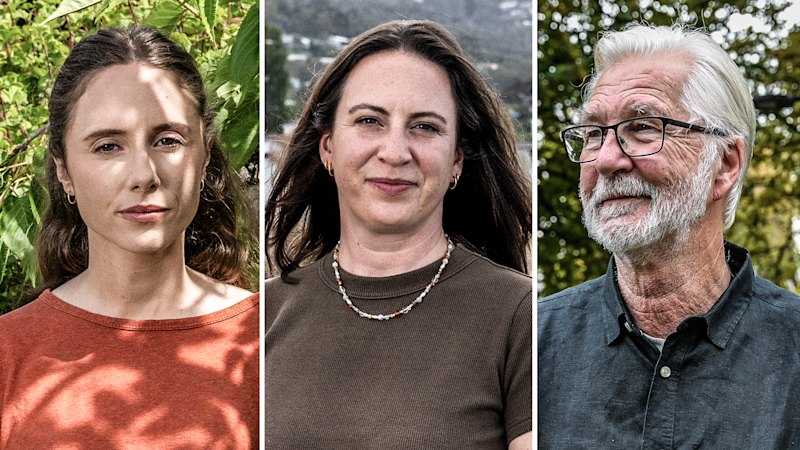
Following the traumatic events, Burbidge found herself hunkered down in Melbourne during the COVID-19 lockdowns. Once restrictions lifted, she moved to Tasmania with her new partner, Edward, in search of refuge from a warming world. “Hobart is almost famously known for its cooler climate,” she explains, “and we thought it would be a safe place to go if climate change worsens, where we could put down roots and maybe start a family.”
Burbidge’s decision is not an isolated one. New research by Charles Sturt University’s Professor Clive Hamilton reveals that 14 percent of Australians who have moved in the past six years cite climate change as a factor in their decision. Of those planning to relocate in the coming year, 22 percent are influenced by climate considerations. For those who have experienced extreme weather events, this figure rises to a third, according to a Roy Morgan survey of 2,000 respondents.
41 percent of respondents identified Tasmania as the safest state in a warming climate, far ahead of other regions.
Implications and Government Response
Hamilton’s research highlights a significant oversight in the government’s climate change strategy. While the focus remains on mitigation—reducing greenhouse gas emissions—Hamilton argues that adaptation should be equally prioritized. “They are not talking about the change that is already coming down the highway,” he asserts, emphasizing the need for proactive adaptation measures.
Without government leadership, individuals with the means and awareness are beginning to adapt independently. Hamilton himself admits to purchasing land in Tasmania out of climate concerns. This migration trend, he predicts, will have profound demographic implications for Australia, reshaping communities based on climate awareness and resilience.
“If there’s half the population who are very worried about climate change and taking action, and a quarter who don’t believe it’s real, the implications are significant,” Hamilton notes.
Community and Cultural Shifts
Jessie Bodor, who once worked for a major law firm in Sydney, felt a growing unease as summers became increasingly hotter. She relocated to Tasmania, where she now works for the Tasmanian Land Conservancy, finding fulfillment in work relevant to climate action. “I think [a climate reshuffling] is already happening here,” she says, noting the emergence of highly connected communities sharing climate experiences and knowledge.
Launceston Mayor Matthew Garwood welcomes the influx of “climate refugees,” noting the benefits they bring to the community. “Once people decide to come here, they want to contribute, bringing their skills and families,” he observes.
Peter George, a former journalist and now an independent MP in Tasmania, echoes this sentiment. Having moved from Sydney to escape the heat, he sees the influx as a boon for Tasmania, bringing new wealth, demand for services, and fresh ideas. However, he acknowledges the potential for tension, as island communities can be resistant to change driven by outsiders.
The Future of Climate Migration
Burbidge, now working with Bushfire Survivors for Climate Action, is grateful for her new life in Hobart but admits she does not feel entirely safe from climate change. The waters around Tasmania are warming rapidly, and the state is experiencing drier and hotter conditions. In 2016, fires devastated ancient rainforests, and this year, emergencies were declared on Tasmania’s east coast with homes lost.
Author Richard Flanagan, a vocal environmental advocate, offers a stark perspective: “You can run, but when you have run as far south as you can, you are brought face to face with what is destroying our world.” The sentiment resonates with Burbidge, who continues to grapple with the decision to start a family in an uncertain future.
As Australia faces the realities of climate change, the movement of “climate refugees” southward could reshape the nation’s demographic and cultural landscape. The choices made today will have lasting impacts on communities and the environment, prompting a reevaluation of priorities and strategies in the face of an ever-changing climate.