




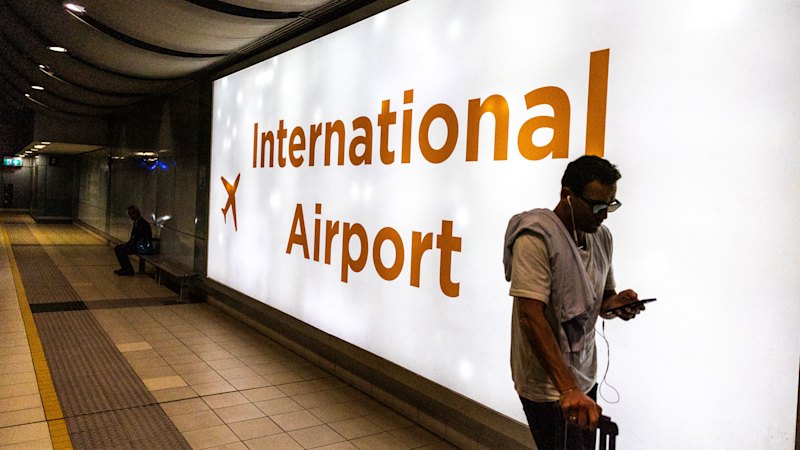
Net overseas migration to Australia has reached its lowest point since the Albanese government assumed office, yet it continues to drive the nation’s population growth. As of now, Australia is home to over 27.6 million people, according to the latest figures from the Australian Bureau of Statistics released on Thursday.
The data reveals that net overseas migration fell to 305,600 through 2024-25, marking the lowest annual figure since mid-2022. In the June quarter alone, migration numbers eased to 50,120, the smallest quarterly result since the end of 2021. This represents a significant drop of 123,593 or 29 percent compared to 2023-24, and a 45 percent decrease from the peak of 555,798 recorded in the 12 months leading up to September 2023.
Migration Trends and Economic Implications
Despite the decline, the current migration levels remain above the 260,000 forecasted in last year’s budget by Treasurer Jim Chalmers. However, they fall short of the government’s mid-year budget update expectations. This trend is in stark contrast to other nations, such as Canada, where recent policy changes have led to a 0.2 percent population decrease in the last quarter.
New South Wales and Victoria, traditionally the largest recipients of international students, saw a 31 percent drop in net overseas migration for 2024-25, with reductions of 45,000 and 40,000 respectively. In the June quarter, Victoria’s intake was the lowest for a June quarter in a decade, excluding the COVID-19 period when borders were closed. The government has implemented caps on university admissions and increased visa application charges, expecting to generate an additional $740 million from these changes.
Population Growth Driven by Migration
Despite the easing in migration, it remains a significant factor in Australia’s population growth. Of the 82,189 residents added in the June quarter, 61 percent were attributed to net overseas migration. Since the government took office in 2022, migration has accounted for 84 percent of the 1.6 million increase in the nation’s population.
Western Australia continues to lead in population growth, increasing by 65,584 people or 2.2 percent over the past year, now housing 3.04 million residents. Meanwhile, Victoria and Queensland both experienced a 1.8 percent growth, with their populations reaching 7.07 million and 5.7 million respectively. New South Wales added 101,000 people, bringing its total to nearly 8.6 million.
Expert Opinions and Economic Context
The right-leaning Institute of Public Affairs has expressed concern over the large migration intake, which they argue is exacerbating societal pressures. Kevin You, a senior fellow at the Institute, commented,
“This is uncontrolled mass migration on steroids, pure and simple. It is causing social division, sectarian strife, and is making mainstream Australians poorer.”
While the population continues to grow, household wealth is increasing at a faster pace. The Australian Bureau of Statistics reported that the net value of Australians’ assets rose by 3.1 percent, or $551.3 billion, in the September quarter, reaching an all-time high of $18.4 trillion. Over the past year, household assets have surged by $1.5 trillion, marking a 9 percent increase.
The value of the nation’s land and dwellings climbed by $283 billion or 2.4 percent to $12.2 trillion, while superannuation assets increased by 3 percent to $4.5 trillion.
Looking Ahead
The government projects that net overseas migration will fall to 260,000 this financial year and further decrease to 225,000 by 2026-27. Despite these forecasts, the ongoing debate over migration policy highlights the complex balance between population growth and economic stability.
As Australia navigates these demographic shifts, the implications for social cohesion and economic prosperity remain at the forefront of policy discussions. The coming years will be critical in determining how the nation adapts to these changes and what strategies will be implemented to manage the challenges and opportunities that arise.