

Violent protests have erupted across Bangladesh following the death of youth leader Sharif Osman Hadi, highlighting renewed instability in the neighboring nation and amplifying concerns in New Delhi about rising anti-India sentiment and regional security implications.
The unrest escalated in Dhaka and other major cities after Hadi, a 32-year-old prominent student leader from the 2024 uprising that toppled former Prime Minister Sheikh Hasina, succumbed to injuries in a Singapore hospital. Hadi, who was also a spokesperson for the Inquilab Mancha protest platform, was shot during his election campaign last week. His body was flown back to Dhaka on Friday evening, with his funeral scheduled for Saturday, even as tensions simmered across the country.
Violence and Vandalism in the Capital
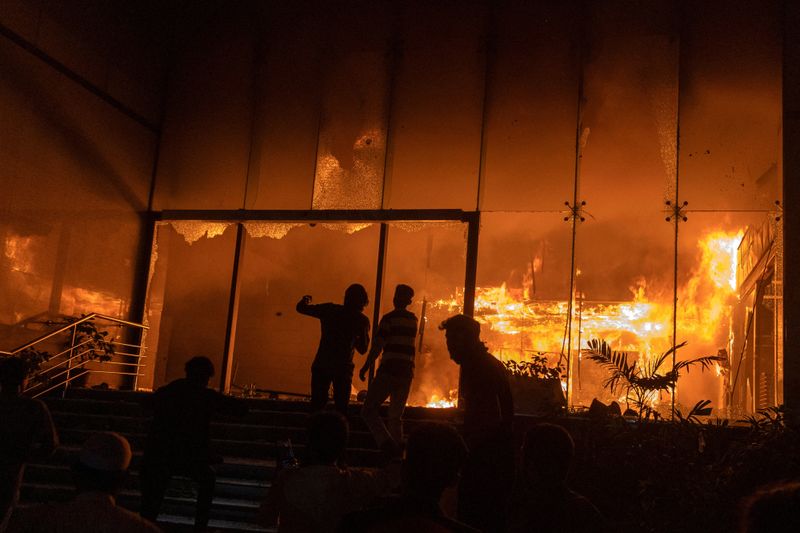
While no major incidents were reported during the day, Thursday night saw violent mobs vandalize the already demolished structure at 32 Dhanmondi — the former residence of Bangladesh’s founding father Sheikh Mujibur Rahman — and attack the offices of leading media organizations in the capital. The offices of Prothom Alo and The Daily Star were torched in what is being described as one of the most serious assaults on the media in recent years. Journalists were trapped inside the buildings and later rescued by emergency services as fires raged and equipment was destroyed.
Anti-India Sentiment and Security Concerns
In the port city of Chittagong, protesters attempted to storm the Assistant High Commission of India, raising anti-India slogans, prompting heightened security measures. Police and paramilitary forces have been deployed across the country to contain the violence ahead of national elections scheduled for February. The interim government, led by Nobel laureate Muhammad Yunus, condemned the violence and declared a state day of mourning, pledging a transparent investigation into Hadi’s killing and warning against attempts to derail Bangladesh’s democratic transition.
“The government urges all citizens of Bangladesh to resist all forms of mob violence committed by a few fringe elements. We strongly and unequivocally condemn all acts of violence, intimidation, arson, and destruction of property,” Yunus, who serves as the chief adviser to the interim government, said.
Media Under Siege
Addressing attacks on the media, Yunus expressed solidarity with journalists, saying assaults on news organizations were an assault on democracy itself. “Attacks on journalists are attacks on truth. We promise full justice,” he said, assuring that those responsible would be held accountable.
Regional Implications and Future Outlook
The renewed violence comes amid heightened regional sensitivities, with Indian agencies closely monitoring developments in Bangladesh as instability once again spills onto the streets, raising concerns over security, diplomatic missions, and the broader political trajectory of India’s eastern neighbor. Historically, Bangladesh has experienced periods of political unrest, often impacting its relations with neighboring countries. The current situation is reminiscent of past crises that have tested the resilience of its democratic institutions.
Experts suggest that the violence could have far-reaching implications for regional stability. Dr. Anika Rahman, a political analyst based in Dhaka, noted, “The death of a prominent figure like Hadi can act as a catalyst for further unrest, especially in a politically charged environment. The international community must keep a close eye on the developments.”
As Bangladesh prepares for its upcoming elections, the interim government’s handling of the situation will be crucial in determining the country’s political future. The government’s commitment to a transparent investigation and maintaining law and order will be pivotal in restoring public confidence and ensuring a peaceful transition.
The situation remains fluid, and the coming days will be critical in shaping the narrative of Bangladesh’s political landscape. The international community, particularly neighboring India, will be watching closely as events unfold, hoping for a resolution that ensures stability and peace in the region.