




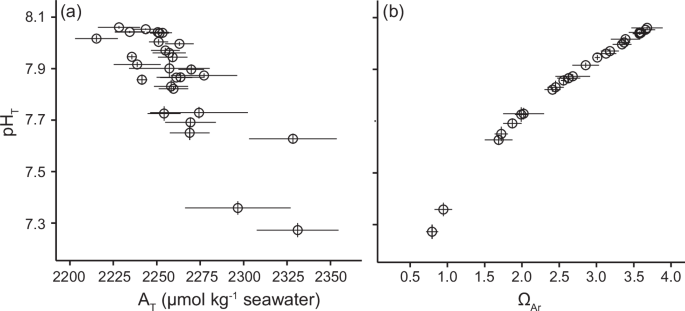
Human activities have driven atmospheric carbon dioxide (CO2) concentrations to unprecedented levels, a trend that has not been seen for at least 66 million years. Approximately one quarter of this CO2 is absorbed by the world’s oceans, leading to ocean acidification—a phenomenon that is lowering oceanic pH to levels not experienced in over 800,000 years. This acidification is causing significant chemical changes, including a decline in the saturation state of aragonite, a critical compound for coral reef health.
Ocean acidification poses a severe threat to coral reefs, which are built by organisms with calcium carbonate skeletons. The lowered pH and aragonite saturation state (ΩAr) can inhibit the calcification process and accelerate the dissolution of calcium carbonate, affecting the structural integrity of coral reefs. A recent study conducted around volcanic CO2 seeps provides new insights into how these changes are reshaping coral reef communities.
Research at Volcanic CO2 Seeps: A Natural Laboratory
The study observed coral reef benthic communities at 37 stations with varying levels of long-term ocean acidification conditions. These stations were located around volcanic CO2 seeps, where pure CO2 bubbles emerge from the sea floor. This unique setting allowed researchers to examine the impact of different CO2 levels on coral reefs under natural conditions, unlike the controlled environments of laboratory experiments.
Researchers found that changes in the reef communities were strongly correlated with the aragonite saturation state. Stations with higher ΩAr values supported a greater diversity of calcareous taxa, including hard corals and crustose coralline algae. In contrast, stations with lower ΩAr values showed an increase in non-calcareous taxa, such as macroalgae and sponges.
Impacts on Coral Diversity and Algal Communities
The study revealed that coral diversity and juvenile densities declined along the ΩAr gradient. Hard coral diversity, along with juvenile densities, significantly decreased as ΩAr values dropped by as little as 0.3 units. This reduction in diversity poses a threat to the structural complexity and ecological function of coral reefs.
Algal communities also shifted from calcareous to non-calcareous taxa along the ΩAr gradient. Calcareous algae, which are crucial for reef building, experienced a significant decline, while non-calcareous macroalgae increased in cover. This shift could further hinder coral recruitment and exacerbate the decline in coral diversity.
Wider Implications and Future Projections
The findings from this study highlight the immediate and progressive changes occurring in coral reef communities due to ocean acidification. These changes are not just a future concern; they are happening now and are likely to intensify as atmospheric CO2 levels continue to rise.
According to the study, the magnitude of change in coral reef communities by 2100 will depend heavily on CO2 emissions. Under the most optimistic scenario, where emissions are cut to net zero by 2050, coral reefs may not experience drastic changes. However, under more pessimistic scenarios, significant declines in coral diversity and increases in non-calcareous macroalgae are expected.
“By 2100, under high CO2 emission scenarios, we could see a 40% decline in hard coral diversity and a 70% reduction in crustose coralline algae cover,” the study warns.
Challenges and the Need for Action
While volcanic CO2 seep sites provide valuable insights, they are not perfect representations of future coral reefs. These sites lack the co-occurring elevated temperature stress expected under climate change, and their variability poses challenges for extrapolating results globally. Nonetheless, they offer a glimpse into the potential future of coral reefs under continued ocean acidification.
Experts emphasize the urgent need for reductions in atmospheric CO2 levels to prevent further degradation of coral reefs. These ecosystems are already under pressure from marine heatwaves and other climate change-related disturbances, making immediate action crucial to preserving their biodiversity and ecological functions.
Conclusion: A Call to Preserve Coral Reefs
The study conducted at the volcanic CO2 seep at Upa-Upasina, Papua New Guinea, underscores the drastic impact of ocean acidification on coral reef communities. As CO2 levels continue to rise, the resilience and recovery of these vital ecosystems will be increasingly compromised. The findings serve as a stark reminder of the need for urgent action to mitigate CO2 emissions and protect the world’s coral reefs for future generations.