
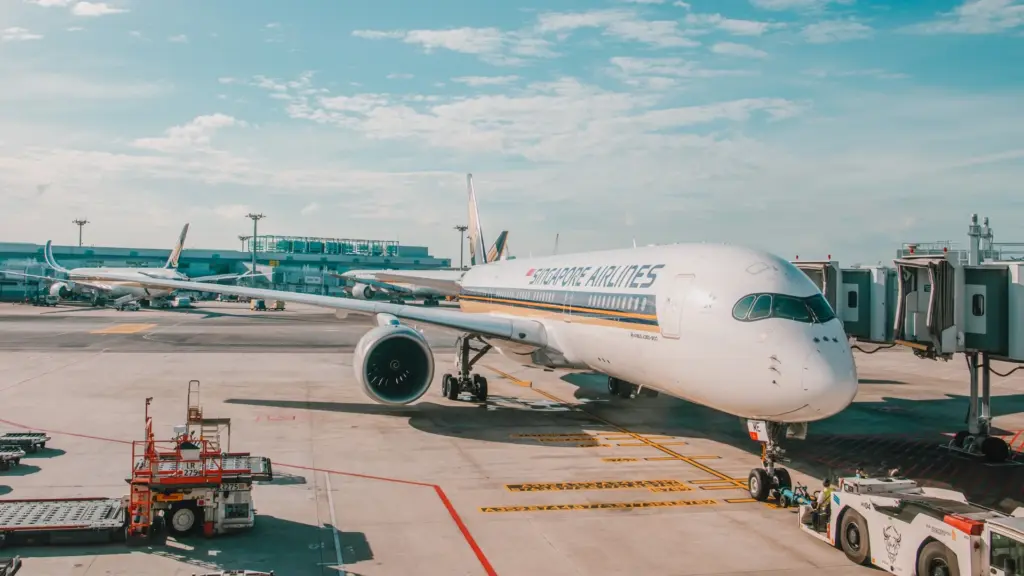
SINGAPORE—A passenger faced a harrowing travel ordeal when a premium business class ticket issued by Singapore Airlines (SQ) fell apart due to a misconnection. The disruption began with a delay on the first leg operated by Aer Lingus (EI) from Dublin (DUB) to Paris (CDG), leading to a chaotic rerouting, a day-late arrival in Auckland (AKL), and ongoing disputes over compensation and frequent flyer miles.
The traveler, identified as Jamie, had booked a cash business class itinerary through Singapore Airlines, planning to fly from Dublin to Auckland. The original route included Aer Lingus from Dublin to Paris, Singapore Airlines from Paris to Singapore, and an SQ codeshare operated by Air New Zealand (NZ) from Singapore to Auckland. Connections were tight, with only 1 hour 45 minutes in Paris and 1 hour 10 minutes in Singapore.
Rerouting Chaos and Emotional Stress
When a two-hour delay on the Aer Lingus flight occurred, Dublin airport staff denied Jamie check-in and initiated a rerouting process. Despite Jamie’s request to contact Singapore Airlines for assistance or to be rerouted via mainland Europe or the UK, these suggestions were dismissed. Initially, he was provided an overnight stay in Dublin and rerouted the following day via Qatar Airways (QR). However, upon returning to the airport, Jamie discovered he had no reservation.
After further discussions, a new routing was issued: Aer Lingus to London Heathrow (LHR), British Airways (BA) to Dubai (DXB), and Emirates (EK) to Auckland. Despite receiving confirmation, boarding passes were only issued for the first two segments, with instructions to obtain the final pass at Heathrow.
“How could you expect me to print a boarding pass if you’ve made two separate bookings?” a British Airways lounge agent remarked, highlighting the complications of the rerouting.
Jamie, typically reserved despite his extensive travel experience, found himself overwhelmed with stress, breaking down in tears on the BA flight. Crew members intervened, explaining the issue likely stemmed from the lack of interline agreements between British Airways and Emirates.
Industry Standards and Accountability
According to industry standards, the airline responsible for the misconnection should ensure rerouting to the final destination. In this case, Aer Lingus was obligated to manage the rerouting. However, the chosen path through British Airways and Emirates, which lack interline agreements, introduced unnecessary complications.
Singapore Airlines, as the issuing carrier, was not legally required to reroute Jamie but could have offered better support. The handling of the situation fell short of expectations for a premium ticket. Meanwhile, Aer Lingus qualifies for EU261 compensation claims due to the EU departure, though enforcement remains challenging.
Expert Opinions and Passenger Advice
Travel experts suggest that passengers can minimize risks by avoiding tight connections across loosely partnered airlines on long-haul routes. While airlines sell these tickets, passengers are not at fault for booking them. However, disruptions expose coordination weaknesses.
In such situations, passengers are advised to escalate requests at the airport, insist on retaining original routings, and contact the issuing carrier directly, despite advice to the contrary. Verifying new bookings online immediately and rejecting reroutings involving non-interlining carriers with short connections are crucial steps. Opting for longer layovers and fewer airline changes can enhance reliability.
Implications and Future Considerations
This incident underscores the fragility of interline agreements, which facilitate complex bookings under normal operations but collapse under irregular conditions. More carriers and shorter connections significantly increase the risk of failure.
This case illustrates a worst-case scenario for multi-airline tickets, where airlines struggle to accept accountability or provide seamless solutions, leaving passengers to endure significant stress despite paying premium fares.
As the travel industry continues to evolve, airlines must improve coordination and accountability to prevent such scenarios. Passengers, on the other hand, should remain vigilant and proactive in managing their travel plans.
Stay tuned with us for further updates, and follow us on social media for the latest developments in the travel industry.