



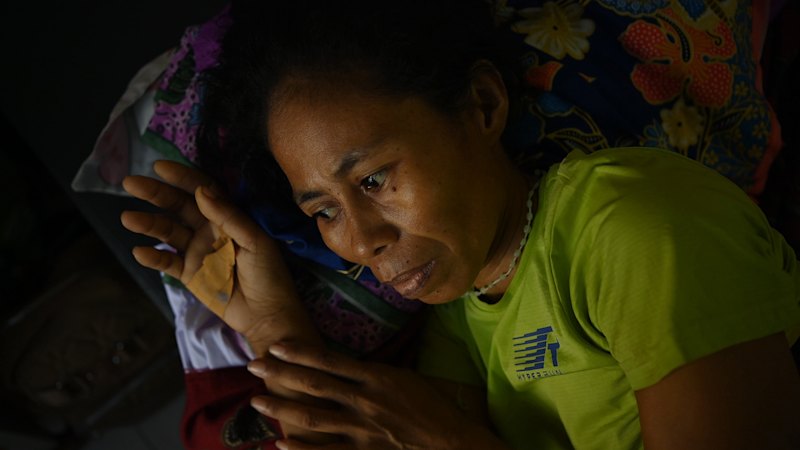
In the small clinic of Vera Cruz, roughly 13 percent of women who undergo screening test positive for cancer-causing HPV types. Olinda, one of these women, maintains a calm demeanor, even laughing as Dr. Maria Jose explains her “intermediate risk” HPV type and illustrates a diagram of a cervix with precancerous lesions.
On the consulting room wall, a calendar reads “Deb’s Back!” under today’s date. Deborah Bateson, Professor of Practice and EPICC’s deputy lead at the CEC, is indeed in Dili. Her mission, as she puts it, is to “do myself out of a job” by equipping countries with the necessary training and resources to independently continue this vital work.
The initiative aims to prove that these interventions are sustainable, enhance national productivity, and crucially, save women’s lives. “Everyone you meet in Timor knows someone with cervical cancer or someone who has died of this terrible disease, often horrible deaths, stigmatized and isolated,” Bateson explains. “Screening women is absolutely critical to successful elimination.”
Mobilizing Community Support
Ana, a 45-year-old woman, waits in the clinic hallway for her screening. “In my mum’s time, cancer was [believed to be] a curse,” she recalls. “People with cancer were separated and isolated. It was very sad.” Ana hopes to persuade her female colleagues to participate in screenings, despite their shyness, understanding the importance of early detection.
Since March, over 1,000 women aged 30 to 49 have been screened, with more than 110 receiving treatment. “There was nothing like this here before,” says Dr. Adriano Pereira, known as Dr. Andi, EPICC’s in-country project coordinator. The support of local religious leaders has been instrumental, with bishops and priests encouraging women to attend screenings during Sunday services.
Reaching Marginalized Women
In a bid to reach marginalized women, EPICC staff recently organized a gender equality, disability, and social inclusion workshop. This initiative included members of Timor-Leste’s LGBTQ communities, sex workers, and disability and gender equity advocates, aiming to develop strategies for broader outreach.
The immediate goal is to screen 5,000 of the approximately 161,000 eligible women in Timor-Leste. Following EPICC’s assistance in procuring tests and equipment, developing screening algorithms, and upskilling healthcare workers, the Ministry of Health plans to expand the program.
“We are not going to leave any woman behind,” says Dr. Andi, emphasizing the commitment to comprehensive healthcare access.
Building a Sustainable Healthcare System
The challenges in Timor-Leste’s healthcare system are significant, with limited treatment options beyond surgery for early-stage cases. Dr. Flávio Brandão Mendes de Araújo, Vice Minister of Health for Hospital Operationalisation, underscores the need for a balance between identifying cases and having the capacity to treat them.
EPICC’s future support will focus on expanding treatment options, but first, hospitals must be equipped for timely diagnosis and staging. The laboratory at the National Hospital, for instance, is being upgraded to improve cancer diagnosis capabilities.
EPICC has also been instrumental in training local health professionals, with several securing Australia Awards Fellowships to enhance their skills. This initiative is part of a broader effort to build a multidisciplinary approach to cervical cancer in Timor-Leste.
The Path Forward
On the sidelines of the UN General Assembly, EPICC and the Women’s Health and Economic Empowerment Network launched a $50 million technical assistance facility. This initiative aims to coordinate sustainable financing for non-communicable diseases and women’s cancers, with a focus on eliminating cervical cancer in Indonesia.
Foreign Minister Penny Wong highlights the broader implications of this work, stating that all women deserve to live free from preventable diseases. “Building a healthier, more stable, and more prosperous Indo-Pacific is in Australia’s national interest,” she asserts.
Minderoo Foundation’s chief executive John Hartman describes EPICC as transformative, with profound implications for healthcare systems. “By investing in scalable, locally led solutions, we are helping to build resilient health systems and drive lasting change,” he says.
Dignity in Healthcare
Improving palliative care is a crucial component of EPICC’s work. “Screening is going to find more cervical cancers; and even if they are untreatable, women should be able to die with dignity,” Bateson emphasizes. Access to proper pain management is essential, yet many facilities lack basic opioids like morphine and fentanyl.
Julia Da Costa, part of EPICC’s team, is working on developing policies to improve access to these essential medications. “There is a lot of resilience in Timor,” she notes. “But no one should suffer.”
As EPICC continues its work, the hope is to create a sustainable and enduring healthcare system that can address the needs of all women in Timor-Leste, ensuring that no woman is left behind in the fight against cervical cancer.