



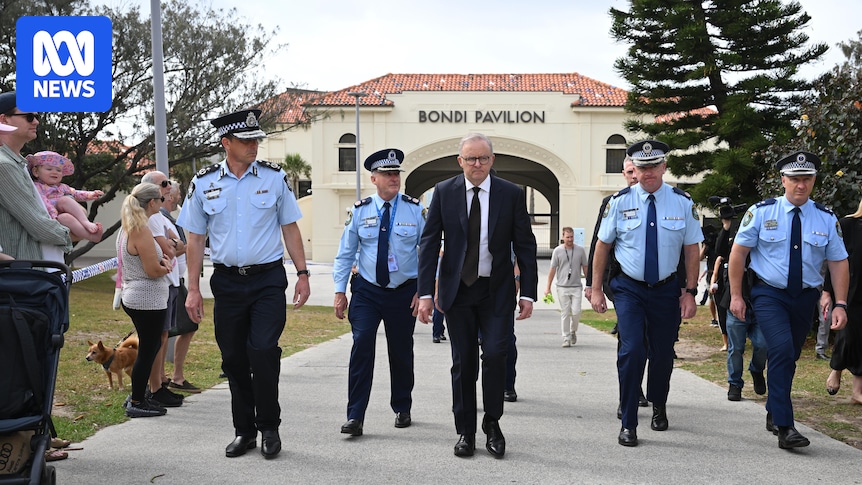
In an extraordinary turn of events, Australia’s Jewish community has effectively sidelined Prime Minister Anthony Albanese from his expected role as the nation’s chief public mourner during a week marked by national tragedy. Typically, a prime minister would attend the funerals of victims, particularly those of a rabbi and a 10-year-old child. However, Albanese was notably absent, aware that his presence might not be welcomed and could even provoke hostility. In stark contrast, New South Wales Premier Chris Minns received a warm reception at both services.
Albanese opted for a more private approach, visiting the home of a rabbi where he engaged in frank discussions with direct relatives of the deceased and others affected by the tragedy. He also reached out to several individuals through extended phone conversations. Despite these efforts, the government’s initial response to the massacre was met with criticism, as the prime minister emphasized the need for tighter gun controls, convening a national cabinet to initiate work on this front. However, critics argued that this focus was a diversion from the core issue: the government’s inadequate response to the rising tide of antisemitism in Australia over the past two years.
Government’s Response and Legislative Actions
The cabinet’s national security committee expanded its response, and on Thursday, Albanese introduced a package of measures aimed at strengthening hate laws and enhancing powers to deny visas. The government is also exploring ways to combat online hate and has established a taskforce led by respected business figure David Gonski to address the issue within the education sector. Gonski previously conducted a seminal inquiry into schools for the Gillard government.
Unlike New South Wales, there will be no pre-Christmas recall of the federal parliament. Albanese explained that the new measures are complex and time-consuming to draft. More importantly, the government is wary of providing the opposition with another platform to criticize its actions. Nonetheless, the absence of a parliamentary session at this juncture is seen as a missed opportunity for a formal expression of national condolence and for Albanese to outline his plans in a more structured setting.
Political Reactions and Criticism
Opposition Leader Sussan Ley has been actively engaging with the Jewish community, attending funerals and spending significant time in Bondi. The Coalition has politicized the tragedy, a move that, while unfortunate, is seen as justified by some. The opposition, with its stronger connections to the Jewish community, has long advocated for more robust action against antisemitism. The government’s recent measures, albeit under duress, acknowledge this point.
In a rare concession, Albanese admitted, “I, of course, acknowledge that more could have been done, and I accept my responsibility for the part in that as prime minister of Australia.” While it is unfair to hold Albanese personally accountable for the events in Bondi, he is criticized for his inadequate response to the antisemitism crisis, seemingly underestimating its severity.
Voices from the Opposition
Former Treasurer Josh Frydenberg emerged as a powerful voice from the opposition, delivering a scathing critique of Albanese and calling for action in a speech at Bondi. Frydenberg expressed his offense at the political framing of his personal case against the prime minister during an ABC interview. His remarks have sparked speculation about his potential role in the Liberal Party’s future, particularly post-2028 election.
The government has dismissed Frydenberg’s call for a royal commission, arguing that it would delay action. However, some believe that a judicial inquiry into antisemitism could offer valuable insights into how this issue became so deeply rooted in Australian society.
Long-term Implications and Future Outlook
The Bondi tragedy serves as a stark reminder of how quickly the political landscape can shift. Just a week ago, the focus was on the overuse of parliamentarians’ travel allowances, with expectations of imminent announcements on stricter rules. Albanese spent the preceding weekend discussing these changes, but the unfolding events have overshadowed these plans. Even the budget update has been relegated to a footnote in the week’s developments.
The opposition was preparing to launch its immigration policy, which will now likely be influenced by the Bondi attack, emphasizing the importance of ensuring that immigrants share core Australian values. The incident will undoubtedly impact the ongoing migration debate, a contentious area already fraught with challenges.
Kos Samaras of RedBridge political consultancy notes, “It’s still unclear what the political wash-up will be. We’re in uncharted territory. But having looked closely at how communities respond to trauma on this scale, one thing is clear: politicians from every side will need to think very carefully about how they conduct themselves. If this moment is weaponized for partisan advantage, it will almost certainly trigger a backlash, much like the one we witnessed during the pandemic.”
“Right now, we can say something else with confidence: Australians will give the widest moral licence to members of the Jewish community, across every background and political persuasion, to express anger, fear and frustration. Australians have rightly a huge amount of sympathy for them and the overall safety of the community.”
While some claim the massacre will change Australia forever, it is more likely to serve as an indelible marker of how modern Australia, as a complex multicultural society, faces constant tests to its harmony and security from global tensions.