




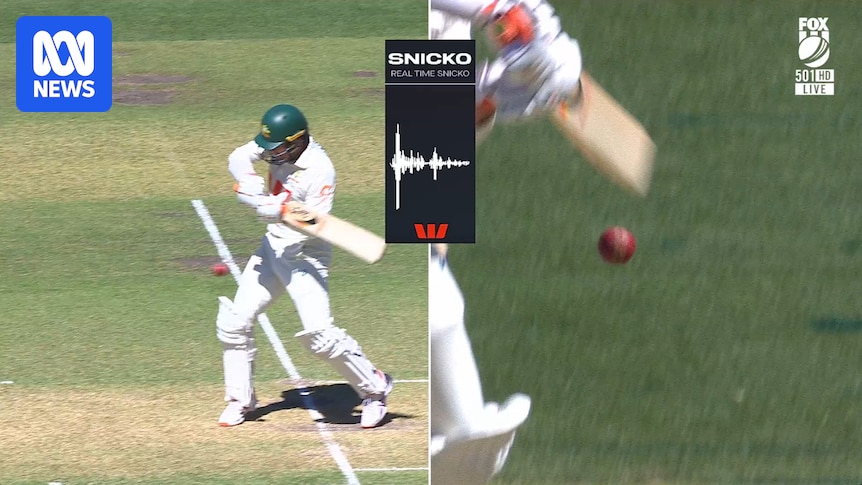
England’s cricket team has expressed frustration after a Snicko operator error led to a controversial decision that allowed Australia’s Alex Carey to continue his innings during the third Ashes Test in Adelaide. The incident occurred on the first day of the match, adding tension to an already fiercely contested series.
The contentious moment unfolded when England believed they had dismissed Carey on 72 runs. The batsman appeared to edge a delivery from Josh Tongue, which was caught by Jamie Smith. However, the on-field umpire Ahsan Raza ruled Carey not out, a decision upheld by DRS umpire Chris Gaffaney despite England’s review request.
At the time, Australia was at 6-245 and eventually reached 8-326 by stumps, strengthening their position in the series as they aim for a 3-0 lead. The Snicko technology, which is used to detect edges, showed a significant spike, but not at the moment the ball passed the bat. This discrepancy was attributed to a calibration error.
Technical Error and Admission
BBG Sports, the operator of the Snicko system for Fox Sports, acknowledged the mistake. In a statement to the BBC, the company explained that the incorrect stump microphone was used for audio processing, leading to the error.
“Given that Alex Carey admitted he had hit the ball in question, the only conclusion that can be drawn from this is that the Snicko operator at the time must have selected the incorrect stump mic for audio processing,” BBG Sports stated.
Carey himself admitted in a press conference that he thought he had edged the ball, saying, “I thought there was a feather or some sort of noise when it passed the bat.” He added that he would have reviewed the decision had he been given out, albeit without confidence.
Expert Opinions and Technological Concerns
The incident has sparked debate over the reliability of cricket’s technological aids. Former umpire Simon Taufel commented on the situation, suggesting that the technology’s calibration was off.
“For the third umpire to overturn, they need to see a clear deflection off the bat or we have to see a spike next to the bat or up to one frame past the bat,” Taufel explained. “The confusing element here was that the spike occurred at least a couple of frames before the bat, which was just amazing.”
England’s bowling consultant, David Saker, echoed these concerns, stating that the calibration of Snicko had been inconsistent throughout the series. He noted that while the error cost England 34 runs, their own fielding mistakes had a greater impact, such as Harry Brook’s dropped catch of Usman Khawaja, which cost 77 runs.
Implications for the Series
England plans to raise the issue with match referee Jeff Crowe, highlighting the importance of accurate technology in high-stakes matches. Saker mentioned that despite previous issues with Snicko, England had not formally complained, but this incident might prompt further action.
The controversy underscores the ongoing challenges of integrating technology into sports officiating. As cricket continues to rely on technological aids, ensuring their accuracy and reliability remains crucial to maintaining the integrity of the game.
As the Ashes series progresses, both teams will be keenly aware of the role technology plays in decision-making, and the incident may prompt a review of current systems to prevent similar errors in the future.