




The Pentagon has completed its review of the AUKUS pact, identifying key areas to bolster the agreement’s foundation. However, the recommendations from the review remain undisclosed and may never be made public. Congressman Joe Courtney, who has reviewed the document, stated that it “fully endorses” the trilateral agreement between Australia, the United Kingdom, and the United States, while also emphasizing the “critical deadlines” that must be met by all three nations.
This development follows the confirmation by Australia’s Defence Minister Richard Marles that he had received the “fully supportive” review and is currently “working through” its findings. Pentagon spokesman Sean Parnell confirmed the review’s completion in a statement to the media.
Endorsement Amidst Political Changes
Joe Courtney, a prominent advocate of AUKUS in Congress, noted that the review concluded the pact aligns with U.S. national security interests. He highlighted the resilience of the 2021 AUKUS agreement, which has endured through three government changes across the participating countries, maintaining its strength and purpose.
“The statutory authority enacted by Congress in 2023 will remain intact, including the sale of three Virginia-class submarines starting in 2032,” said Mr. Courtney, a member of the House Armed Services Committee that received the review.
The report underscores the importance of adhering to critical deadlines, stressing that maintaining a disciplined schedule is crucial for the pact’s success.
Ambitious Targets and Challenges
The AUKUS agreement’s ambitious plan to equip Australia with nuclear-powered submarines faces significant challenges, particularly concerning the timeline. The initial phase involves Australia purchasing between three and five nuclear-powered submarines from the United States, starting in the early 2030s. At least two of these would be second-hand Virginia-class submarines, contingent on U.S. national security needs.
Currently, the U.S. is struggling to meet its submarine-building targets. The Navy requires a production rate of 2.33 Virginia-class submarines per year to fulfill the deal, but workforce and supply chain issues have reduced output to approximately 1.2 submarines annually, according to recent data.
In addition to purchasing submarines, Australia plans to construct its own nuclear-powered vessels, integrating technology still under development by the three nations. However, the first of these submarines is not expected to be completed until at least the early 2040s.
“The AUKUS report reaffirms that Congress and our Australian allies must continue that effort to achieve the goals of AUKUS,” Mr. Courtney stated. “Expanding the submarine workforce, supply chain, and facilities to even greater capacity is the clear pathway to meet the demands of the U.S. submarine fleet requirements and those of our ally Australia.”
Financial and Strategic Pressures
While the review’s endorsement of the pact was anticipated, especially following assurances from former President Donald Trump in October, it provides relief to many within the Australian government and military. Concerns had arisen that the Trump administration might leverage the pact to pressure Australia into significantly increasing its defense spending, a request previously made by U.S. Defense Secretary Pete Hegseth.
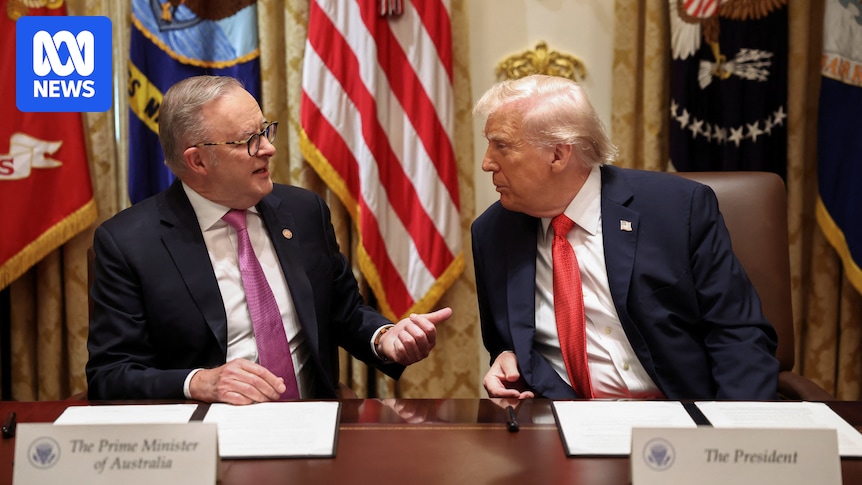
Speculation also surrounded potential U.S. demands for guarantees on the deployment of AUKUS submarines should America become involved in a military conflict. During an October meeting at the White House with Prime Minister Anthony Albanese, Mr. Trump confirmed Australia’s receipt of nuclear-powered submarines as per the agreement. However, Navy Secretary John Phelan, present at the meeting, mentioned efforts to “clarify some ambiguity” in the prior agreement.
The ABC has sought further details from the Pentagon and the White House but has yet to receive a formal response. It remains uncertain whether the review’s findings will be publicly disclosed.
Looking Ahead
The AUKUS pact represents a significant strategic alliance aimed at enhancing security and defense capabilities in the Indo-Pacific region. As the three nations navigate the complexities of this ambitious agreement, the focus will remain on meeting critical deadlines and overcoming production challenges. The successful implementation of the pact will require continued collaboration, investment, and strategic planning to ensure that the goals of AUKUS are realized in the coming decades.