

In a daring escape under the cover of night, Maria Corina Machado, a prominent Venezuelan opposition leader, embarked on a clandestine journey to flee her home country. Disguised in a wig to conceal her identity, Machado navigated through ten military checkpoints over a grueling ten-hour period before reaching the Venezuelan coast. There, she boarded a small wooden fishing skiff to cross the Caribbean Sea towards Curaçao, as reported by multiple U.S. outlets. Overhead, U.S. Navy F-18 fighter jets circled, providing a protective watch.
The operation, dubbed “Golden Dynamite,” was orchestrated by Bryan Stern, a U.S. special forces veteran and CEO of Grey Bull Rescue, a private U.S. rescues and extractions company. Stern met Machado at sea, assisting in the next leg of her journey, which ultimately led to her accepting the Nobel Peace Prize in Oslo, Norway. “No-one’s blood pressure was low, throughout any phase of this operation, including mine,” Stern told CBS News, highlighting the high-stakes nature of the mission.
The High-Stakes Operation
The entire operation took 16 hours and involved a complex network of individuals coordinating translations, intelligence, logistics, and unofficial collaboration with the U.S. military. “This was our most high threat and high stakes mission we have ever done,” Grey Bull Rescue stated in a LinkedIn post. The maritime domain’s inherent dangers, coupled with Machado’s high-profile status and the counterintelligence threats, made the mission particularly perilous.
Upon reaching Curaçao, Machado boarded a private jet that flew her first to the United States and then to Oslo, where she was photographed inside the cabin. Her arrival in the Norwegian capital marked the first time she had been seen publicly in nearly a year, as she had been living in hiding due to threats from the Maduro regime in Venezuela.
Background: From Political Activist to “Iron Lady”
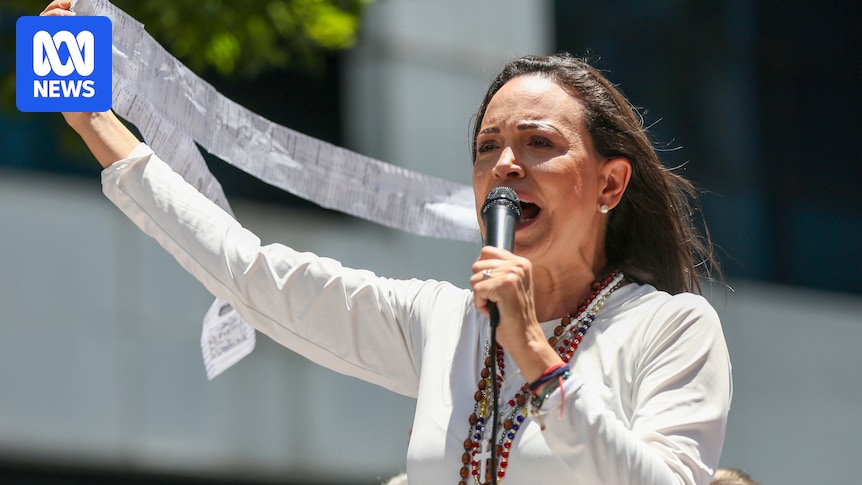
Maria Corina Machado’s journey to becoming a Nobel Peace Prize laureate began long before her dramatic escape. More than a year prior to Operation Golden Dynamite, Machado stood atop a truck in central Caracas, surrounded by supporters, demanding the overturn of the 2024 presidential election results. The Venezuelan opposition claimed that President Nicolás Maduro Moros had lost in a landslide but illegitimately held onto power.
Machado, who had been banned from participating in the election as a candidate, disappeared shortly after the protests, fearing for her life and freedom under the Maduro regime. Her political party, Vente Venezuela, reported that she had been forced into hiding. Despite the risks, Machado continued to communicate with her supporters through political messages and live news appearances, always careful to conceal her location.
Machado’s Political Ascent
Born in 1967 to a prominent family in Caracas, Machado’s political journey began in the early 2000s. Inspired by the leadership of Hugo Chavez and a visit to a center for orphans and the homeless, she founded Sumate, an organization dedicated to promoting free and fair elections. Her outspoken opposition to Chavez’s socialist regime earned her the label “Enemy Number One” in national newspapers.
In 2010, Machado secured a seat in the Venezuelan National Assembly and became a vocal critic of Maduro following his rise to power in 2013. Her political career has been marked by her relentless advocacy for democracy and human rights in Venezuela.
International Support and Recognition
Machado’s efforts have garnered significant international support. In April, Time magazine named her one of the 100 most influential people of 2025, with U.S. Secretary of State Marco Rubio praising her unwavering commitment to a free and democratic Venezuela. This endorsement came amid increasing pressure from the Trump administration on the Maduro regime, which the U.S. accuses of drug trafficking and other crimes.
Despite the challenges, Machado remains steadfast in her mission. In a “Freedom Manifesto” penned last month, she outlined her vision for a new Venezuela, emphasizing the need for a government that safeguards the natural rights of its citizens. Her daughter, Ana Corina Sosa, echoed these sentiments while accepting the Nobel Peace Prize on her behalf in Oslo.
The Road Ahead
Maria Corina Machado’s arrival in Oslo marked a significant milestone in her political journey. As she emerged onto the balcony of Oslo’s Grand Hotel, greeted by cheers and the Venezuelan national anthem, she expressed her determination to return to Venezuela. “I came to receive the prize on behalf of the Venezuelan people and I will take it back to Venezuela at the correct moment,” she told reporters.
While the future remains uncertain, Machado’s escape and subsequent recognition underscore her resilience and commitment to her cause. As she continues to advocate for change, her story serves as a powerful reminder of the enduring fight for freedom and democracy in Venezuela.