



Late last month, an Indian citizen named Prema Thongdok faced an unexpected ordeal during her layover in Shanghai while traveling from London to Japan. Chinese officials detained her for 18 hours, citing her passport as invalid because it listed her birthplace as Arunachal Pradesh, an Indian state that China claims as its own territory. Thongdok reported that officials insisted she was not Indian but Chinese, preventing her from continuing her journey to Japan.
This incident, while not widely covered in mainstream media, highlights the ongoing territorial disputes between India and China over Arunachal Pradesh. These disputes have persisted despite recent efforts to thaw relations between the two Asian giants, who have a history of territorial disagreements.
Historical Context of the Dispute
China refers to Arunachal Pradesh as Zangnan, or South Tibet, rejecting the McMahon Line drawn by the British in 1914 as the northern border of the Indian state. This demarcation was agreed upon by Britain and an independent Tibet, which China considers illegitimate. In recent years, Beijing has been renaming places in Arunachal Pradesh and reportedly painting Chinese characters on stones in remote parts to assert its claim. Additionally, China has challenged regional countries whose textbooks depict the state as part of India.
In 2023, India withdrew from the World University Games in Chengdu, Sichuan province, after China issued stapled visas instead of regular ones to three athletes from Arunachal Pradesh. The strategic significance of the state, coupled with its geography, necessitates that even Indian citizens require a special permit to visit.
Infrastructure and Military Buildup
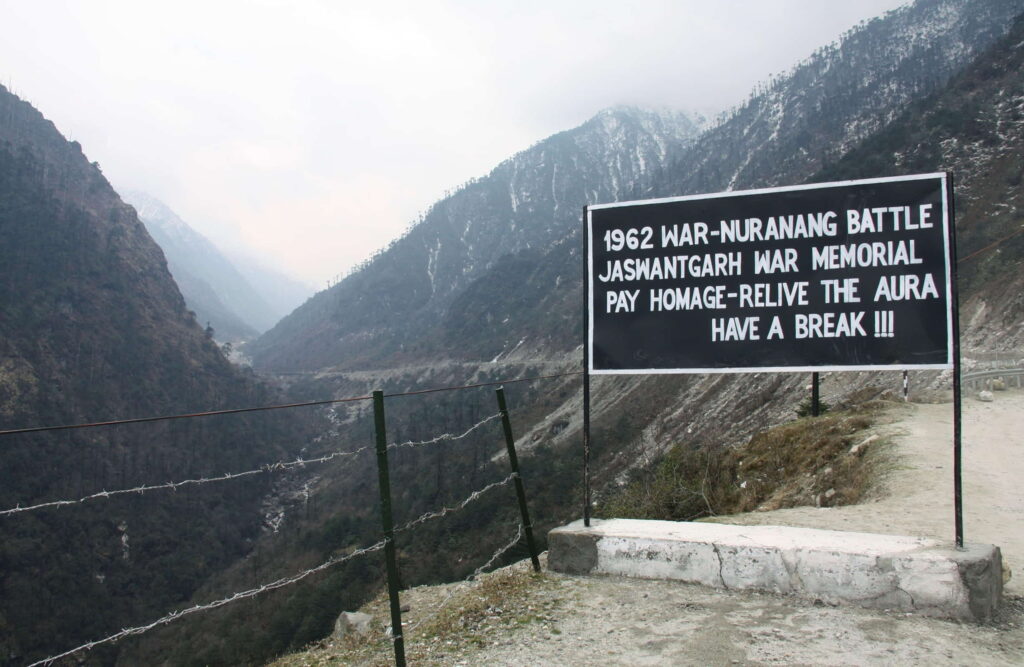
Both India and China have been ramping up infrastructure developments in the disputed areas, with each side accusing the other of overstepping the border. The Line of Actual Control (LAC), a de facto demarcation stretching 3,488 kilometers, is central to the India-China border conflicts. The Himalayan region’s ill-defined terrain, including unclear mountainous boundaries and melting snowcaps, complicates precise delineation. Colonial-era maps and changes following the 1962 war further exacerbate these challenges.
Since Chinese President Xi Jinping assumed power in 2012, several key flashpoints have occurred. These include the 2017 standoff at Doklam in Bhutan, the 2020 skirmish in Galwan Valley, a 2021 clash in Sikkim, and a 2022 quarrel in Arunachal Pradesh, which US intelligence reportedly tipped off India about.
The Significance of Tawang
Within Arunachal Pradesh, Tawang holds particular importance for China. It was the only area China initially claimed before extending its claim to the entire northeastern Indian state. Tawang houses one of Tibetan Buddhism’s most significant monasteries and is the birthplace of the sixth Dalai Lama. The region’s large Tibetan community is crucial for the Chinese government, which fears Tibetan uprisings and is determined to select its own candidate as the next Dalai Lama’s reincarnation.
In this context, China’s continued insistence on claiming Arunachal Pradesh must be understood. The strategic and cultural significance of the region, coupled with historical grievances and geopolitical ambitions, fuels the ongoing tensions.
Looking Ahead
The detention of Prema Thongdok underscores the complexities and sensitivities surrounding the India-China border disputes. As both nations continue to develop infrastructure and assert their claims, the potential for further incidents remains. Diplomatic efforts to resolve these longstanding issues will be crucial in maintaining regional stability and preventing escalation.
As the world watches, the actions of India and China in the coming months will be pivotal in shaping the future of their bilateral relations and the broader geopolitical landscape in Asia.