



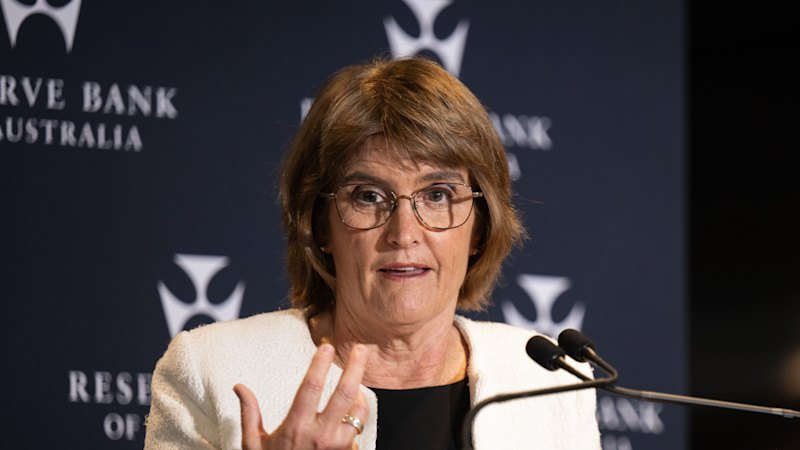
Reserve Bank of Australia (RBA) Governor Michele Bullock has issued a stark warning about the potential for a global economic slowdown over the next five years. In an exclusive interview, Bullock highlighted the unintended consequences of former U.S. President Donald Trump’s policies, which aimed to bolster American economic prowess but may instead lead to increased costs and stunted growth worldwide.
Bullock’s concerns stem from the Trump administration’s aggressive tariff campaigns, which she likens to the economic challenges faced by the United Kingdom following Brexit. “Andrew often talks about, people said when Brexit was coming it was going to be a disaster. Well, it wasn’t [immediately], it was just a long-term disaster,” she remarked, referencing insights from her deputy, Andrew Hauser, a former senior official at the Bank of England.
Global Economic Implications
The RBA is set to release a comprehensive report detailing its response to an independent review that suggested 51 recommendations for the institution. These changes, including the establishment of a separate committee for setting interest rates and the introduction of regular press conferences, mark the most significant reforms since the early 1990s when the bank began targeting a 2-3 percent inflation rate.
This period of transformation coincides with a surge in global inflation not seen since the 1980s, compounded by geopolitical tensions such as Russia’s invasion of Ukraine and ongoing conflicts in Gaza. Bullock emphasized that while the RBA’s primary focus remains on China and the broader Asian region, economic signals from the U.S. suggest challenging times ahead.
“That’s what I think with what’s going on in the world at the moment – nothing’s falling off a cliff. But I think in five years’ time, we’re gonna look back and we’re going to say that was the start of the [decay].”
Unintended Consequences of Economic Policies
Bullock pointed out that the global shift towards economic nationalism, characterized by countries severing ties with international supply chains, is leading to slower growth in world trade and increased tensions. “What the US is basically saying, rather than produce things more efficiently somewhere else and bring them in, we’re going to just produce lots of these things ourselves [but] we’re not as efficient as them,” she explained.
This inward-looking approach is expected to result in slower productivity and economic lethargy. “All I’m saying is that it’s just going dampen things down, and things might be a bit more lethargic,” Bullock added.
Monetary Policy and Consumer Behavior
The Reserve Bank recently held interest rates steady at 3.6 percent, following three cuts through 2025. Financial markets anticipate a rise to 3.85 percent by August. Bullock noted that during previous rate-cutting periods, commercial banks did not fully pass on reductions in the official cash rate, but the recent cuts have been more effective in reaching borrowers.
Despite these measures, consumer spending remains inconsistent, a trend that has surprised the Reserve. While there is an uptick in spending for major events, such as concerts by AC/DC, Oasis, and Lady Gaga, many Australians are opting to save rather than spend.
“I do think it’s also true that people can splurge on big events, but I do think they tend to offset that a little bit by saying, ‘I’m doing that, so I’m not going to do that’,” Bullock observed.
Fiscal Policy and Inflation Control
Critics have pointed to federal and state government spending as a factor in the RBA’s struggle to maintain inflation within its target range. Treasurer Jim Chalmers is expected to announce a budget deficit of approximately $40 billion in the upcoming fiscal update.
Bullock emphasized that while governments must consider inflation in their budgeting, the Reserve Bank’s sole focus is on inflation control. “I don’t think there’s any point in me telling governments what to do with fiscal policy,” she stated, underscoring the independence of monetary policy from governmental fiscal strategies.
Communication and Public Engagement
A key element of the Reserve’s recent reforms is the introduction of regular press conferences, a practice initiated by Bullock’s predecessor, Philip Lowe. While Bullock admits to being less comfortable with media engagements, she views these conferences as an opportunity to connect with ordinary Australians, including her own parents.
Some economists have criticized the nature of the questions posed during these sessions, but Bullock remains unapologetic about her approach. Her focus is on making complex economic concepts accessible to the general public.
“My words are aimed at ordinary Australians, including my parents, Nola and Ivan Droop,” she affirmed.
As the global economy navigates these turbulent times, Bullock’s warnings serve as a reminder of the intricate balance between national policies and their far-reaching impacts on the world stage. The next five years will be crucial in determining whether these policies lead to the slow decay she anticipates or if new strategies can mitigate these challenges.