
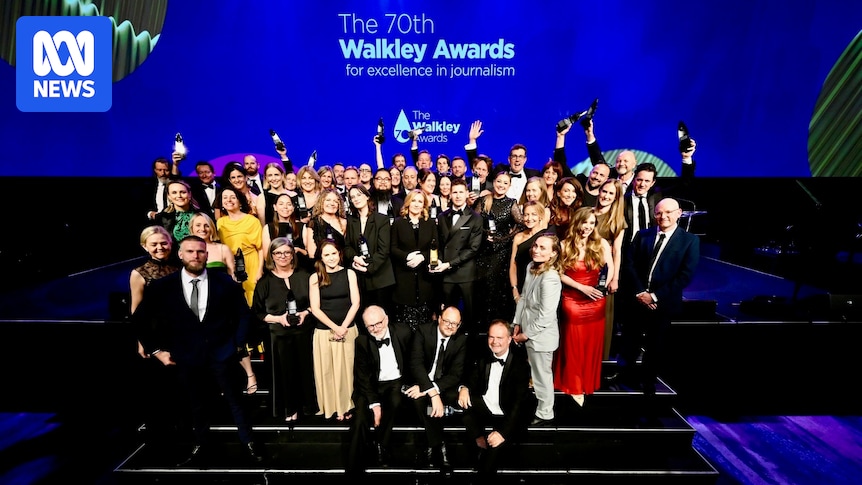
In a significant shake-up at the heart of Australia’s journalism community, three independent directors, including prominent ABC journalist Adele Ferguson, have resigned from the board of the Walkley Foundation. The departures stem from ongoing “governance issues” related to the foundation’s independence from the Media Arts and Entertainment Alliance (MEAA).
The resignations of Walkley Foundation chair Adele Ferguson, Walkley Advisory Board chair Sally Neighbour, and independent director Victoria Laurie were announced after the MEAA rejected a proposal aimed at reforming the foundation’s governance structure. The proposal was intended to “strengthen governance and enshrine its independence,” according to a joint statement from the departing directors.
Background of the Governance Dispute
The Walkley Foundation, which administers Australia’s most prestigious journalism awards, was spun out of the MEAA a decade ago as a company limited by guarantee. Despite this separation, the union has retained significant control over the foundation, a point of contention for the independent directors who have been advocating for change.
Two additional members of the Walkley Public Fund Committee, Pamela Williams and Alan Sunderland, have also resigned in solidarity. The directors’ proposal, rejected on December 4, was seen as a critical step towards reducing MEAA’s influence over the foundation’s board.
“In our view, it would not advance the objectives of strengthening the Walkley Foundation’s independence or improving its governance. Instead, it would have the effect of reinforcing MEAA’s control over the Board,” the directors stated.
Responses and Reactions
The MEAA Directors of the Walkley Foundation expressed disappointment over the resignations. Michael Slezak, media president of the MEAA, noted that there had been “in-principle agreement on the majority of issues” following extensive negotiations. He suggested that the resigning directors misunderstood the MEAA’s final position, which included proposals for term limits and maintaining the current director balance.
“If any matters required clarification, tonight’s Board meeting would have been an opportune time for further discussion,” Slezak added.
The resigning directors, however, have been engaged in discussions about governance and independence for over two years. Their efforts were supported by a February letter co-signed by several high-profile journalists, including Nick McKenzie and Kate McClymont, advocating for more independent directors on the board—a move that was also rejected by the MEAA.
Historical Context and Implications
The Walkley Foundation’s governance issues are not new. Historically, the foundation operated as part of the MEAA for 70 years before its spin-off. The current governance model, which still allows significant union control, has been a point of contention for those advocating for a truly independent board.
The resignation of the three directors highlights ongoing tensions between the foundation’s desire for independence and the MEAA’s control. In March, three MEAA representatives on the board also resigned abruptly, indicating deeper systemic issues within the governance structure.
“As independent directors, we have approached these discussions in a spirit of goodwill and compromise, recognising that it was intended as a first step towards strengthening the Walkley Foundation’s governance,” the former directors wrote.
Looking Forward
The resignations pose significant questions about the future governance of the Walkley Foundation. With key independent voices stepping down, the foundation faces challenges in maintaining its reputation for journalistic excellence while navigating its relationship with the MEAA.
Michael Slezak concluded, “While disappointing, we wish Adele, Sally, and Victoria well for the future, and MEAA will continue working to ensure a thriving Walkley Foundation that stands for excellence in journalism.”
As the Walkley Foundation moves forward, the broader journalism community will be watching closely to see how these governance issues are resolved and what impact they will have on the foundation’s independence and the integrity of its awards.