




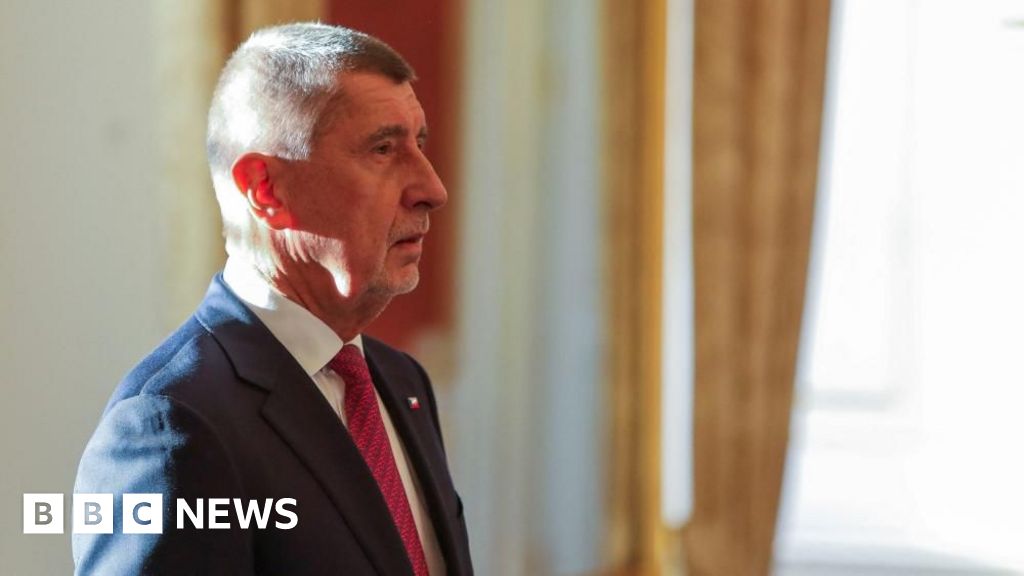
Billionaire Andrej Babis has been appointed as the Czech Republic’s new prime minister, marking a significant political shift in the country. His full cabinet is expected to assume office within days, following a key demand from President Petr Pavel: a public commitment by Babis to relinquish control over his expansive business empire, Agrofert.
After the official ceremony at Prague Castle, Babis declared, “I promise to be a prime minister who defends the interests of all our citizens, at home and abroad. A prime minister who will work to make the Czech Republic the best place to live on the entire planet.” These are ambitious goals, yet Babis, 71, is no stranger to grand visions.
Agrofert’s Deep Roots in Czech Economy
Agrofert, Babis’s conglomerate, is deeply woven into the Czech commercial fabric, with over 200 subsidiaries in food-processing, agriculture, and chemicals. The company’s influence is so pervasive that an app exists to help consumers avoid purchasing its products, such as Kostelecké uzeniny sausages or Penam sliced bread, by displaying a thumbs-down symbol if they belong to Agrofert.
Babis, who previously served as prime minister from 2017 to 2021, has shifted politically to the right. His new cabinet will include members from the far-right SPD and the Eurosceptic “Motorists for Themselves” party. If he follows through on his pledge to divest from Agrofert, he will no longer benefit financially from the conglomerate’s extensive product line, nor will he have any insight into its financial health or influence over its operations.
Divestiture and Legal Complexities
Babis has announced that Agrofert, valued at an estimated $4.3 billion, will be placed in a trust managed by an independent administrator until his death, at which point it will pass to his children. He claims this arrangement exceeds the requirements of Czech law, although the exact nature of the trust remains ambiguous.
“A blind trust is not a solution,” said David Kotora, head of Transparency International’s Czech branch. “There’s no separation. [Babis] obviously knows the managers. He knows Agrofert’s portfolio. From an executive position, even at a European level, he could theoretically intervene in matters that would affect the sector in which Agrofert operates.”
The concept of a “blind trust” is not recognized under Czech legislation, necessitating a complex legal framework to ensure compliance. Critics, including Transparency International, remain skeptical of the effectiveness of such a trust in ensuring true separation of Babis’s political and business interests.
Broader Business Influence
Babis’s business reach extends beyond Agrofert. In Prague’s eastern suburbs, a private health clinic owned by FutureLife a.s., which is majority-owned by Hartenberg Holding—a company controlled by Babis—stands prominently. Hartenberg also operates a network of reproductive clinics, a florist chain named Flamengo, and an underwear retailer, Astratex.
This extensive business network highlights the breadth of Babis’s influence across various sectors of Czech life. As he assumes the role of prime minister for the second time, his impact on the nation’s socio-economic landscape is poised to expand further.
Political and Economic Implications
The appointment of Babis as prime minister comes at a time of significant political and economic challenges for the Czech Republic. His leadership will be closely scrutinized, particularly regarding his ability to balance national interests with his extensive business connections. The effectiveness of his divestiture pledge will be a focal point for both domestic and international observers.
As Babis takes on the premiership, the Czech Republic stands at a crossroads, facing the task of navigating complex economic landscapes while ensuring transparent governance. The coming months will be crucial in determining the success of Babis’s administration and its impact on the country’s future.