

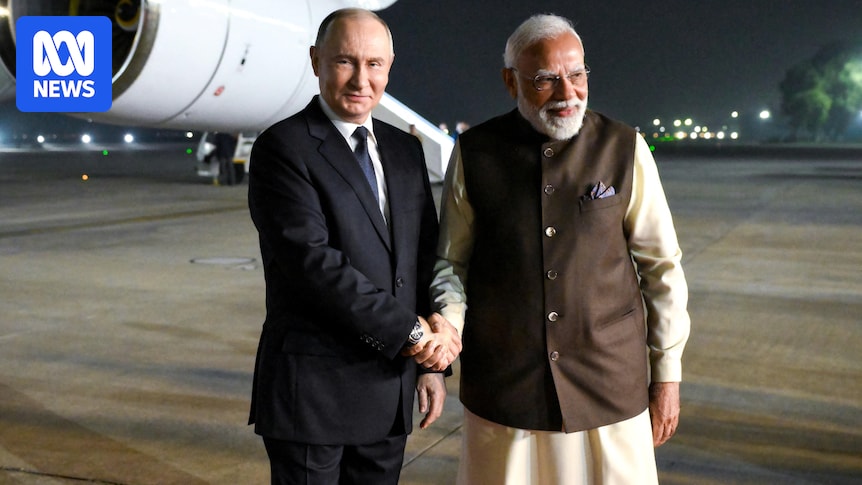
Vladimir Putin’s state visit to India marks a significant moment in the diplomatic relations between Moscow and New Delhi. The Russian President is keen on forging new deals, particularly in the sectors of oil, missiles, and aviation, while also seeking to expand broader business links beyond energy and defense equipment. This visit comes at a time when Russia faces increasing international sanctions due to its ongoing conflict in Ukraine, and India grapples with the economic impacts of Donald Trump’s tariff policies. Both nations have clear incentives to strengthen their economic ties.
Putin’s visit to India, his first in nearly four years, is expected to focus heavily on trade, with several agreements anticipated to be announced. Russia aims to import more Indian goods to balance the current trade dynamics, which are heavily skewed towards Russian oil. In an interview with India Today, Putin expressed his enthusiasm for meeting with Indian Prime Minister Narendra Modi, referring to him as “my friend” and highlighting the vast scope of cooperation between the two nations, including ship and aircraft manufacturing, nuclear energy, and space exploration.
Russia’s Strategic Objectives
The Russian delegation, led by Deputy Kremlin Chief of Staff Maxim Oreshkin, has come with a clear agenda: to increase the purchase of Indian goods and services. Oreshkin emphasized that this move is not just a temporary measure but a strategic choice aimed at developing long-term relations between the two countries. The world’s fastest-growing economy, India, presents a plethora of opportunities for Russia, especially as both countries aim to elevate their bilateral trade to $100 billion by 2030.
India and Russia’s commerce rose more than five-fold from approximately $13 billion in 2021 to nearly $69 billion in 2024–25, primarily driven by Indian imports of Russian oil.
However, this economic relationship faces challenges. Former US President Donald Trump’s tariffs have impacted Indian exports, creating a need for India to find new markets for its goods. New Delhi is particularly interested in diversifying its exports to Russia, focusing on sectors such as automobiles, electronics, data-processing equipment, machinery, industrial components, and food products.
India’s Economic Aspirations
India’s Trade Minister, Piyush Goyal, has articulated New Delhi’s desire to diversify its trade portfolio with Russia, emphasizing the need for a more balanced trade relationship. India, being the world’s largest exporter of shrimp, sees potential in expanding its seafood exports to Russia, especially after US tariffs affected its market share.
“Russia has a huge demand for a wide range of industrial goods, consumer products, presenting multiple untapped opportunities for Indian businesses,” Goyal stated at a recent conference.
India’s strategic interest in Russia extends beyond economic considerations. The geopolitical landscape, particularly the ongoing conflict in Ukraine, plays a significant role in shaping the discussions during Putin’s visit.
The Ukraine Conflict and Its Impact
The war in Ukraine has significantly influenced global trade dynamics, with US tariffs aimed at curbing Russian oil sales, a critical revenue stream for Moscow. India’s reliance on Russian oil has become a contentious issue with Washington, as Russian oil constituted about 35% of India’s oil imports over the past three and a half years. However, recent sanctions targeting Russian oil companies have led to a decline in Indian oil imports.
Aleksei Zakharov, a fellow at the Observer Research Foundation, noted, “I don’t think that’s the end of the story. There are still some loopholes in the sanctions mechanisms and there are attempts to recalibrate supply chains.”
Kremlin spokesperson Dimitri Peskov assured that the drop in Indian oil imports would be temporary, as Moscow works to circumvent Western sanctions. During a scheduled dinner with Modi, it is expected that the war in Ukraine will be discussed informally, with Modi likely to reiterate his call for peace.
Broader Discussions and Future Prospects
Beyond trade and the Ukraine conflict, the visit is expected to cover other areas of mutual interest. Space collaboration and potential agreements to address labor market shortages in Russia with Indian workers are on the agenda. Although India has historically imported weapons from Russia, this trade has seen a decline over the past decade due to sanctions on Russia’s military and industrial sectors.
“Russia’s share of the Indian arms market has significantly reduced as India has been prioritizing deals with other partners,” Zakharov explained. “However, Russia remains a key defense partner due to the existing military platforms within the Indian armed forces.”
As Putin’s visit unfolds, the outcomes of these discussions will likely shape the future trajectory of Indo-Russian relations. Both nations are poised to navigate the complexities of global politics and economics, seeking to bolster their partnership in a rapidly changing world.