




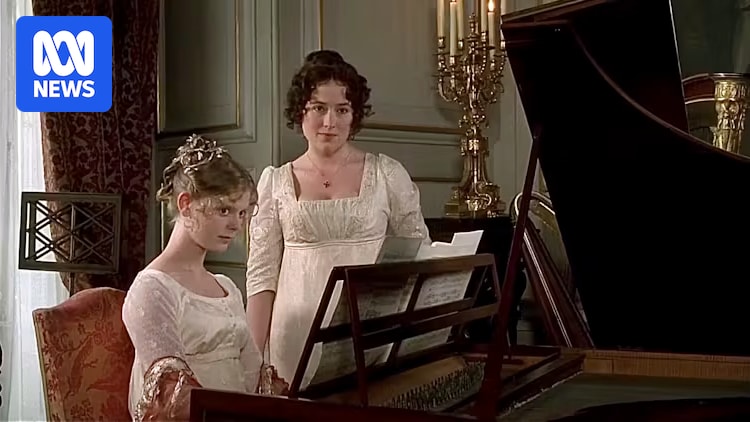
Jane Austen, the beloved author known for her keen social commentary and vivid characters, had a profound love for music. “She played the piano and sang throughout her life,” says Gillian Dooley, a pianist, academic, and author of She Played and Sang: Jane Austen and Music. This passion for music not only enriched her personal life but also infused her literary works and their subsequent adaptations with a unique sparkle.
In 2025, Austen enthusiasts around the globe are celebrating the 250th anniversary of her birth. Her life, spanning from 1775 to 1816, coincided with the era of some of the most cherished composers, including Wolfgang Amadeus Mozart and Josef Haydn. Austen’s personal music collection featured pieces by George Frideric Handel, Thomas Arne, and numerous popular composers of her time. This musical backdrop has inspired countless screen adaptations of her novels, where music plays a pivotal role in bringing her stories to life.
The Musical World of Jane Austen
During Austen’s era, young women like her and her sisters often entertained themselves and others by playing contemporary songs on the piano or other instruments. However, acquiring sheet music was not always straightforward or affordable. Austen frequently copied music from acquaintances or circulating libraries, resulting in an extensive collection of at least 160 pieces in her handwriting, including songs, nursery rhymes, and dances. This collection is part of the broader Austen family archive, which contains around 600 pieces.
“A lot of them are unattributed or [popular] folk music,” Dooley notes, highlighting the diversity and richness of the collection. Unlike many of her heroines, who played to enhance their social standing, Austen played for personal enjoyment and to entertain her nieces and nephews. Among her collection, Dooley discovered piano arrangements of Mozart’s waltzes and songs by Haydn, alongside works by female composers such as the Duchess of Devonshire and Miss Mellish.
Drama by the Piano
The pianoforte, a central element in many of Austen’s novels, was the most fashionable instrument of the time and a symbol of social status. Austen herself had a modest square piano at home, which Dooley describes as “looking like a table” and lacking the full range of a modern piano. This contrasts with the grand pianos often featured in her stories, such as the one in Emma, where Jane Fairfax receives an elegant pianoforte from an anonymous benefactor, fueling Emma’s speculations.
Historically, women were expected to play music for family and friends rather than professionally. This societal constraint is reflected in Austen’s characters, like Jane Fairfax, whose musical talent is both a blessing and a limitation. Similarly, in Pride and Prejudice, Mary Bennett’s attempts to be “the most accomplished girl in the neighbourhood” fall flat, while her sister Elizabeth’s sincerity in playing wins more genuine admiration.
Classical Music in Period Dramas
Austen’s novels have inspired numerous screen adaptations, each enriched by music from her era. The 1995 and 2005 versions of Pride and Prejudice, scored by Carl Davis and Dario Marianelli respectively, are particularly noted for their musical authenticity. “You could think of music in the same way that you see costumes,” says Megan Burslem, ABC Classic’s Breakfast presenter, emphasizing how historical music enhances the viewing experience.
In the 1995 adaptation, Davis used a hunting horn motif to symbolize Mrs. Bennett’s relentless pursuit of husbands for her daughters. Burslem appreciates this adaptation for its understated aesthetic, allowing the characters’ words and interactions to shine. Her runner-up is Ang Lee’s Sense and Sensibility from the same year, with John Powell’s music underscoring the characters’ emotional journeys.
Music lovers, including Dooley, have also praised Autumn de Wilde’s 2020 adaptation of Emma, scored by Isobel Waller-Bridge and David Schweitzer. This film, along with the 1996 adaptation scored by Rachel Portman, who won an Academy Award for her work, highlights the groundbreaking role of female composers in Austen adaptations.
The Timelessness of Austen’s Stories
Although set in Georgian England, Austen’s stories resonate with contemporary audiences due to their exploration of universal themes like love, confidence, and overcoming adversity. Burslem believes these narratives will continue to be reimagined for new generations. “We’re going to keep remaking them like we keep remaking Little Women,” she asserts.
As fans celebrate the 250th anniversary of Jane Austen’s birth, her enduring legacy is evident not only in her novels but also in the harmonious interplay of music and storytelling that continues to captivate audiences worldwide.