


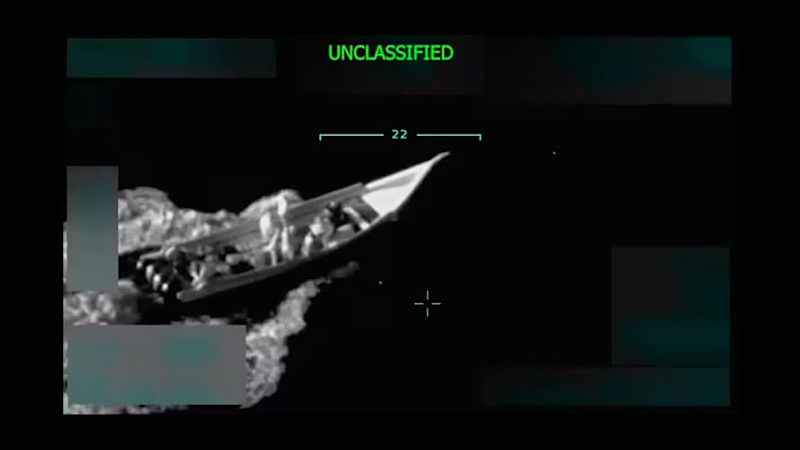
WASHINGTON: An alleged drug boat destroyed in a lethal “double-tap” US strike in the Caribbean earlier this year was reportedly en route to Suriname, a small nation east of Venezuela, to rendezvous with a larger vessel. The operation, which occurred on September 2, has sparked significant debate over its legality and the broader implications of military involvement in anti-drug operations.
According to two sources familiar with the operation cited by CNN, the boat intended to transfer drugs to a second vessel. However, the US military could not locate this secondary craft. The US admiral overseeing the operation revealed during closed Senate briefings this week that the military struck the boat four times. The initial strike split the vessel in half, leaving two survivors clinging to the capsized hull. Subsequent strikes killed the survivors and sank the vessel.
First Military Strike on Drug Vessels
The September 2 strikes marked the first instance of the US military targeting vessels allegedly carrying drugs. This particular attack, along with a broader military campaign in the Caribbean that has destroyed over 20 boats and resulted in more than 80 deaths, is now under intense scrutiny from Congress. Lawmakers are questioning the legal basis for such military actions.
While Republicans have largely supported the operation, viewing it as a deterrent against drug flow into the US, others have raised alarms. Concerns focus on potential violations of the laws of armed conflict, which are designed to safeguard human rights and protect American troops.
Legal and Ethical Concerns
Admiral Frank “Mitch” Bradley clarified that War Secretary Pete Hegseth did not issue a “kill them all” order regarding the survivors of the September 2 strike. However, Democrats argue that the mission’s scope was clear: to destroy the drugs and eliminate the 11 people on board. Hegseth defended the strikes, asserting that President Donald Trump had the authority to take military action “as he sees fit” to protect the nation.
“If you’re working for a designated terrorist organization, and you bring drugs to this country in a boat, we will find you, and we will sink you. Let there be no doubt about it,” Hegseth stated during a speech at the Reagan National Defense Forum.
Last week, lawmakers heard from Admiral Bradley, who ordered the initial strikes, including the follow-up that killed the two survivors. Bradley explained that the second strike was ordered because it was believed that bales of cocaine remained in the hull, posing a risk of later retrieval by cartel members.
Debate Over Military Role in Drug Enforcement
The Trump administration’s legal opinion equates drugs and drug smugglers en route to the US with terrorist threats, allowing them to be targeted under the same rules as the global war on terror. This represents a significant departure from traditional practices, which typically address drug-running as a criminal activity managed by law enforcement, such as the Department of Homeland Security’s Coast Guard.
“The people in the boat, as a matter of the law of armed conflict, are not fighters. All they are is transporting drugs,” said Michael Schmitt, a former Air Force lawyer and professor emeritus at the US Naval War College.
Democrats have expressed concern over the administration’s broad legal interpretation. Congressman Adam Smith, the ranking Democrat on the House Armed Services Committee, described the killings as “deeply concerning.” He emphasized the need for transparency regarding the legal rationale behind such military actions.
Call for Transparency and Further Investigation
Lawmakers are now calling for the public release of the legal argument supporting the military campaign, which is reportedly detailed in a 40-page opinion from the Justice Department’s Office of Legal Counsel. Senator Jack Reed, the top Democrat on the Armed Services Committee, stated, “This briefing confirmed my worst fears about the nature of the Trump administration’s military activities. This must and will be only the beginning of our investigation into this incident.”
The controversy surrounding the strike underscores ongoing debates about the appropriate role of the military in drug enforcement and the balance between national security and adherence to international law. As Congress continues its investigation, the outcomes could have significant implications for future military operations in drug interdiction efforts.