


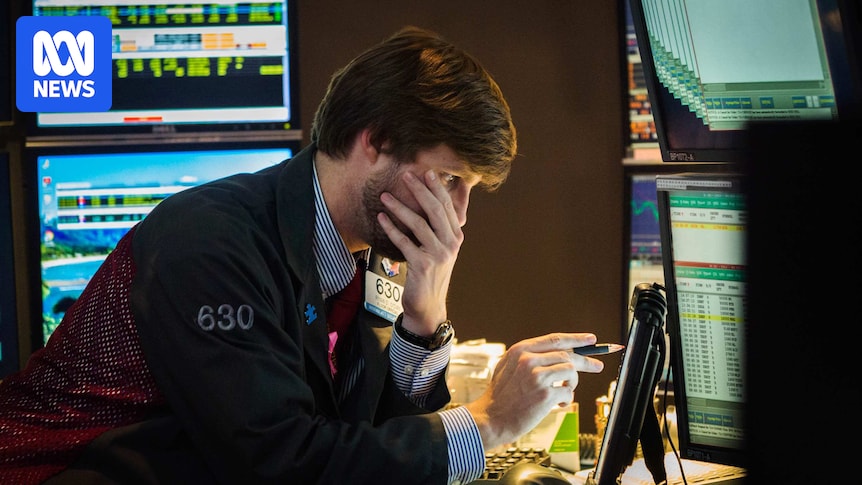
The Australian Securities Exchange (ASX) closed in the red today, with the ASX 200 index falling by 1.5% to 8,421 points. This marks the fourth consecutive week of losses for the Australian market, as global economic uncertainties continue to weigh heavily on investor sentiment. Among the hardest hit was DroneShield, which saw its shares drop nearly 12%.
Meanwhile, the Australian dollar showed a slight uptick, rising 0.1% to 64.45 US cents, while other global markets experienced varied movements. The S&P 500 fell by 1.6% to 6,539 points, and the Nasdaq dropped 2.4% to 24,054 points. In contrast, the FTSE and EuroStoxx indices experienced modest gains.
Market Performance and Key Movers
The ASX’s downturn was characterized by a broad sell-off across most sectors, with only Consumer Non-Cyclicals managing a slight gain of 0.04%. Basic Materials led the declines, plunging 4.01%, followed closely by Academic & Educational Services and Energy sectors.
Among individual stocks, GQG Partners Inc emerged as a top performer with a 5.2% rise, while Catapult Sports Ltd followed with a 4.4% increase. Conversely, Lovisa Holdings Ltd faced significant losses, plummeting 13.8%, with Iluka Resources and Iperionx also suffering steep declines.
ASX 200: -1.6% to 8,417 points
Australian dollar: +0.2% to 64.50 US cents
Bitcoin: -1.2% to $US86,195
Global Market Context
The ASX’s decline is part of a broader global trend, as markets worldwide grapple with economic challenges. The S&P/ASX 200’s current position is 7.6% below its record high of 9,115 points reached in October, edging closer to a technical correction, defined as a 10% fall from a recent peak.
Japan’s Nikkei index also reflected this global unease, dropping 2.4% amid announcements of a substantial economic stimulus package by Prime Minister Sanae Takaichi’s government. The package, worth $US135.40 billion, aims to counteract fiscal pressures and stimulate growth.
Expert Insights and Historical Comparisons
Shane Oliver, chief economist at AMP, noted significant differences between the current market conditions and those during the dot-com crash of the early 2000s. He emphasized that today’s tech stocks, often referred to as the “Magnificent Seven,” are backed by strong profits and growth prospects, unlike the overvalued internet stocks of the past.
“There are big differences between current concerns over the bursting of the tech bubble and what happened to markets a quarter of a century ago,” said Oliver.
Looking Ahead: Market Implications and Future Prospects
As investors navigate these turbulent times, attention is turning to potential market signals that could indicate a shift in direction. The US futures markets show some optimism, with the S&P 500 futures index up 0.4% at the close of the Australian market.
In Japan, the yield on 10-year government bonds has dipped below 1.8%, suggesting some investor confidence in government securities. However, local investors remain cautious, hesitant to “buy the dip” in the Australian market.
In a separate development, the Queensland government approved a rescue plan for The Star Entertainment Group, allowing Bally’s Corporation to convert debt into equity, providing a lifeline to the struggling company. This news has buoyed The Star’s share price, although it remains far below its value from four years ago.
As markets continue to fluctuate, experts advise investors to maintain a long-term perspective and avoid knee-jerk reactions. Kirby Rappell, executive director of SuperRatings, emphasized the importance of focusing on long-term strategies rather than attempting to time the market.
“No knee-jerk reactions are usually the best answer. Focusing on the long term is probably the best thing you can do right now,” Rappell advised.
The coming weeks will be critical as investors and policymakers alike look for signs of stability and potential recovery in global markets.