



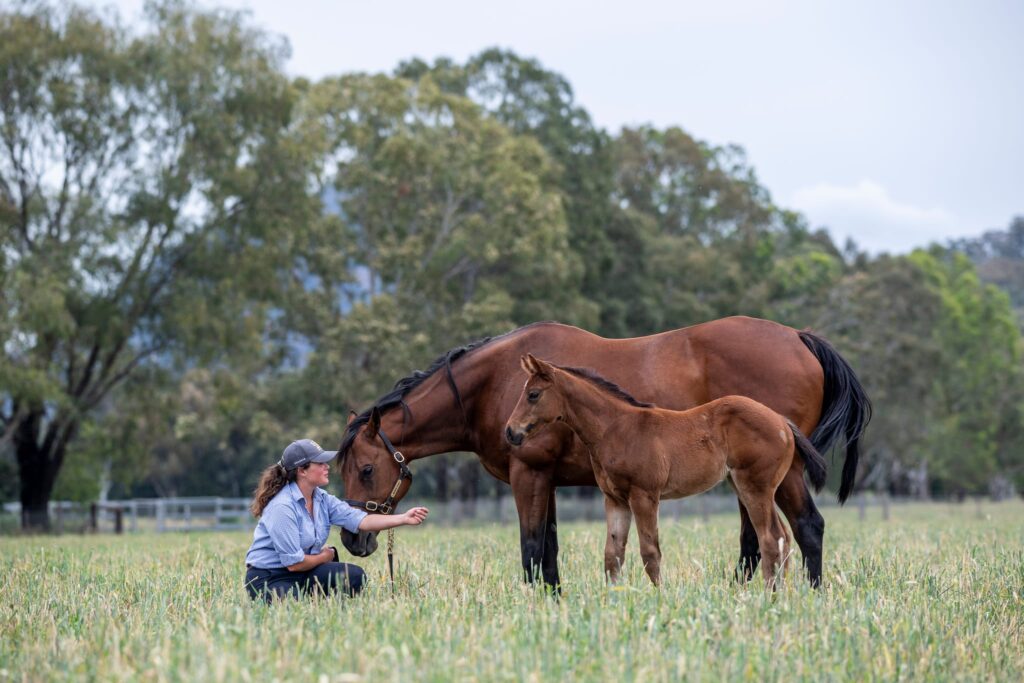
As the breeding season draws to a close, the sight of an empty mare at the 14-day scan can be disheartening for breeders. Particularly for older mares, achieving conception can be a challenging process. However, a promising new study led by Professor Christopher Grupen from the University of Sydney could offer a groundbreaking solution. The research, supported by AgriFutures Australia, is investigating the effects of niacin supplementation on improving egg quality in older mares.
Professor Grupen, an expert in reproductive technologies with over three decades of experience, is spearheading this inter-university project. The study explores the potential of niacin, specifically its end product nicotinamide adenine dinucleotide (NAD), to enhance fertility in mares. NAD is crucial for various cellular processes, including energy production, immune response, and DNA repair. Evidence from studies in humans and mice suggests that NAD levels decline with age, impacting female fertility.
The Science Behind Niacin’s Potential
The research team hypothesized that increasing NAD levels might improve egg quality in horses, similar to results seen in mice. “NAD is produced in cells through different metabolic pathways, and nicotinic acid, a form of niacin, is readily absorbed by cells,” explained Professor Grupen. The initial trial, conducted in late 2023, involved supplementing nicotinic acid in the feed of Standardbred mares aged 15 or older.
The mares were divided into groups: a control group with no supplement, one receiving 1.5g of nicotinic acid daily, and another receiving 3g. Researchers measured the absorption of nicotinic acid by analyzing blood and follicular fluid. “We were quite amazed by the metabolite changes, especially in the follicular fluid,” said Grupen, indicating that the supplement effectively reached its target and was converted into NAD.
“Studies in humans and mice have shown that the NAD decline can really impact female fertility. The mouse studies have gone even further and have shown that it affects the quality of the eggs that they ovulate.” – Professor Christopher Grupen
Testing in the Field
The next phase of the study involves a large-scale trial in collaboration with several studs in the Hunter Valley. The goal is to determine whether increased NAD production positively affects conception rates. “We’ve partnered with a number of studs and tried to recruit as many mares as possible,” Grupen noted. “Half of the mares receive the supplement, while the other half do not, and breeding data will be collected through to foaling.”
The targeted supplementation is administered as an oral paste for four to eight days leading up to ovulation. “We’re hoping that a targeted supplement for at least four days will be beneficial,” Grupen added. The study aims to demonstrate that niacin supplementation can lead to higher pregnancy rates and fewer cycles needed to achieve conception.
Implications for the Industry
If successful, niacin supplementation could revolutionize breeding practices, offering a safe and effective method to enhance fertility in older mares. “It would improve the welfare of the animals, as well as reduce the cost and time spent by management to get these mares in foal,” said Grupen. The potential development of a marketable supplement backed by research could fill a significant gap in the industry.
“The good thing about niacin is that we know it’s very safe, it’s tolerated very well by the horses, and if it is in excess, it’s cleared from the body pretty quickly in the urine.” – Professor Christopher Grupen
Moreover, the study could pave the way for further research into niacin’s benefits for mares with poor reproductive histories due to other factors. “We’re just looking at one piece of the puzzle, so maybe it will have beneficial effects for immune response and general health as well,” Grupen suggested.
As the research progresses, the equine industry eagerly anticipates the results, which could mark a significant advancement in equine reproductive management. “I am hopeful that in five years’ time, everyone will understand the importance of this as a supplement,” Grupen concluded.