



Dozens of oil tankers operating within Russia’s so-called “shadow fleet” are set to face a new wave of Australian sanctions. This move aims to cut off a significant revenue stream for Vladimir Putin, potentially hampering his ability to fund the ongoing conflict in Ukraine. The announcement coincides with Australia’s first military support package for Ukraine in over a year.
The sanctions, however, have not quelled demands for more stringent measures. Critics urge the Australian government to align with the European Union and the United Kingdom by banning the import of Russian-origin oil through intermediary countries. A prominent sanctions law expert has criticized Australia’s efforts as “weak and slow,” emphasizing the need for tougher policies to prevent inadvertently aiding the Kremlin financially.
Military Aid and Strategic Support
Australia’s government will announce a $95 million military assistance package for Ukraine on Thursday. This includes the country’s inaugural contribution to the Prioritised Ukraine Requirements List (PURL), a NATO-led initiative designed to fund and deliver essential U.S. military equipment to Ukraine. Additionally, Australia will provide $45 million in tactical air defense radars, munitions, and combat engineering equipment from its defense stockpile, alongside $2 million to enhance Ukraine’s drone technology capabilities.
In a related development, discussions are underway regarding the potential provision of retiring Tiger attack helicopters to bolster Ukraine’s defense efforts. “Australia is unwavering in its support for Ukraine,” stated Defence Minister Richard Marles. “These commitments will make a tangible difference in Ukraine’s defense against Russia’s illegal and immoral invasion.”
Australia’s last significant military aid package, consisting of 49 M1A1 Abrams tanks, was announced in October of the previous year, with the final batch expected to arrive in Ukraine shortly.
Sanctions on Russia’s Shadow Fleet
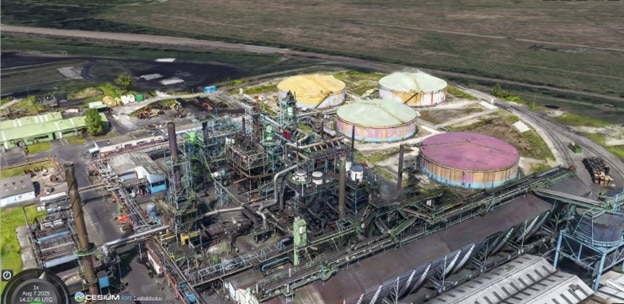
The recent sanctions target 45 vessels within Russia’s shadow fleet, notorious for circumventing international sanctions imposed following Russia’s full-scale invasion of Ukraine. While these measures are welcomed by the Ukrainian-Australian community, their practical impact is expected to be limited.
Analysis by the Centre for Research on Energy and Clean Air (CREA) reveals that “shadow” tankers, which employ false flags and other clandestine methods, account for 62% of Russian crude oil exports.
Previously, the Australian government sanctioned 60 shadow fleet vessels in June. Anton Moiseienko, a senior lecturer at the Australian National University, criticized Australia’s sanctions strategy as lacking “vigour and ambition.” He noted, “Australia is a major global market for refined petroleum originating in Russian crude oil,” and described the government’s response as inadequate given Australia’s market position.
Economic and Political Implications
The ongoing “blood oil” series by this masthead has highlighted the substantial volumes of Russian-origin oil entering Australia, primarily from Indian refineries. According to CREA’s analysis, Australians have spent at least $3.8 billion on petrol and diesel derived from Russian crude oil since February 2023.
Moiseienko, an author of two books on sanctions policy, has called for legislative action to ban the purchase of refined oil products originating from Russian crude, aligning with EU and UK policies. He also advocates for sanctions against entire networks involved in the Russian oil trade, arguing that targeting the shadow fleet serves more as a “naming and shaming” exercise than a practical deterrent, as these vessels do not depend on Australian ports.
Foreign Minister Penny Wong emphasized that Australia’s sanctions are part of a coordinated effort with key partners, including the United Kingdom, United States, New Zealand, and the European Union, to deplete Russia’s oil revenues and restrict its capacity to finance its invasion.
As Australia continues to navigate the complexities of international sanctions and military aid, the effectiveness of these measures remains a topic of debate among experts and policymakers alike.