



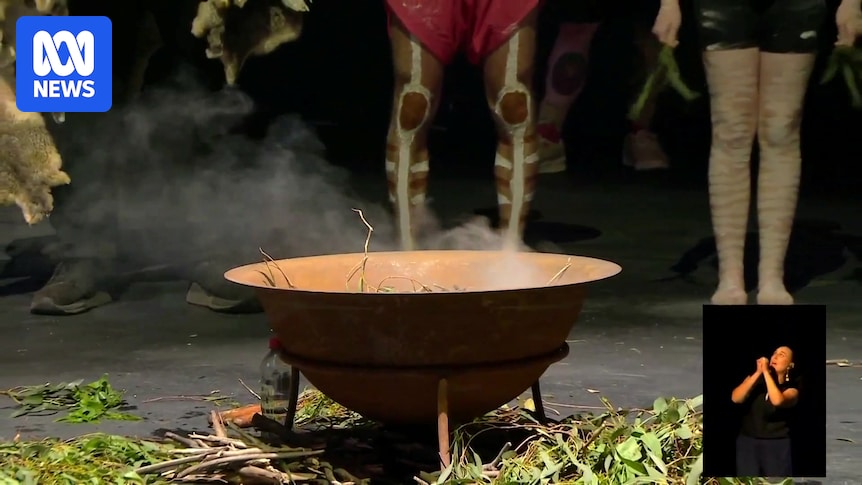
Victoria’s statewide treaty has officially commenced following a day of vibrant cultural celebrations in Melbourne. The treaty, which was signed and passed into Victorian law last month, was set to formally begin only after a cultural ceremony on Wurundjeri country, which took place last Friday.
The cultural assent marked the beginning of a new chapter in the relationship between the Victorian government and the Aboriginal community. As part of the ceremony, a kangaroo skin version of the treaty was adorned with ochre handprints by Aboriginal community leaders, symbolizing unity and commitment.
On Friday night, Premier Jacinta Allan, Treaty Minister Natalie Hutchins, and Victoria’s First Peoples’ Assembly co-chairs Ngarra Murray and Reuben Berg finalized the assent by imprinting their ochre-covered hands on the kangaroo skin. The gesture was met with a standing ovation at a free event held at John Cain Arena, attended by thousands of Aboriginal and non-Aboriginal Victorians.
A New Era of Recognition and Accountability
The treaty aims to enhance the lives of Aboriginal Victorians through the establishment of a new advisory body, truth-telling and accountability initiatives, and acknowledgment of past injustices. The Treaty Authority, an independent body overseeing the negotiations, declared to the crowd that the treaty was now officially in place.
“Today for the first time in the history of this nation we affirm a treaty between first peoples and the state,” said Ngarra Murray. “This treaty is born from strength, resilience and the resistance of our people. It is born from our unyielding love for our country and our communities and our unwavering belief in a better future.”
Leadership and Community Response
Premier Jacinta Allan expressed pride in Victoria’s leadership role, stating, “Here in Victoria we believe in fairness, we believe in truth, and we believe in a better future for First Peoples. This is a journey that has taken years of work. It has taken that vital truth-telling through the Yoorook Justice Commission. Those stories of children taken, languages silenced, and families torn apart.”
Ms. Allan emphasized the treaty as a starting point rather than an endpoint. “This is not the finish line. It is the first big step in a much longer journey,” she remarked. “And if we want treaty to endure, and we most certainly want it to endure, if we want it to be real, strong and here not just for the next generation but many, many more, then we have to fight for it.”
Cultural Celebrations and Future Steps
The cultural ceremony was followed by a concert featuring performances from renowned artists such as Yothu Yindi, Yorta Yorta rapper Briggs, and Missy Higgins, celebrating the historic occasion with music and dance.
Looking ahead, the treaty is expected to bring about practical changes, including elections for Gellung Warl, a revamped Aboriginal representative body established under the treaty. These elections are anticipated to take place next year, setting the stage for more inclusive governance and representation.
However, the journey forward faces political challenges. The Victorian opposition has pledged to repeal the treaty legislation if it wins the government in the upcoming election. This political tension underscores the ongoing struggle for recognition and rights for Aboriginal communities.
Historical Context and Future Implications
The treaty represents a significant milestone in Australia’s history, echoing past efforts to recognize and reconcile with Indigenous communities. Similar initiatives have been seen in other parts of the world, such as New Zealand’s Treaty of Waitangi, which serves as a foundational document for Maori rights and governance.
Experts believe that Victoria’s treaty could set a precedent for other Australian states, encouraging a nationwide movement towards reconciliation and justice for Aboriginal peoples. The success of this treaty could influence broader discussions on Indigenous rights and self-determination across the country.
As Victoria embarks on this new journey, the focus will remain on implementing the treaty’s provisions effectively and ensuring that it leads to tangible improvements in the lives of Aboriginal Victorians. The road ahead may be challenging, but the commitment to a fairer and more inclusive future remains strong.