



When “The Brothers McMullen” debuted in 1995, Edward Burns was hailed as a fresh voice in cinema, drawing comparisons to Woody Allen for his insightful portrayal of Irish-American life. Fast forward 30 years, and Burns revisits his roots with “The Family McMullen,” a sequel that attempts to capture the charm of its predecessor but struggles to find its footing.
Shot on a shoestring budget of $25,000, “The Brothers McMullen” was a hallmark of indie filmmaking. Burns, then a junior employee at Entertainment Tonight, famously handed a copy of his film to Robert Redford, leading to its screening at Sundance and subsequent acquisition by Fox Searchlight. This serendipitous moment launched Burns’ career, which now spans 20 directorial projects and numerous acting roles.
The Return to Long Island
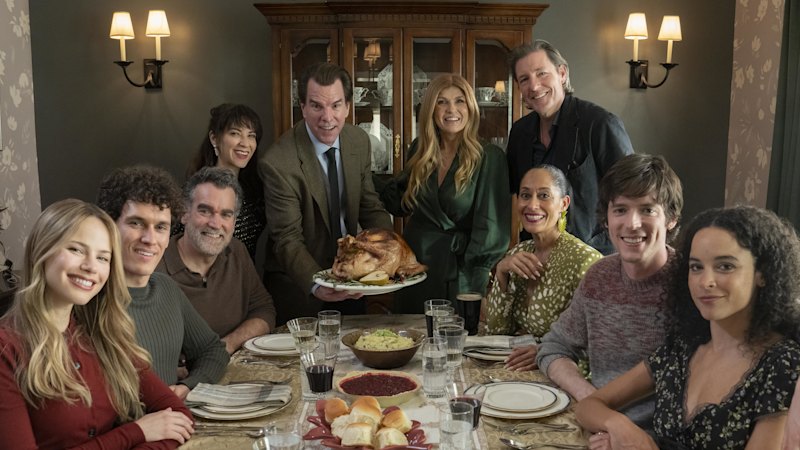
In “The Family McMullen,” Burns returns to the familiar territory of family dynamics, focusing on the McMullen brothers and their extended clan. The film opens and closes with Thanksgiving dinners, framing a year of personal upheavals and familial tensions. Burns reprises his role as Barry, the middle brother, now a twice-divorced father grappling with his children’s choices.
Michael McGlone returns as Patrick, the youngest brother, facing his own marital challenges. The eldest brother, Jack, is absent, having passed away from cancer, leaving behind his widow Molly, played by Connie Britton. Molly’s interactions with her niece Patty, who is engaged to her law school sweetheart, add layers of romantic and familial complexity.
A Shift in Tone
The original film’s raw, indie spirit is notably absent in this sequel, which leans towards the polished predictability of a Hallmark movie. While the narrative attempts to echo the familial and romantic entanglements reminiscent of Woody Allen’s work, it lacks the sharp dialogue and existential depth that characterized Allen’s films.
“The Family McMullen isn’t exactly terrible, but nor is it anything to write home about.”
The film’s holiday setting and familial themes are familiar, yet the execution feels formulaic. The characters’ interactions, while occasionally humorous, often fall into cliché, lacking the authenticity that made the original film resonate with audiences.
Context and Critique
Critics have noted the difficulty of recapturing the magic of a debut film, especially one that was as serendipitous and impactful as “The Brothers McMullen.” The indie film landscape has evolved significantly since the mid-90s, with digital technology and streaming platforms reshaping how films are made and consumed. Burns’ attempt to recreate his early success highlights the challenges filmmakers face in balancing nostalgia with innovation.
Film historian Dr. Emily Carter suggests, “Sequels often struggle because they are burdened with the expectations set by their predecessors. ‘The Family McMullen’ is no exception, as it tries to navigate the delicate balance between homage and originality.”
The Future of Indie Filmmaking
As Burns reflects on his career, “The Family McMullen” serves as a reminder of the unpredictable nature of filmmaking. While the sequel may not have achieved the critical acclaim of its predecessor, it underscores the enduring appeal of storytelling centered on family dynamics.
Looking ahead, the film industry continues to evolve, with filmmakers like Burns adapting to new technologies and audience preferences. The rise of streaming services has democratized film distribution, offering opportunities for indie filmmakers to reach global audiences without the traditional constraints of theatrical releases.
In conclusion, “The Family McMullen” may not have been the triumphant return some hoped for, but it reflects the ongoing journey of a filmmaker dedicated to exploring the complexities of family life. As Burns continues to navigate his career, the lessons learned from this sequel will undoubtedly inform his future projects.