



On December 9, 1967, Nicolae Ceaușescu ascended to power as the President of Romania, marking the beginning of a notorious regime that would last over two decades. Known for his eccentricity and authoritarian rule, Ceaușescu’s leadership was characterized by grandiose ambitions and oppressive policies that left a lasting impact on the nation.
Born to a shoemaker in a small Romanian village, Ceaușescu rose through the ranks of the Romanian Communist Party by forging strategic alliances and eliminating his rivals. Upon becoming president, he pledged to improve living standards in Romania, one of Europe’s poorest countries at the time. His initial moves included distancing Romania from the Soviet Union, notably criticizing the Soviet military’s intervention in Czechoslovakia in 1968.
The Iron Rule of Ceaușescu
Despite his early promises, Ceaușescu, influenced by his ambitious wife Elena, quickly established a regime marked by strict control and repression. His government was notorious for its secret police, which quashed dissent and maintained a climate of fear. Meanwhile, Romanians faced severe food shortages as Ceaușescu exported much of the country’s produce to repay foreign debts.
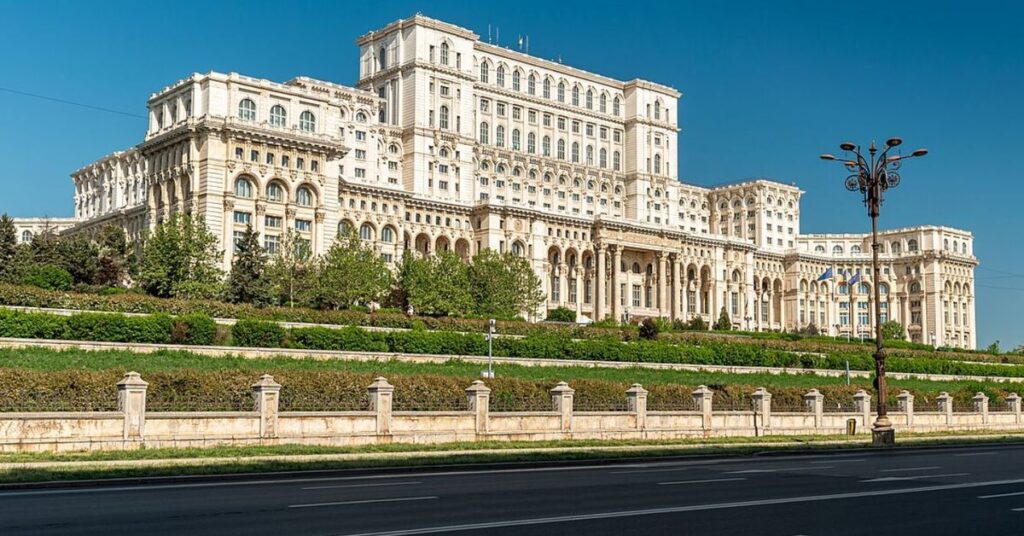
By the 1970s, Romania’s economy was struggling, prompting Ceaușescu to embark on a lavish construction program. Among his most ambitious projects was the Parliamentary Palace in Bucharest, a colossal structure that became emblematic of his megalomania.
The Monument to Megalomania
Initiated after a devastating earthquake in 1977, the Parliamentary Palace was designed to be one of the largest buildings in the world. It required immense resources, including 220,000 square meters of carpet, 3,500 tonnes of crystal, and one million cubic meters of marble. The project displaced 40,000 residents and employed a workforce of 700 architects, 20,000 laborers working in shifts, and 5,000 troops.
The Parliamentary Palace is the third largest building in the world, a testament to Ceaușescu’s grandiose vision.
Ironically, Ceaușescu never saw the completion of his monumental project. By December 1989, with the palace only two-thirds finished, a wave of political change swept through Eastern Europe, leading to the fall of communist regimes.
The Fall of a Dictator
The collapse of the Berlin Wall in 1989 signaled the end of Soviet influence in Eastern Europe, and Ceaușescu’s regime was not immune to the ensuing upheaval. When he ordered the suppression of demonstrations, his security forces turned against him, and the Romanian army seized control.
On December 25, 1989, Nicolae and Elena Ceaușescu were tried and executed by firing squad, marking a dramatic end to their reign. Their downfall was part of a broader trend of political transformation across the region.
Legacy and Lessons
Ceaușescu’s rule left a complex legacy in Romania. While he initially sought to assert Romania’s independence from Soviet influence, his oppressive policies and economic mismanagement overshadowed any positive achievements. The Parliamentary Palace remains a symbol of his extravagant ambitions and the burdens they imposed on the Romanian people.
“Ceaușescu’s regime serves as a cautionary tale of how unchecked power and ambition can lead to a nation’s downfall,” said a historian specializing in Eastern European politics.
As Romania continues to navigate its post-communist era, the lessons from Ceaușescu’s rule remain relevant. The country’s journey towards democracy and economic stability reflects both the challenges and opportunities that arise from such a tumultuous history.
For more updates on historical events and their implications, download our app from the Apple App Store or Google Play.