




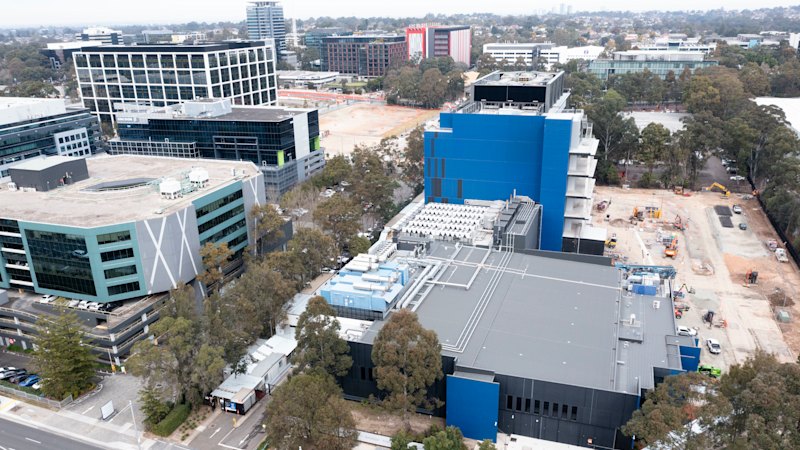
Energy demand from expansive new data centers in Australia is projected to increase tenfold over the next decade, significantly straining the electricity grid and potentially driving up energy costs by about 25% in New South Wales (NSW) and Victoria. This surge could also elevate national greenhouse gas emissions by 14% if not properly managed, according to a report by the Clean Energy Finance Corporation (CEFC).
The government-owned green energy investor has called on Australian governments to develop policies or incentives to encourage the construction of new data centers outside metropolitan areas, specifically in renewable energy zones where existing or planned transmission lines could be utilized. The CEFC also suggests that governments require these centers to contribute to the cost of new grid connections.
Projected Growth and Economic Implications
A report commissioned by the CEFC and conducted by Baringa Consulting forecasts that data centers could account for up to 11% of Australia’s total electricity consumption by 2035, a significant increase from the current 1%. This growth is driven by rising demand for data storage, cloud computing, and digital infrastructure.
“Such a surge would attract between $85 billion and $135 billion in investment,” the report states.
Currently, about 50% of new data storage capacity is planned for western Sydney, with approximately 25% earmarked for Melbourne. The CEFC’s analysis considered various scenarios modeling the industry’s growth and the development of renewable energy capacity.
Energy Market Impact and Renewable Solutions
The CEFC report warns that without additional renewable energy and storage, the growth of data centers could significantly impact the electricity market. It predicts wholesale electricity prices could rise by 26% in NSW and 23% in Victoria by 2035, primarily due to increased reliance on more expensive gas peaking generation.
“This reliance not only drives up prices but could also lead to a 14% increase in grid emissions across the National Electricity Market,” the report highlights.
To mitigate these impacts, the report suggests that an additional 3.2 GW of renewable capacity will be needed over the next decade, alongside already planned wind and solar projects. This capacity would be sufficient to power nearly 5 million Australian households. If implemented, price increases could be limited to 7% in NSW and 6% in Victoria, with emissions increases eliminated.
Policy Recommendations and Global Comparisons
Julia Hinwood, CEFC’s head of infrastructure, emphasized the importance of government collaboration on policies to manage demand by directing new centers to renewable energy zones. This strategy could drive investment in renewable energy and stabilize the grid.
The report also notes that in some areas, the development of large data centers can benefit grid management by reducing renewable curtailment, which occurs when excess green energy cannot be used during peak generation periods. This could enhance the business case for new renewable projects and balance grid supply and demand.
Hinwood pointed out the potential pitfalls of unchecked growth, referencing Ireland, where data center demand now accounts for 21% of energy use, and Singapore, which imposed a moratorium on new centers due to similar issues.
Environmental and Regulatory Considerations
A spokesman for Climate Change and Energy Minister Chris Bowen stated that Australia should continue to position itself as a prime location for data center development. He emphasized that the industry could drive new investment in clean energy if the right settings are in place, ensuring it does not burden consumers.
A recent report highlighted that individual data centers proposed for major cities are seeking daily water volumes equivalent to that used by 80,000 homes, prompting calls for stricter regulation and water efficiency standards.
At the United Nations climate talks in Brazil, Melbourne Lord Mayor Nicholas Reece advocated for global guidelines and standards for low-carbon and water-efficient AI infrastructure. Reece noted that data centers and AI infrastructure currently account for 2% of Melbourne’s energy consumption, a figure expected to rise to 8% in five years and 20% by 2040.
As Australia navigates the challenges and opportunities of this burgeoning sector, the focus will remain on balancing growth with sustainability and consumer protection.