



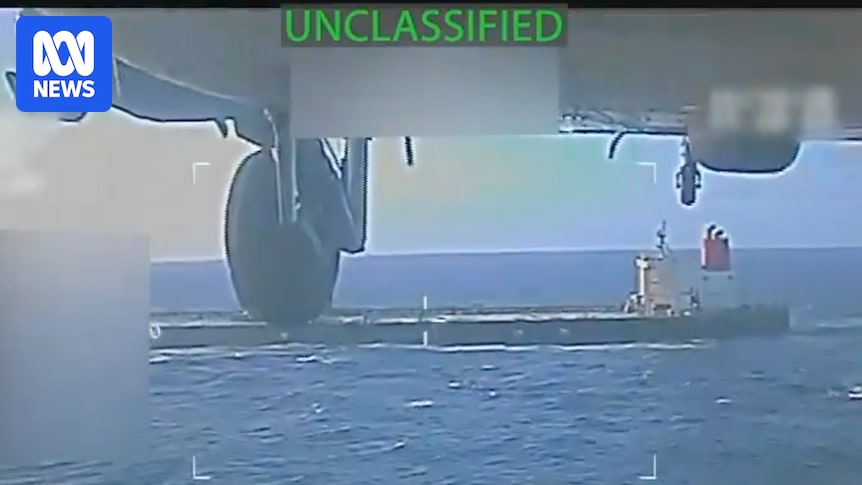
The United States is ramping up its efforts to intercept ships carrying Venezuelan oil, following the recent seizure of a tanker, according to six sources familiar with the situation. This move marks the first interdiction of an oil cargo tanker from Venezuela, a country that has been under US sanctions since 2019.
In an attempt to increase pressure on Venezuelan President Nicolas Maduro, the US has bolstered its military presence in the southern Caribbean and implemented new sanctions. This latest action has sent shockwaves through the maritime industry, with shipowners and operators reconsidering their routes from Venezuelan waters.
US Sanctions and Military Presence
The US Treasury Department announced sanctions on six shipping companies involved in transporting Venezuelan oil, as well as six crude oil tankers accused of “deceptive and unsafe shipping practices.” These vessels, including the H. Constance and Lattafa, are registered in Panama, the Cook Islands, and Hong Kong. The targeted supertankers recently loaded crude in Venezuela, according to state oil company PDVSA’s documents.
David Goldwyn, a former energy diplomat at the US State Department, described the sanctions as a “powerful intimidation tactic.” He stated,
“Certainly, any sanctioned vessel owner will think twice about lifting Venezuelan crude for fear of losing the vessel entirely. And those that are not sanctioned will certainly be concerned about being boarded.”
Impact on Venezuelan Oil Exports
Venezuela’s state oil company PDVSA did not respond to requests for comment, but the government labeled the US seizure as “theft.” White House spokesperson Karoline Leavitt emphasized the administration’s commitment to enforcing sanctions, stating,
“We’re not going to stand by and watch sanctioned vessels sail the seas with black-market oil, the proceeds of which will fuel narcoterrorism of rogue and illegitimate regimes around the world.”
The US has reportedly assembled a list of additional sanctioned tankers for potential seizure. This strategy could further strain the Maduro government’s finances, as Venezuelan oil exports are a primary revenue source.
Legal and Human Rights Concerns
The US’s aggressive stance has raised legal and human rights questions. Legal experts argue that the recent strikes against vessels in the Caribbean and Pacific may constitute illegal extrajudicial attacks. However, the US maintains that these actions are necessary to protect Americans from drug cartels labeled as terrorist organizations.
Laurence Atkin-Teillet, a specialist in piracy and the law of the sea, clarified that the US’s actions do not legally qualify as piracy.
“The term piracy in this context appears to be rhetorical or figurative, rather than a legal usage,”
he explained.
Future Implications and Global Reactions
The US’s focus on the so-called shadow fleet of tankers, which transport sanctioned oil to China and other countries, underscores the complexity of international oil trade. The seizure of the tanker Skipper has already caused disruptions, with some shipping companies halting voyages of Venezuelan crude oil.
As US forces monitor tankers at sea and in Venezuelan ports, the timing of further seizures will depend on logistical arrangements for unloading oil cargoes at US ports. Meanwhile, the Venezuelan government continues to denounce these actions as attempts to overthrow Maduro and control the nation’s oil resources.
The unfolding situation highlights the geopolitical tensions surrounding Venezuela’s oil industry and the broader implications for international trade and diplomacy. As the US continues to enforce its sanctions, the global community watches closely, anticipating the next developments in this high-stakes saga.