

A groundbreaking therapy, once the realm of science fiction, has achieved remarkable success in reversing aggressive and previously incurable blood cancers in some patients, according to recent reports from doctors. This innovative treatment involves the precise editing of DNA in white blood cells, effectively transforming them into a cancer-fighting “living drug.”
The therapy’s first success story, a young girl whose journey was first reported in 2022, remains free of the disease and now aspires to become a cancer scientist. Recently, eight more children and two adults with T-cell acute lymphoblastic leukemia have undergone the treatment, with nearly two-thirds (64%) achieving remission.
Revolutionary Treatment Process
T-cells, which are typically the body’s defenders against threats, become uncontrollable in this form of leukemia. For patients in the trial, traditional treatments like chemotherapy and bone marrow transplants had failed, leaving this experimental therapy as their last hope.
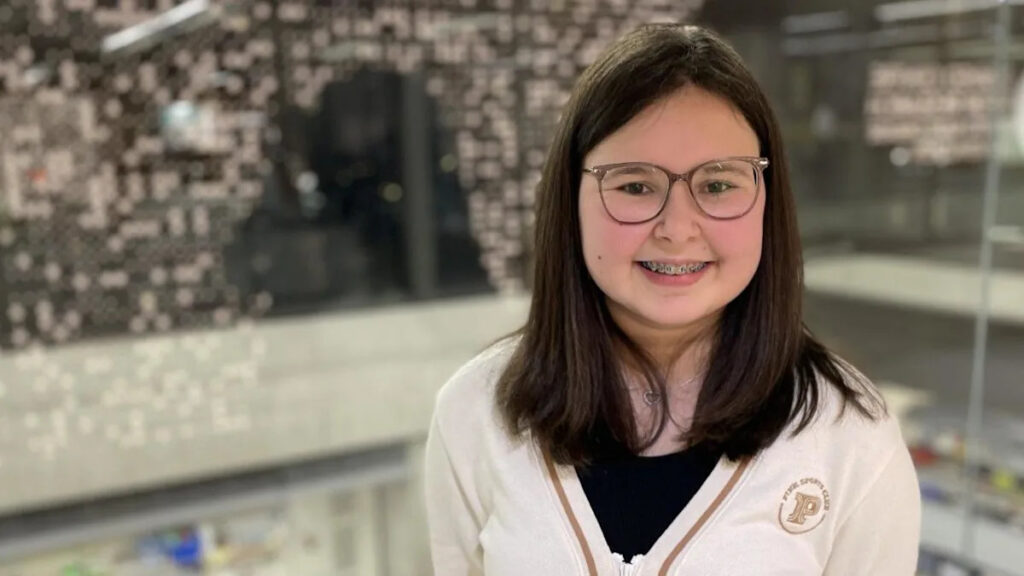
“I really did think that I was going to die and I wouldn’t be able to grow up and do all the things that every child deserves to be able to do,” shared 16-year-old Alyssa Tapley from Leicester. She was the first person globally to receive the treatment at Great Ormond Street Hospital and is now enjoying a normal life.
The revolutionary treatment Alyssa underwent three years ago involved eradicating her old immune system and cultivating a new one. She spent four months in the hospital, isolated from her brother to prevent infections. Today, her cancer is undetectable, requiring only annual check-ups. Alyssa is pursuing her A-levels, the Duke of Edinburgh Award, and is planning for her future, including a potential career in biomedical science.
Base Editing: The Science Behind the Success
The team at University College London (UCL) and Great Ormond Street Hospital employed a cutting-edge technology known as base editing. This technique allows scientists to target a specific part of the genetic code and alter the molecular structure of a single base, effectively rewriting the body’s instruction manual.
Researchers aimed to harness the natural power of healthy T-cells to target and destroy the leukemia. This required engineering the T-cells to attack the cancerous cells without self-destructing. They began with healthy T-cells from a donor and made several genetic modifications:
- The first edit disabled the T-cells’ targeting mechanism, preventing them from attacking the patient’s body.
- The second edit removed a chemical marker, CD7, essential for preventing the therapy from self-destructing.
- The third edit provided an “invisibility cloak” to protect the cells from being killed by chemotherapy drugs.
- The final modification instructed the T-cells to target anything with the CD7 marker.
Once modified, the T-cells were infused into patients. If cancer was undetectable after four weeks, patients received a bone marrow transplant to regenerate their immune system.
“A few years ago, this would have been science fiction,” said Prof Waseem Qasim from UCL and Great Ormond Street. “It’s a deep, intensive treatment, it’s very demanding on the patients, but when it works, it’s worked very well.”
Clinical Results and Future Implications
The study, published in the New England Journal of Medicine, details the outcomes of the first 11 patients treated at Great Ormond Street and King’s College Hospital. Nine patients achieved deep remission, allowing them to proceed with a bone marrow transplant, and seven remain disease-free for periods ranging from three months to three years post-treatment.
One of the significant risks of this treatment is the potential for infections while the immune system is suppressed. In two cases, the cancer adapted by losing its CD7 markers, enabling it to evade treatment and return.
“Given how aggressive this particular form of leukemia is, these are quite striking clinical results, and obviously, I’m very happy that we managed to offer hope to patients that otherwise have lost it,” said Dr. Robert Chiesa from the bone marrow transplant department at Great Ormond Street Hospital.
Dr. Deborah Yallop, a consultant haematologist at King’s, noted, “We’ve seen impressive responses in clearing leukemia that seemed incurable – it’s a very powerful approach.”
Commenting on the research, Dr. Tania Dexter, senior medical officer at UK stem cell charity Anthony Nolan, expressed optimism: “Considering these patients had a low chance of survival before the trial, these results bring hope that treatments like this will continue to advance and become available to more patients.”
This pioneering therapy not only represents a significant advancement in the fight against aggressive blood cancers but also paves the way for future innovations in genetic medicine. As research continues, the hope is that such treatments will become more widely accessible, offering renewed hope to patients worldwide.