



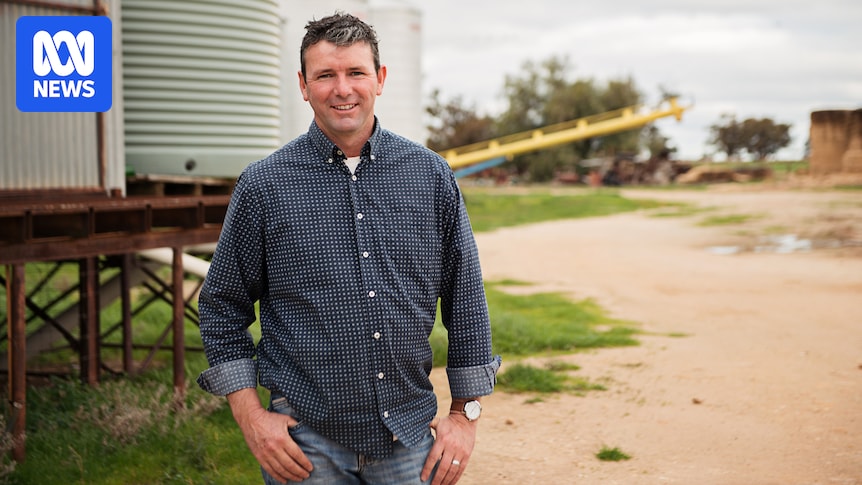
Fifth-generation farmer Brett Hosking is gearing up for harvest in Quambatook, western Victoria, where he cultivates wheat, barley, and canola. As the president of the Victorian Farmers Federation, Hosking identifies a promising opportunity for the agricultural industry in the burgeoning market of low-carbon fuels.
“We’ve seen it overseas for many years now,” Hosking remarked, highlighting the potential for growth in Australia. The Clean Energy Finance Corporation (CEFC) estimates that an Australian low-carbon liquid fuel industry could be worth $36 billion by 2050. This projection has sparked interest across the agricultural and industrial sectors, marking it as an untapped market ripe for development.
Exploring the Potential of Low-Carbon Fuels
Renewable or low-carbon fuels, often derived from agricultural feedstock like canola oil or waste products, present alternatives to fossil fuels. These fuels are particularly useful in industries that cannot be easily electrified, such as heavy transport and aviation. Globally, the United States, Brazil, and the European Union are leading producers of low-carbon fuels.
Australia currently exports nearly 6 million tonnes of canola annually, primarily for conversion into biofuel overseas. Now, industry advocates are pushing for the establishment of a domestic market to produce and utilize biofuel within Australia.
“It will be a big boost for farmers, to be sure,” Mr. Hosking said. “We produce an incredibly high-quality product … using very low emissions in our cropping systems.”
Industry Initiatives and Investments
GrainCorp’s head of agri-energy, Jesse Scott, emphasized that a local biofuel industry would attract more investment in regional Australia and cater to domestic demand. GrainCorp is collaborating with Ampol and super fund IFM Investors to refine canola oil in Australia for use in the aviation sector.
“I fully expect that all parts of Australia are going to contribute feedstock,” Scott noted, adding that Victoria is expected to play a significant role in this initiative.
Innovative Projects in Victoria
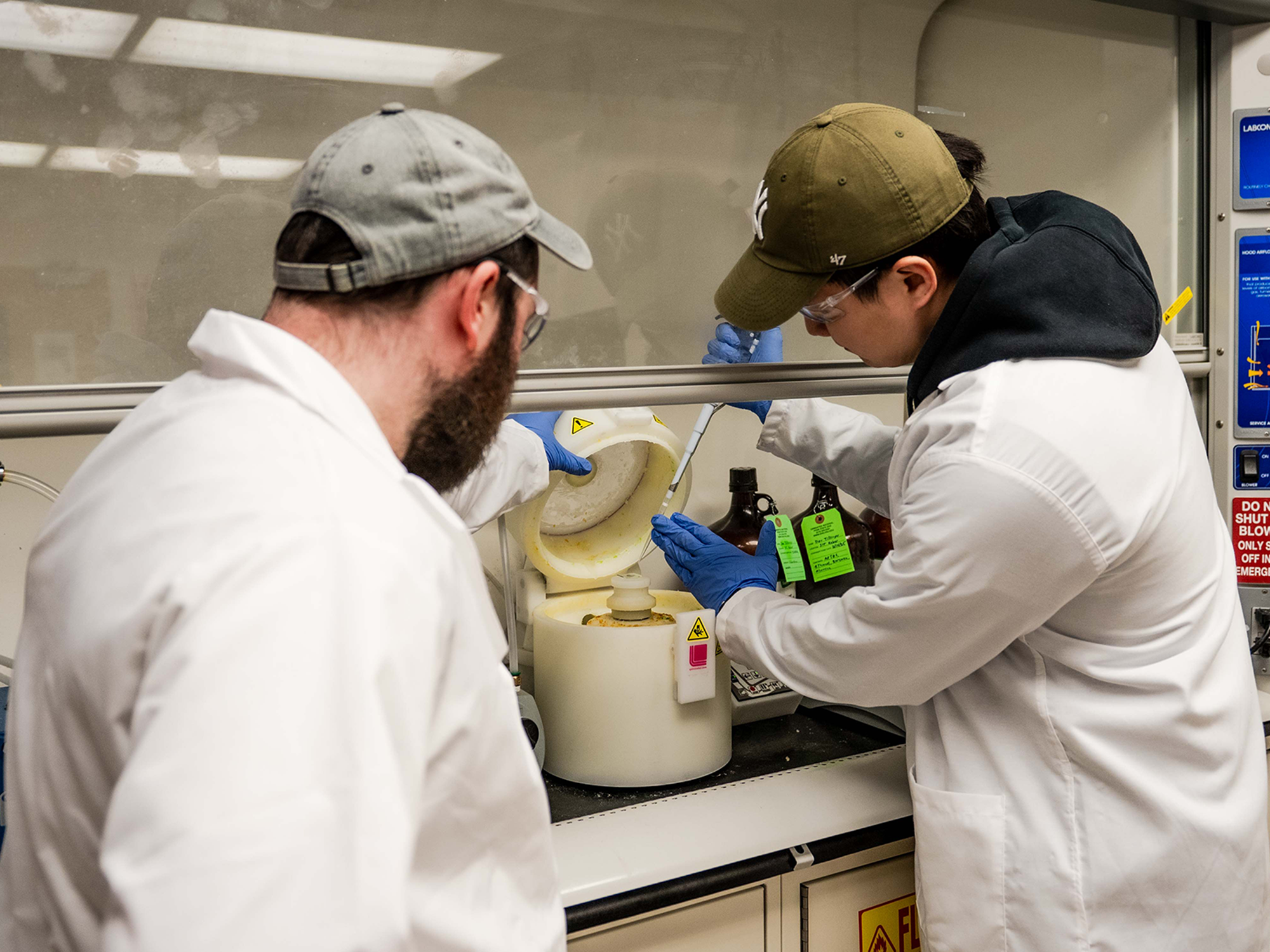
In eastern Victoria, a feasibility study is underway at the Australian Paper Mill near Morwell to assess the potential for producing a new biofuel. Opal, the mill’s owner, has partnered with European Energy Australia to explore carbon capture at the mill, aiming to utilize biogenic carbon dioxide (CO2) in the production of e-methanol — a low-carbon fuel alternative for freight ships.
David Jettner, Opal’s general manager of environment and sustainability, stated, “It was still early days but the project had the potential to generate between $25 million and $30 million.”
Should the project succeed, it could provide a substantial economic boost to the region, particularly after the company cut 400 jobs in 2023.
Turning Waste into Fuel
The Gippsland region is also home to another biofuel project — an upcycling facility in Wellington Shire that plans to convert household waste into hydrogen and low-carbon fuels. This initiative, managed by Zerogen, Boson Energy, and Xseed Solutions, aims to produce aviation fuel by gasifying municipal waste.
Zerogen director Scott McArdle highlighted the dual benefits of reducing waste and developing low-carbon fuels for transport, especially aviation. “We are targeting those municipal waste, kerbside garbage, non-recyclables,” McArdle explained.
Director of XSeed Solutions, Craig Allen, mentioned that the project is progressing well, with the aim to be operational by 2028. “We’re working closely with our partners as they finalize the initial funding round, which is expected to reach completion within the next couple of months,” Allen said.
Government Support and Future Prospects
As part of its Future Made in Australia plan, the federal government is accelerating support for a low-carbon liquid fuel (LCLF) industry, recently announcing a $1 billion fund to encourage private investment. The domestic LCLF industry will initially focus on sustainable aviation fuel and renewable diesel to reduce emissions in fuel-reliant sectors, including transport, mining, and agriculture.
By 2040, an Australian renewable fuels industry could directly support 13,000 jobs and contribute $13 billion in GDP annually.
While the grants process has been welcomed by industry, proponents argue that more needs to be done to establish the market. Hosking suggested that Australia should follow the lead of the United Kingdom and European Union by mandating the use of LCLF to ensure a guaranteed market for investors.
“We are talking billions of dollars to build a low-carbon liquid fuel plant, so it’s not a small investment for anyone,” he said. “What we need is government to send a signal that there will be a guaranteed market for that product at the end.”
The push for a domestic biofuel industry represents a significant opportunity for Australia to harness its agricultural resources, reduce emissions, and stimulate regional economies. As the nation moves towards a more sustainable future, the development of low-carbon fuels could play a crucial role in achieving these goals.