



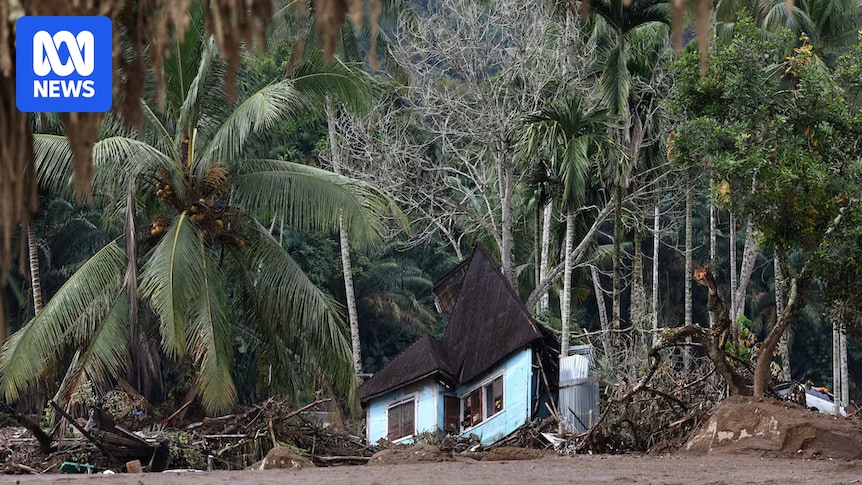
Indonesian environmental activists have attributed the devastating floods and landslides in Sumatra to extensive deforestation, which has been accelerated by the issuance of numerous permits for resource extraction. The catastrophic weather events, including unusually severe storms and monsoonal floods, have resulted in over 1,300 deaths across Indonesia, Sri Lanka, and Thailand since last week.
Indonesia has borne the brunt of the disaster, with the death toll surpassing 700 and at least 500 people reported missing. According to Indonesia’s disaster management agency, more than 1.2 million people have been displaced in Sumatra alone.
Unusual Weather Patterns and Human Impact
Meteorologists have pointed to the rare interaction between Typhoon Koto and Cyclone Senyar in the Malacca Strait as a significant factor in the devastation. Cyclones typically do not form near the equator, making this event particularly unusual. However, Indonesian environmental experts argue that deforestation and mining activities have intensified the disaster’s impact.
“Someone must be held responsible,” stated Dodik Ridho Nurochmat, a forest policy professor at IPB University. He emphasized the role of both natural and human factors in the landslides, citing extreme weather, mountainous geography, and environmental degradation.
“There are extreme weather conditions, mountainous geography and environmental degradation caused by human activities,” he said in a statement.
Deforestation and Resource Extraction
The Indonesian Forum for the Environment has revealed that over the past two decades, hundreds of thousands of hectares in North Sumatra, West Sumatra, and Aceh have been deforested due to licenses granted to 631 companies. The wood harvested is primarily used for pulp and paper exports to Europe, while palm oil is exported to India, Malaysia, and China.
Uli Arta Siagian, the group’s director, highlighted Indonesia’s ecological vulnerability, noting that the country has the third-largest forest in the world, with Sumatra’s Bukit Barisan ecosystem being predominantly forested.
“The energy and forest and land use sectors in Indonesia are the biggest contributors for Indonesia’s greenhouse [gas emissions],” she said.
Government Response and Accountability
President Prabowo Subianto has acknowledged the role of land clearing in the flash floods and landslides, emphasizing the need to prevent further deforestation. The Ministry of Environment is investigating the source of thousands of logs swept away by the floods, which could originate from various legal and illegal logging activities.
Environment Minister Hanif Faisol Nurofiq announced that eight companies, including plantation firms and mining operators, are suspected of contributing to the disaster’s severity. Existing environmental approvals for these companies may be revised if misconduct is found.
“Someone must be held responsible for this disaster,” he said.
Residents like Ramlan from Langkar in North Sumatra blame nearby palm oil plantations for exacerbating the floods, citing the inability of deforested areas to absorb heavy rainwater.
Criticism and Calls for Reform
While President Prabowo has called for environmental education in schools, his administration faces criticism for promoting an extractive economic model. The Mining Advocacy Network has accused the government of reinforcing resource oligarchies and expanding mining projects, which dominate upstream watershed areas.
Data from the Energy and Mineral Resources Ministry indicates that there are 1,907 active mining permits in Sumatra, covering nearly 2.5 million hectares. Critics argue that legal projects, not just illegal activities, are contributing to environmental degradation.
“This narrative that keeps blaming illegal mining obscures the fact that thousands of legal permits for mining, hydropower plants, geothermal projects, palm oil and forestry concessions dominate the upstream watershed areas,” said Melky Nahar of the Mining Advocacy Network.
Future Implications and Risk Management
Indonesia’s location on the “Ring of Fire” makes it highly susceptible to earthquakes and volcanic eruptions. Experts warn that projects like the Batang Toru hydropower plant, situated on fault lines, could escalate these risks.
The Indonesian government is urged to conduct a comprehensive audit of large-scale land-based investments to mitigate future disasters. As the nation grapples with the aftermath of the floods, the need for sustainable environmental policies and effective risk management becomes increasingly critical.