



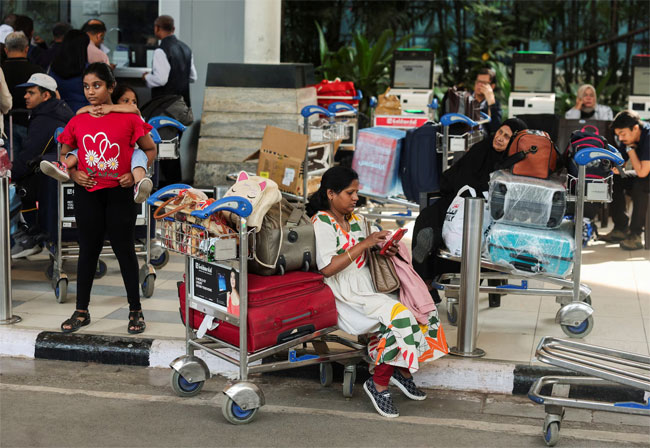
India moved to cap airfares on Saturday as chaos ensued at major airports in Bengaluru and Mumbai, where hundreds of passengers were left stranded. This disruption came after IndiGo, the nation’s largest airline, canceled 385 flights on the fifth consecutive day of a crisis that has severely impacted air travel across the country.
The crisis at IndiGo stems from a shortage of pilots, which the airline attributed to inadequate planning for new regulations that limit pilots’ working hours. In response, the Indian government announced special relief measures for the airline and arranged additional train services to alleviate the backlog of stranded travelers.
According to a statement posted by the Delhi airport on X, flight operations were gradually resuming, although cancellations remained widespread elsewhere. The situation has led to a spike in airfares on flights operated by other airlines on popular routes, prompting the government to impose fare caps to maintain pricing discipline.
Government Intervention and Fare Caps
The Civil Aviation Ministry has stated that it will “continue to closely monitor fare levels through real-time data and active coordination with airlines.” This move to cap fares is reminiscent of similar measures taken during the COVID-19 pandemic in 2020.
The government specified that a one-way fare for a journey up to 500 kilometers should not exceed 7,500 rupees ($83), while fares for journeys between 1,000 and 1,500 kilometers, such as the New Delhi-Mumbai route, should be capped at 15,000 rupees ($167). This is significantly lower than the 20,419 rupees ($227) price listed by Air India for a Delhi-Mumbai flight on Saturday.
Fares were last capped during the COVID-19 pandemic in 2020.
Impact on Passengers and Events
The flight cancellations represent the most significant crisis in the 20-year history of IndiGo, which holds over 60% of the market share in the world’s most populous country. The airline has built its reputation on punctuality and competitive pricing, which have now been compromised.
IndiGo admitted to failing to adequately prepare for the November 1 deadline to implement stricter rules on night flying and weekly rest for pilots. The airline’s operational crisis peaked this week as air travel surged ahead of the December holiday season.
On Friday alone, more than 1,000 IndiGo flights were canceled. Following the government’s intervention, IndiGo announced plans to resume normal operations between December 10 and 15. However, the disruptions have already caused significant inconvenience, including affecting weddings as many families and guests were left stranded at airports.
At Bengaluru and Mumbai airports, hundreds of passengers gathered on Saturday, with some unaware of the cancellations. Satish Konde, a passenger, expressed his frustration after his connecting flight from Mumbai to Nagpur was canceled, saying, “I am waiting for my luggage to be returned.”
Pilot Regulations and Industry Reactions
The new pilot rest and duty regulations have capped the number of night landings to two from six and restricted the maximum number of hours a pilot can fly at night to 10 hours. For now, IndiGo has been exempted from these measures until February 10.
Additionally, the rules stipulate that personal leave cannot be counted towards the weekly rest period of 48 hours. This restriction has been temporarily lifted for all airlines due to the IndiGo crisis, a move that has sparked discontent among pilot labor groups.
The Airline Pilots Association of India objected on Friday, calling the relief for IndiGo “selective dispensation”.
C.S. Randhawa, head of the Federation of Indian Pilots, emphasized that safety should not be compromised to compensate for IndiGo’s poor planning. Other major Indian airlines, including Air India and Akasa, have not faced similar disruptions due to the new regulations.
Looking Ahead
The current crisis at IndiGo highlights the challenges faced by airlines in adapting to regulatory changes while maintaining operational efficiency. As the situation unfolds, the Indian government and aviation authorities will need to balance the immediate needs of passengers with long-term safety and regulatory compliance.
IndiGo’s ability to recover from this crisis and restore its reputation will be closely watched by industry experts and passengers alike. The airline’s response and the government’s regulatory measures will likely set precedents for handling similar crises in the future.