



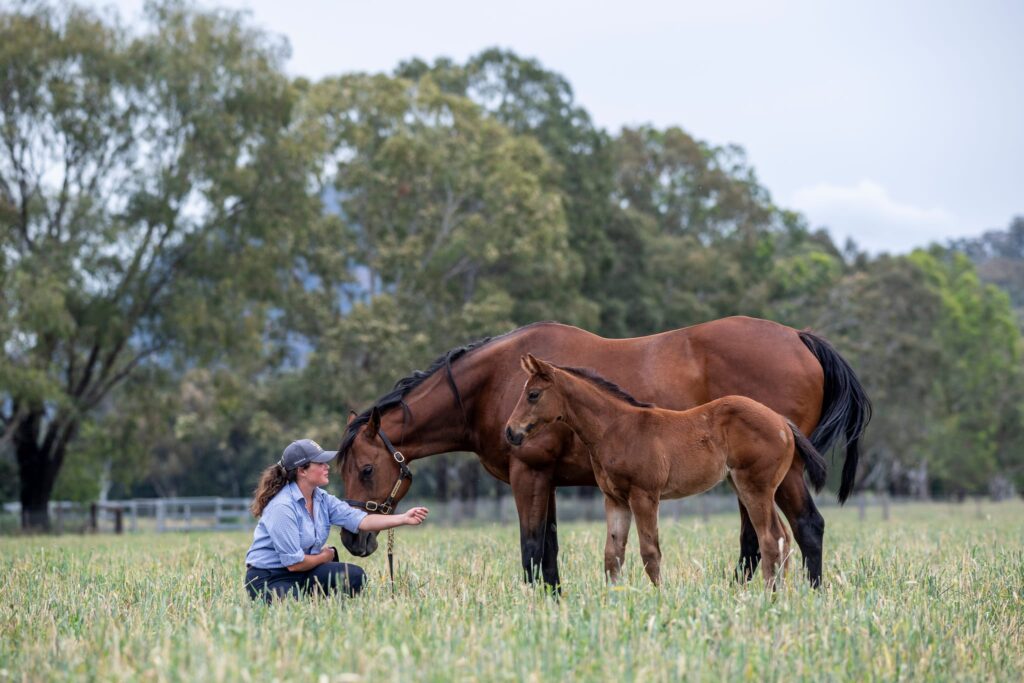
As the breeding season winds down, the frustration of an empty mare at a 14-day scan becomes palpable for horse breeders. While stallion infertility has been extensively studied, the fertility challenges faced by mares, particularly older ones, are now under the spotlight. An innovative project led by Professor Christopher Grupen from the University of Sydney, supported by AgriFutures Australia, is examining the potential of niacin supplementation to enhance egg quality in older mares.
The research, a collaboration between the University of Sydney, the University of Newcastle, and Charles Sturt University, could offer a new tool for studmasters. The focus is on nicotinamide adenine dinucleotide (NAD), a crucial cellular component derived from niacin, or vitamin B3, known for its role in fertility across various species.
Understanding the Role of NAD in Fertility
NAD is a key regulator of cellular processes, including energy production, immune response, and DNA repair. According to Professor Grupen, “There’s mounting evidence in other species, including humans and mice, that the levels of this important factor NAD decline as we advance in age.” This decline is linked to reduced fertility, as seen in studies with mice, where NAD levels impact egg quality.
Similar to stallions over 15 facing testicular degeneration, older mares experience a decline in egg quality. The research team hypothesizes that increasing NAD levels could improve egg quality and enhance conception chances in mares.
Initial Trials and Promising Results
The initial trials conducted in late 2023 involved supplementing Standardbred mares aged 15 or over with nicotinic acid, a form of niacin. The study aimed to determine the absorption efficiency by measuring changes in metabolites in blood and follicular fluid using mass spectrometry. “We were quite amazed by the metabolite changes, especially in the follicular fluid,” Grupen noted, indicating successful conversion to NAD.
Previous in vitro studies on pigs showed slight improvements in egg quality with niacin supplementation. This led researchers to believe that a short supplementation window could be effective, as the follicular fluid surrounding the egg expands significantly before ovulation, drawing factors from the bloodstream.
Field Trials and Future Implications
The research has now moved to a larger scale, involving several studs in the Hunter Valley. The goal is to determine if increased NAD production positively affects conception rates. “Half of the mares in the study receive the supplement, half of them don’t,” Grupen explained, with breeding data collected through to foaling for analysis.
The hope is that niacin supplementation will lead to higher pregnancy rates and fewer cycles needed for conception. “It would improve the welfare of the animals, as well as reduce the cost and time spent by management to get these mares in foal,” Grupen stated. If successful, this could lead to the development of a marketable supplement for breeding operations.
Looking Ahead: A Potential Game-Changer
Niacin is known for its safety and rapid clearance from the body, making it an attractive option for breeders. Grupen emphasized, “The frustrating thing with a lot of supplements is that the companies that produce them often claim there’s a lot of benefits, and usually it’s a mixture of factors with no studies about the specific benefits.” This research aims to provide clear evidence of niacin’s benefits, potentially transforming mare fertility management.
Professor Grupen, with over 30 years of experience in reproductive technologies, sees this as one of the most exciting advancements in the field. “I think this is going to be a really important story, especially for fertility in older mares,” he remarked. While the focus is currently on older mares, there may be broader applications for mares with poor reproductive histories.
As the research progresses, the equine breeding industry awaits results that could redefine fertility treatments for mares, potentially offering a low-risk, high-reward solution to a longstanding challenge.