
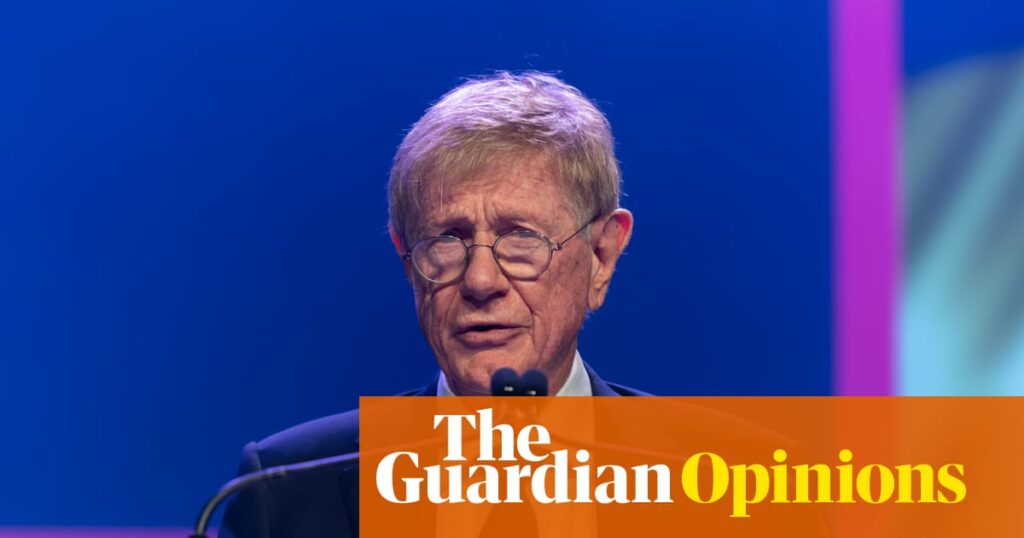
The former ABC broadcaster Kerry O’Brien received a standing ovation at the 70th Walkley Awards on Thursday night, delivering a compelling speech that highlighted the “clear and present danger” facing a strong, free, and independent media globally. The event, held at the ICC Sydney ballroom, saw O’Brien, a six-time Walkley Award winner, urge the media industry to unite in strengthening press freedom.
O’Brien began his address by paying tribute to Palestinian journalists, acknowledging their bravery in presenting powerful evidence that has increasingly resembled genocide in real time. He criticized the “outrageous casualty list” of Palestinian journalists and other media workers in the ongoing conflict between Israel and Gaza, which escalated following Hamas’s brutal attack on Israeli citizens two years ago.
In his speech, O’Brien also scrutinized the comments made by Anthony Albanese during his time in opposition, noting that these have not yet translated into significant improvements in press freedom, whistleblower protection, or uniform national shield laws. “He’s certainly talked the talk, and to a degree he’s walked the walk, but given what’s at stake now and in a potentially very volatile climate ahead … we as an industry cannot afford to lose sight of important unfinished business,” O’Brien stated. He urged the media to remember the sacrifices of journalists in conflict zones like Gaza, Ukraine, Russia, China, Myanmar, and Afghanistan.
“And if we think we’re doing it tough … remind yourself of those journalists in Gaza or Ukraine, or Russia or China, or Myanmar or Afghanistan who’ve been shut down or gone to prison, or gone to their graves for an ideal – for seeking to report the truth.”
Challenges in Media Diversity
The evening also spotlighted issues of diversity within the Australian media. Paula Kruger, CEO of Media Diversity Australia, criticized the ABC for its lack of diversity following the all-male lineup at ABC Sydney post-Chris Bath’s departure. Kruger, a former ABC Canberra and Perth radio presenter, highlighted that all Sydney local radio presenters, from Breakfast to Drive, are male and white.
“If you are content with delivering an ‘all white is alright’ and ‘all bloke means we’re not woke’ line up to a 2025/26 audience, there is no saving you,” Kruger expressed on LinkedIn.
She challenged the ABC’s audio director, Ben Latimer, who acknowledged the need for more diversity but did not respond to Kruger’s comments. Kruger criticized the ongoing narrative that there is a lack of culturally diverse talent, calling it a failure of the organization.
Artificial Intelligence and Journalism
Meanwhile, Kim Williams, appointed ABC chair in January 2024, has been vocal about the implications of artificial intelligence on journalism. Williams, described by Anthony Albanese as a “true renaissance man,” has embraced AI technologies like ChatGPT and Gemini but warned of their “dangerous and sinister” potential if left unchecked.
In a recent keynote at the UTS Centre for Media Transition, Williams recommended the book If Anyone Builds It, Everyone Dies: The Case Against Superintelligent AI by Eliezer Yudkowsky and Nate Soares. He argued for establishing “ground rules” to govern AI development, criticizing the laissez-faire approach of tech moguls.
“It’s foolhardy to see capital as being the determinator of all human destiny,” Williams stated, emphasizing the need for societal oversight over AI advancements.
Media Mishaps and Legacy
In a related incident, Seven News faced criticism after posting a video about Pauline Hanson’s censure by the Senate, which mistakenly included irrelevant imagery such as the US Capitol and a kangaroo. The video was swiftly removed, highlighting the potential pitfalls of AI in media production.
In other news, the media industry mourns the loss of Prof Graeme Turner, a cultural studies academic who passed away at 78. Turner, known for his extensive work on media, literature, and Australian identity, left a significant impact on the field. His insights into television current affairs and talkback radio remain influential.
Finally, The Australian has launched a new brand campaign, celebrating its growth in readership. According to Roy Morgan Iris figures, it ranks 14th among digital sites, with an audience of 3.5 million, underscoring its position in the competitive media landscape.