

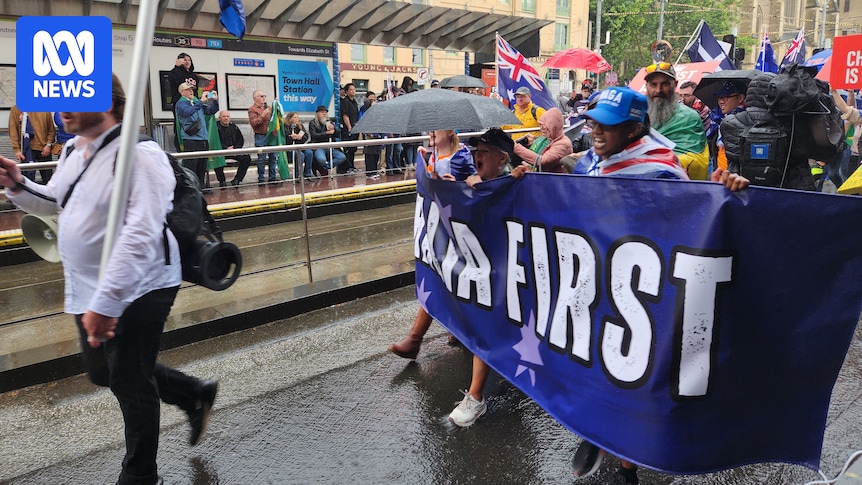
Protesters took to the streets of Melbourne’s CBD on Sunday, as an anti-immigration demonstration and a counter-rally unfolded, drawing a significant police presence. The heightened security measures were a response to previous tensions that saw two officers hospitalized during clashing rallies in October.
The anti-immigration group, Put Australia First, initiated their march outside Flinders Street Station shortly before midday. Participants were heard chanting “Aussie, Aussie, Aussie,” as they advocated for immigration reform aimed at preserving Australian values. They also voiced opposition to digital IDs and the net zero emissions target.
Meanwhile, a counter-protest supporting migrants, women, and the trans community gathered outside the State Library. Victoria Police are currently investigating the alleged display of a Nazi symbol during the rallies, as well as incidents involving offensive behavior, including an “unknown man who threw a can of drink at police officers.”
Police Presence and Public Safety Measures
Police ensured that the two groups remained separate, preventing any violent clashes. Despite the heavy rain, the protests were largely peaceful, with riot police closely monitoring the situation. One man was arrested on Swanston Street after officers allegedly found knuckle dusters in his possession, and two individuals received move-on directions from Flagstaff Gardens.
During the counter-protest, participants carried a large banner reading “Unite to fight the right!” and used megaphones to voice their messages. An effigy was also set alight, adding to the charged atmosphere. The counter-protest concluded around 1 PM, just before One Nation Senator Pauline Hanson addressed the Put Australia First rally at Flagstaff Gardens.
Pauline Hanson’s Address and Message
Senator Hanson expressed her pride in the rally attendees, emphasizing the unity among Australians despite cultural differences. “To see the Australian flags are flying with pride. To see the people out there with different cultural backgrounds. But at the end of the day, we are all Australians together,” she stated.
“I’m not divisive. All I’ve ever done is pull people together and be proud of who we are,” said Pauline Hanson.
Hanson also criticized the perceived division caused by multiculturalism and globalization, advocating for a proud acknowledgment of Australian culture. She addressed accusations of divisiveness, asserting that her message has always been about unity.
Historical Context and Future Implications
The relative calm of these rallies was a stark contrast to the previous month’s protests, which resulted in multiple arrests. This time, Victoria Police had prepared extensively for potential violence, aware of the possibility of civilian crowds mingling with protestors due to the opening of the Metro Tunnel and pre-Christmas sales.
Earlier in the week, Victoria Police designated a large section of Melbourne’s CBD as subject to enhanced search powers, effective for six months. This measure allows officers to stop and search individuals for prohibited weapons without a warrant in the CBD, Docklands, and Southbank. Vehicles can also be searched, and people may be required to remove face coverings.
The ongoing tension surrounding immigration and national identity in Australia mirrors global trends, where debates over immigration policies and cultural integration continue to spark public discourse. As these issues persist, the response from both authorities and the public will likely continue to evolve, shaping the nation’s social and political landscape.