



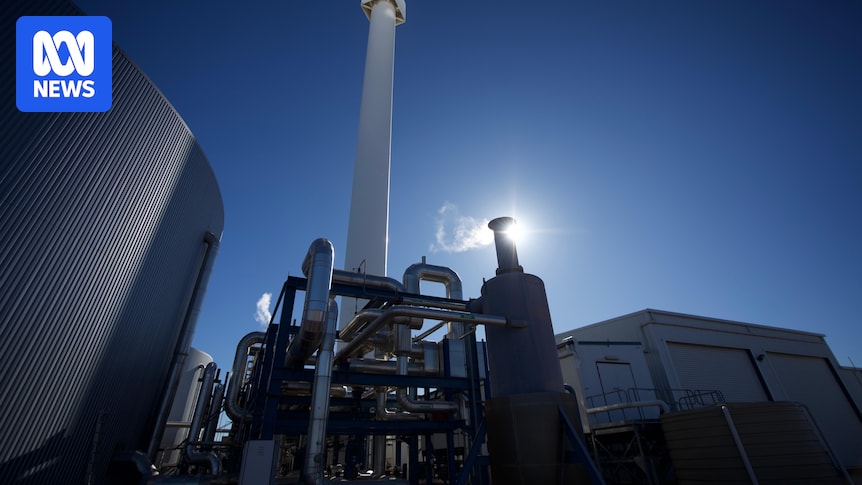
The South Australian government has announced Mallaquana Station, located 20 kilometers south of Whyalla, as the preferred site for its ambitious Northern Water project’s proposed $5 billion desalination plant. This decision follows a comprehensive “multi-criteria” analysis that compared Mallaquana with another potential location at Cape Hardy on the eastern Eyre Peninsula.
In conjunction with the site selection, the government has shortlisted two consortia, WaterConnector and Watermark, to compete for the project’s delivery. Both groups have been requested to submit detailed bids outlining design, operation, and maintenance plans. The final investment decision is anticipated in the 2026-27 financial year, with over $5 billion earmarked for the project.
Strategic Importance and Economic Impact
The announcement marks a significant milestone for the Northern Water project, which aims to construct the desalination plant on the Spencer Gulf and connect it to a new 600-kilometer water pipeline. This pipeline is expected to significantly enhance BHP’s water-intensive copper mining operations at Olympic Dam.
A $200 million pre-feasibility study, primarily funded by the state government and BHP, is currently assessing the project’s viability, with a final decision expected next year. Premier Peter Malinauskas emphasized the potential transformative impact on Whyalla, suggesting that the project could revitalize the region.
“[The] Whyalla steelworks could not only be saved, but be given the opportunity to thrive,” said Premier Malinauskas. “This new water supply is poised to become the next big opportunity for the Upper Spencer Gulf region.”
Local Reactions and Concerns
While Whyalla Mayor Phill Stone welcomed the news, he urged caution, noting that the project is still in its early stages. “This isn’t saying it is going ahead, and it doesn’t say construction is going to start,” he stated. “It has to come up with the right business case, it must be feasible, sustainable, and that’s still going to be a couple of years away.”
The project is expected to support more than 4,000 jobs annually during construction and could generate billions of dollars in regional investment. However, the choice of Mallaquana has raised questions, given that Cape Hardy was initially the preferred location according to an Infrastructure SA report.
Environmental and Technical Considerations
Environmental studies and stakeholder engagement previously indicated that Cape Hardy offered superior benefits, including reduced construction risks related to marine intake and outfall pipes. Despite this, an agreement to purchase the land at Cape Hardy lapsed in April, prompting the government to consider Mallaquana.
Minister for Energy and Mining Tom Koutsantonis explained that Mallaquana was selected due to its proximity to Whyalla’s “ready workforce,” airport, and infrastructure, as well as being 200 kilometers closer to Olympic Dam than Cape Hardy. “It’s also, of course, 200km closer to Olympic Dam than Cape Hardy, which saves a tremendous amount of money,” he noted.
Environmental Concerns and Future Steps
Environmental concerns have surfaced regarding Mallaquana’s proximity to the giant cuttlefish breeding grounds of the Upper Spencer Gulf. Point Lowly, a previous contender for the plant, was dismissed due to potential negative impacts on these breeding grounds.
Mr. Koutsantonis sought to alleviate these concerns, emphasizing the 40-kilometer distance between Point Lowly and Mallaquana. “I think it’s far enough away from sensitive areas,” he said, acknowledging that desalination plants often face opposition regardless of location.
Mayor Stone acknowledged that environmental impact assessments would be crucial in the coming years. “There will obviously be a lot of environmental issues reports, studies, and we welcome all that for us to make that final decision,” he stated.
The completion of the desalination plant and water pipeline has been delayed by at least three years, with operations now expected by 2032. The project’s costs will initially be covered by the state government, with long-term recovery through agreements with BHP and other potential customers. The government has assured that taxpayers will not bear the brunt of any project delays.