

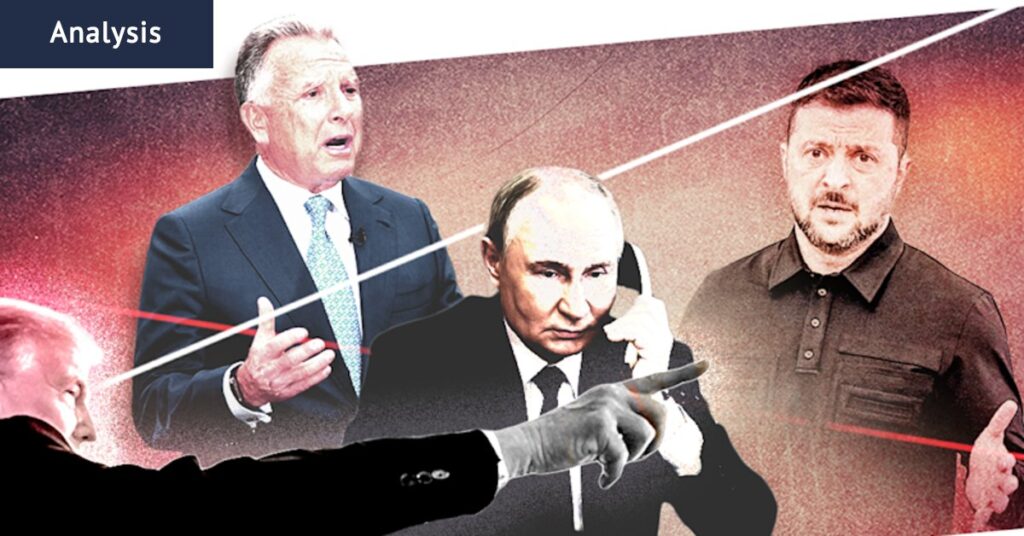
London: A recent conversation between Donald Trump’s special envoy and a Russian counterpart has stirred significant concern across Europe. Steve Witkoff, a property developer turned diplomat, engaged in a candid discussion with Yuri Ushakov, a key aide to Russian President Vladimir Putin, about potential pathways to peace in the ongoing conflict between Russia and Ukraine. Witkoff’s straightforward approach, reminiscent of his real estate dealings in Manhattan, suggested a land swap involving Donetsk as a possible solution.
This conversation, leaked to the media, has sparked fears of a deal that could compromise Ukrainian sovereignty for uncertain promises from Putin. The leaked transcript, first published by Bloomberg, has led to calls from some U.S. Republicans for Witkoff’s dismissal, citing his apparent admiration for Putin, a leader infamous for his authoritarian rule.
The Political Fallout of a Leaked Call
The leak of the Witkoff-Ushakov conversation has been attributed to potential espionage by a European intelligence service, aiming to portray Witkoff as a pawn of Russian interests. This incident has heightened tensions, with Trump defending his envoy’s negotiation style as typical of a dealmaker’s strategy. However, the broader implications suggest a retreat from a previously proposed peace plan that heavily favored Russian interests.
The original peace proposal, developed from earlier discussions between Witkoff and another Kremlin envoy, Kirill Dmitriev, included significant concessions to Russia. These included a swift end to sanctions and a cap on the Ukrainian military. However, the plan has since been revised, with Europe and Ukraine advocating for an alternative that maintains Ukrainian territorial integrity and rejects the notion of a land swap.
The Revised Peace Proposal
The amended peace plan, now under consideration, proposes a more balanced approach. It includes a cap on the Ukrainian military at 800,000 troops, a gradual easing of sanctions, and does not preclude the presence of Western troops in Ukraine. Crucially, it rejects the formal cession of Ukrainian territories such as Crimea, Luhansk, and Donetsk to Russia.
Ukrainian President Volodymyr Zelensky has expressed cautious optimism about the revised plan, emphasizing the importance of continued U.S. support to ensure Ukraine’s long-term security. The revised proposal aims to start negotiations from the current “line of contact,” allowing Ukraine to retain control over its existing territory.
Challenges and Skepticism
Despite these adjustments, the peace plan remains fragile. Putin’s recent remarks suggest a reluctance to compromise, demanding Ukrainian withdrawal from the Donbas region. His stance indicates that if Ukraine does not comply, Russia is prepared to continue military operations.
Witkoff is scheduled to travel to Moscow for further discussions with Putin, potentially accompanied by Jared Kushner. However, skepticism abounds regarding the likelihood of achieving a lasting peace. European leaders remain wary of any agreements that might reward Russian aggression.
Expert Opinions and Historical Context
Experts like Olena Davlikanova from the Sahaidachny Security Centre argue that any peace deal must be backed by robust Western commitments. She stresses the need for U.S. guarantees that extend beyond Trump’s tenure, suggesting Congressional approval to lend weight to these assurances.
“When it comes to security guarantees from Russia, they are empty words,” Davlikanova asserts. “What would really work is very clear back-up by the US so in the case of renewed aggression, the US will supply Ukraine with all necessary weapons and intelligence.”
Keir Giles, a senior consulting fellow at Chatham House, echoes these sentiments, highlighting the historical necessity of demonstrating military resolve to deter Russian aggression. He warns that any proposal perceived as favorable to Putin could pose significant risks to European and American security interests.
The Broader Implications
The ongoing conflict underscores Russia’s military capabilities, despite economic sanctions. NATO reports indicate that Russia continues to produce significant amounts of ammunition and weaponry, with assistance from allies like China and Iran. This industrial strength enables sustained military operations against Ukraine, complicating peace efforts.
Strategists like Mark Brolin argue that the West’s perception of Russia as a superpower is a cognitive bias that needs reevaluation. He advocates for sustained European support for Ukraine, including authorizing long-range strikes against Russian targets and maintaining economic sanctions.
“Peace without deterrence, when Putin is next door, is not peace – it is a pause,” Brolin concludes.
The specter of nuclear escalation remains a significant concern, though experts like Brolin believe that Putin is unlikely to resort to such measures, given the existential risks involved.
Ultimately, the path to peace in Ukraine remains fraught with challenges. As diplomatic efforts continue, the international community must weigh the risks and benefits of proposed solutions, keeping in mind the historical lessons of deterrence and the need for robust security guarantees.