


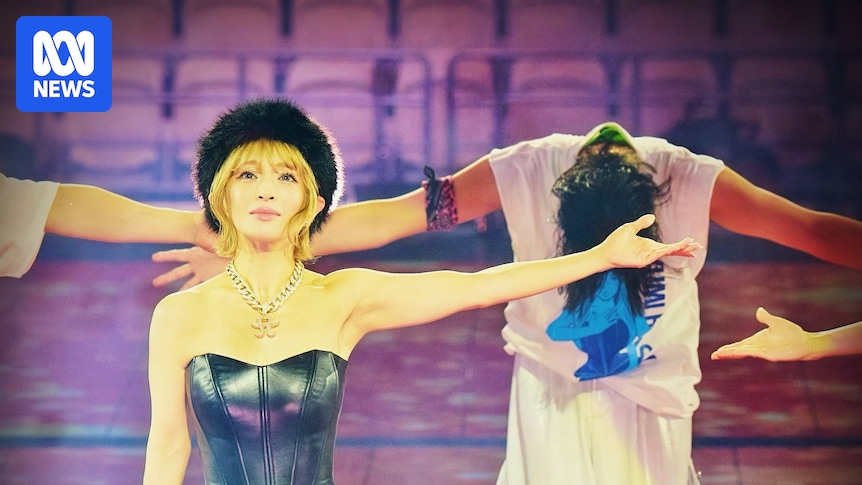
Japan’s “Empress of Pop” Ayumi Hamasaki found herself performing to an audience of empty seats in Shanghai, a stark symbol of the escalating tensions between China and Japan. Hours before her concert was set to begin, she was informed that it could not proceed with an audience due to “an inevitable reason.” Despite the absence of her fans, Hamasaki chose to perform, singing to more than 14,000 empty chairs. Later, she described the unusual experience as one of her most memorable performances.
This incident was not isolated. Just a day prior, another Japanese singer, Maki Otsuki, known for her work on the anime “One Piece,” was abruptly cut off during her performance at the Bandai Namco Festival in Shanghai. The venue went dark, her microphone was silenced, and she was escorted off stage, leaving fans bewildered. The organizers cited “inevitable reasons” for the cancellation, a phrase that has become all too familiar to those involved in Japanese cultural events in China.
Widespread Cancellations
The cancellations of these concerts are part of a broader trend. Over 20 Japanese cultural events scheduled between late November and early December were abruptly called off. Among those affected was 80-year-old jazz musician Yoshio Suzuki, who was preparing for a show in Beijing when plain-clothes police informed the venue that all performances featuring Japanese participants must be cancelled. His concert, along with several others, was immediately halted.
Within days, the cancellations spread across China, affecting performances by Japanese jazz pianist Hiromi Uehara, a new Crayon Shin-chan film, and an 18-city tour of the Sailor Moon musical. Even comedy shows by Japanese entertainment company Yoshimoto Kogyo during the Shanghai Comedy Festival were dropped.
Political Backdrop
The wave of cancellations follows comments by Japan’s Prime Minister Sanae Takaichi regarding Taiwan. In November, she suggested that a hypothetical Chinese attack on Taiwan could prompt a military response from Tokyo. Her remarks drew a furious response from Chinese officials, with one diplomat issuing a threatening statement.
On Tuesday, tensions escalated further when Japan’s coast guard reported Chinese patrol ships entering Japanese territorial waters near the Senkaku Islands, a long-standing point of contention between the two nations.
Expert Analysis
Li Hao, an associate professor at the University of Tokyo, explained that Beijing interpreted Takaichi’s comments as a shift in Japan’s position on Taiwan. Historically, Japan has supported Beijing’s One China policy, which asserts that Taiwan is part of China. “If Japan had not raised those questions about Taiwan, China would not be tightening cultural controls in this way,” Dr. Li noted. “They will argue it is Japan that changed its position, not China.”
Diplomatic Tensions
The situation was further complicated by a social media post from China’s embassy in Tokyo, referencing “enemy state clauses” in a UN charter. The post suggested that if countries like Japan took aggressive actions, China could respond militarily. While widely interpreted as a warning, experts like Dr. Li argue it was more about expressing political displeasure than a strategic threat.
Japan quickly dismissed the remarks as outdated, noting that the UN General Assembly recommended removing the clauses nearly 30 years ago, with China’s support. Jeffrey Hall, a lecturer at Kanda University of International Studies, commented that while Japan is not seeking to provoke China, Beijing’s rhetoric is unsettling for many in Japan and could harden anti-China sentiment.
“If China used this as a pretext to attack Japan, I don’t think the major powers in the UN would recognize it as a legitimate reason,” Dr. Hall said.
Looking Ahead
The cancellation of Japanese cultural events in China reflects the broader geopolitical tensions between the two nations. As diplomatic relations remain strained, the cultural sector finds itself caught in the crossfire. The impact on artists and audiences is significant, with many questioning when or if the situation will improve.
As the international community watches closely, the hope is for diplomatic efforts to ease tensions and restore cultural exchanges that have long been a bridge between the two countries. For now, the future of Japanese cultural events in China remains uncertain, leaving artists and fans alike in a state of limbo.