




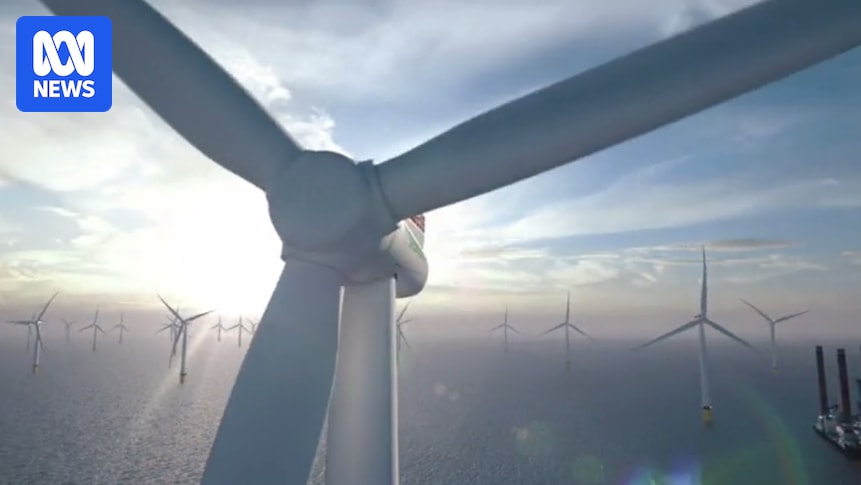
A third wind farm planned for Australia’s first declared offshore wind zone has been abandoned, raising concerns about Victoria’s ability to meet its ambitious offshore wind energy targets. Energy giant AGL announced on Friday that it would not proceed with the 2.5-gigawatt Gippsland Skies offshore wind project in Victoria’s east.
Gippsland Skies was one of 11 projects granted a feasibility licence by the federal government within the Gippsland offshore wind zone. However, AGL has decided to abandon the proposal, choosing instead to focus on other renewable energy projects. “AGL will prioritise options in its development pipeline of onshore wind, batteries, pumped hydro, and gas firming projects,” a company spokesperson stated.
Challenges in the Offshore Wind Sector
The decision to halt the Gippsland Skies project comes as offshore wind projects face global challenges, including those seen in the United States. The project was still in its early feasibility stage when AGL made the decision to withdraw. According to sources, these challenges have influenced AGL’s strategic shift away from offshore wind.
A Pattern of Abandonment
Gippsland Skies is the third offshore wind project in the Gippsland region to be abandoned this year. In October, German company RWE withdrew its plans to develop the 2GW Kent offshore wind farm. This followed BlueFloat Energy’s decision in July to scrap the $10 billion Gippsland Dawn project, which had received major project status from the federal government in November 2024 and had the potential to power over one million homes.
BlueFloat cited commercial viability issues as the reason for their withdrawal, echoing a sentiment that seems to be affecting the sector more broadly.
Implications for Victoria’s Energy Goals
The Victorian government has set a target to produce at least 2GW of power from offshore wind by 2032. However, a recent report from Victoria’s auditor general, tabled in state parliament, warned that the state is unlikely to meet this target. The report highlights the potential risk of a disorderly energy transition if these goals are not achieved.
Victoria was expected to hold an auction to allow offshore wind proponents to bid for government support. Yet, in September, Victorian Energy Minister Lily D’Ambrosio announced that plans for the auction would not be revealed until at least the end of the year.
Political Reactions and Future Prospects
In response to AGL’s decision, a spokesperson for Minister D’Ambrosio emphasized the importance of offshore wind to the nation’s energy security and its role in reducing energy bills for Victorian families. Meanwhile, opposition energy spokesperson David Davis criticized the government’s management of the offshore wind rollout. “Last week, the auditor general made it clear that offshore wind targets in Victoria would not be met, and he pointed to the risk of energy transition becoming disorderly,” Davis remarked.
“Offshore wind is important to the nation’s energy security and pushing down energy bills for Victorian families,” – Spokesperson for Minister D’Ambrosio
Looking Ahead
The abandonment of the Gippsland Skies project underscores the broader challenges facing the offshore wind industry in Australia and globally. As Victoria navigates its energy transition, the state will need to address these challenges to meet its renewable energy targets. The outcome of the anticipated auction and future policy adjustments will be crucial in determining the viability of offshore wind projects in the region.
As the energy landscape continues to evolve, stakeholders will be closely watching how Victoria adapts to these changes and what this means for the future of renewable energy in the state.