



Let’s face reality: Virtual reality (VR) is dead. At least for now. Despite the hype, VR has not become the revolutionary technology many expected by 2025. Even with significant investments from tech giants like Meta, Apple, Sony, and Samsung, VR headsets remain expensive and uncomfortable, often gathering dust on shelves.
The technology itself works; the problem is, nobody seems to want to use it. This year, I’ve spent more time contemplating VR than actually using it, which speaks volumes about its current state.
The $6000 Paperweight
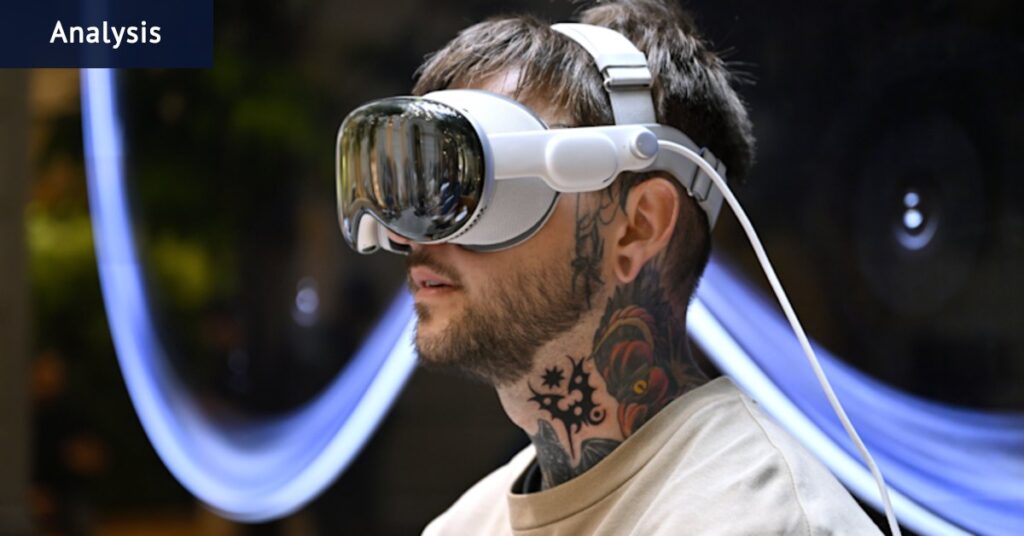
Consider Apple’s Vision Pro, launched in Australia last year with a hefty price tag of $5999. As Apple’s most advanced consumer technology, it boasts impressive features: sharper displays, sophisticated eye tracking, and seamless Mac integration. Yet, despite its technical prowess, it feels like a solution in search of a problem.
The Vision Pro’s issue isn’t technical; it’s existential. Even when the device works perfectly, users are left questioning why they are using it instead of their laptops. Neither Apple, Meta with its Quest 3S, nor Sony with its PSVR 2 has provided a compelling answer.
The Missing Killer App
Every transformative technology needs its killer app—a use case so compelling it justifies the hardware’s existence. For VR, that app remains elusive. While games like Beat Saber offer brief entertainment, they fail to provide a lasting reason to don a headset.
As one tech reviewer candidly admitted, after months of owning a Quest 3S, he simply didn’t use it.
“The reality is that even the most enthusiastic of tech reviewers only has so many hours in each day, and if a device doesn’t manage to eat some of those up, that’s no shameful thing.”
This sentiment reflects a broader consumer disinterest in VR, as attention shifts to AI technologies that offer practical applications on existing devices.
The Physics Problem
VR headsets face a fundamental hardware challenge: they are inherently uncomfortable. The Vision Pro weighs 725 grams—comparable to an iPad Mini, except it’s strapped to your head. Meta’s Quest 3S is lighter but still requires a battery pack. This discomfort is a significant barrier for widespread adoption.
Moreover, achieving human-level visual fidelity in VR requires displays with 7100 to 10,000 pixels per square inch, far beyond the current 2000. These limitations remind users they are using technology rather than experiencing reality.
The Isolation Chamber
Perhaps VR’s most fundamental flaw is philosophical: it requires users to block out the real world. While manufacturers include pass-through video, it’s a Band-Aid for the fact that users are voluntarily making themselves blind. This isolation makes VR socially awkward compared to traditional gaming.
Successful VR applications often lie outside the consumer market. For instance, Australian sheep farmers use VR for climate-resilient farming training, and surgeons practice complex procedures in virtual environments. These professional uses highlight VR’s potential as an enterprise tool rather than a consumer revolution.
The AR Alternative
Augmented reality (AR) in a glasses form factor offers a more promising future. Meta’s Ray-Ban smart glasses, Snap, Google, and Apple are developing AR glasses that enhance rather than replace reality. These devices are socially acceptable and comfortable for all-day wear.
AR applications could include hands-free video calls, instant translation, and navigation aids, integrating seamlessly into daily life. This approach aligns with how people want to interact with technology, offering practical benefits without the isolation of VR.
The Future
While VR is technically impressive, it has missed its window as a mainstream consumer technology. The future of immersive computing likely lies in AR, delivered through devices resembling regular glasses. When someone cracks this problem, today’s VR headsets may be viewed as impressive but ultimately misguided innovations.
Until then, my Meta Quest will continue its primary function: making me feel guilty about spending hundreds of dollars on something I rarely use.
Get news and reviews on technology, gadgets, and gaming in our Technology newsletter every Friday. Sign up here.