



If there were a dictionary entry for Donald Trump’s catchphrase “drill, baby, drill,” it might be accompanied by a photo of Meg O’Neill. As the American chief executive of Woodside Energy, O’Neill is steering the Australian oil and gas giant back to her homeland with a monumental investment. Woodside’s $US17.5 billion Louisiana LNG project, situated just off the Gulf of Mexico, marks the company’s largest US investment and the biggest foreign direct investment in Louisiana’s history.
The potential gas yield from this project is staggering, estimated at 27 million tonnes annually, essentially matching Woodside’s combined Australian operations. Trump’s energy and interior secretaries have lauded the project for contributing to “American energy dominance,” with Speaker Mike Johnson even appearing virtually at the groundbreaking ceremony.
Woodside’s Strategic Move
Woodside acquired the Driftwood LNG project last year under President Joe Biden’s administration, but it was in April that the company made its final investment decision. This move aligns with Biden’s assertion that the US is “open for business,” and Woodside is emerging as a significant player in this landscape.
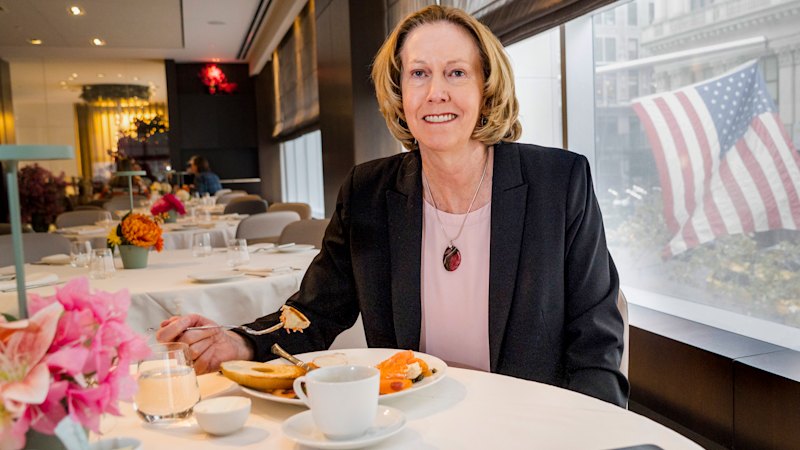
During a brunch meeting at Ai Fiori in New York, O’Neill, who grew up in Boulder, Colorado, and studied at the Massachusetts Institute of Technology, shared her journey. Her career began at ExxonMobil, leading her across the globe, including a stint in Indonesia during the catastrophic 2004 tsunami. After joining Woodside in 2018 and becoming CEO in 2021, O’Neill has frequently traveled back to the US, where she finds the energy discourse more aligned with her company’s goals.
Challenges and Climate Scrutiny
While the US embraces a “drill, baby, drill” mentality, Woodside faces increasing scrutiny in Australia over its climate and environmental impact. Last year, a significant 58 percent of shareholders voted against the company’s climate report, and a legal challenge is ongoing regarding the extension of Woodside’s North West Shelf LNG project. The UN’s special rapporteur on climate has even joined the case as an amicus curiae.
O’Neill remains unfazed, noting a shift in discourse driven by the new administration in Washington and a growing recognition of the energy demands of the artificial intelligence era. She argues that Trump’s pro-energy stance is influencing global perspectives, including in Australia.
“It’s challenging some views that have been probably accepted without a lot of question or debate for a few years,” O’Neill says. “It’s opening the conversation up to one that’s not just, ‘We have to solve climate change and forget about everything else,’ to one that says: actually, we have to solve a number of different problems.”
Global Energy Dynamics
O’Neill highlights that some European nations are increasingly aware of losing their manufacturing edge due to high energy costs compared to the US and China. This was underscored when Germany announced plans to subsidize energy prices for heavy industry to bolster its economy.
In Australia, the Albanese government’s ambitious target to reduce emissions by 62 to 70 percent by 2035 is seen by O’Neill as “highly ambitious.” She questions whether the societal ramifications have been fully considered, pointing out the challenges of maintaining reliable power with a heavy renewable input and decarbonizing heavy industry.
For fossil fuel producers like Woodside, the political focus on cost-of-living concerns has somewhat overshadowed climate change in developed countries. A recent Pew Research Centre study found a decline in the percentage of voters who view climate change as a major threat.
Woodside’s Position in the Energy Transition
O’Neill adheres to the notion that gas is a transition fuel that can replace coal rather than displace renewables. She suggests that critics of gas may inadvertently support the coal industry, which remains a significant part of Australia’s energy mix.
“In Australia, there’s been probably close to 20 years of this anti-gas sentiment, which has at the end of the day resulted in brown coal staying in the mix longer,” she says.
Despite the controversy surrounding the North West Shelf extension, which could account for nearly 90 million tonnes of CO₂ emissions annually, Woodside and the Australian government are aligned on the need for streamlined environmental approvals. Recent legislative changes aim to address these concerns, though gas and coal projects are excluded from new “streamlined” pathways.
Part of this shift is attributed to the Trump effect, with Australia’s critical minerals deal with the US reinforcing the “drill, baby, drill” policy as a strategic export.
Looking Ahead
As Woodside aims for a balanced revenue split between Australia and the US by the next decade, O’Neill emphasizes the need for a conducive environment for investment. She dismisses speculation about shifting Woodside’s primary listing to the New York Stock Exchange, affirming the company’s commitment to Australia.
Before departing, O’Neill reflects on life in Perth, where she resides with her wife and daughter. Despite its isolation, she appreciates the city’s entrepreneurial spirit and the community’s readiness to make a difference.
As an NFL fan, O’Neill has embraced Australian rules football, attending several matches a year. “I love the game. It’s fast-paced, it’s high scoring, there’s tremendous athleticism. It’s the full package,” she says, though she admits the rules remain a bit elusive.
With more meetings and drilling on the horizon, O’Neill continues to navigate the complex landscape of global energy, balancing the demands of business with the evolving discourse on climate and sustainability.