




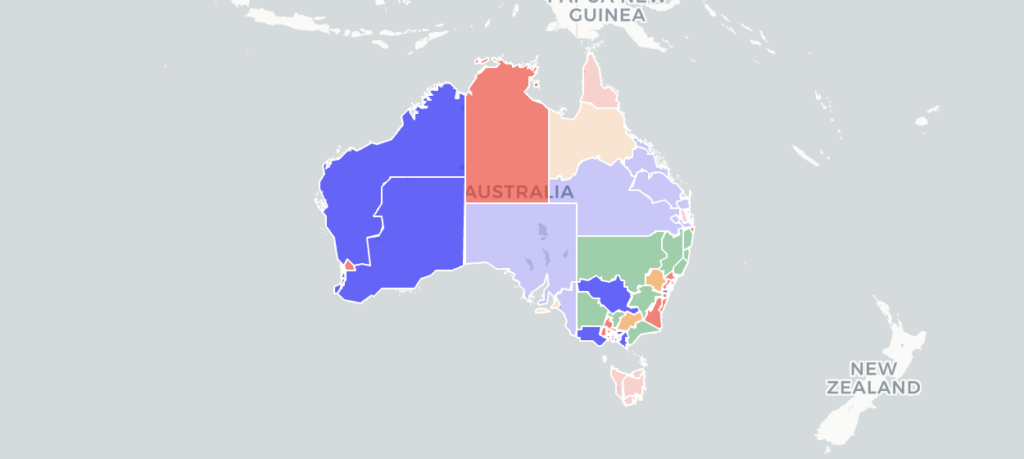
There has been a noticeable shift in recent federal polling in Australia, with One Nation gaining significant traction at the apparent expense of the Coalition. The party’s polling numbers have consistently reached the mid-teens, a remarkable feat for a minor party under the modern party system. If these numbers were to translate into actual votes during an election, it would surpass the best results historically achieved by the Greens or the Democrats.
Although the next federal election is still some time away, the current polling trends raise intriguing questions about the potential impact on the political landscape if an election were held today. A recent MRP poll conducted by DemosAU offers a glimpse into this possible future, providing insights into how a minor party surge might alter the dynamics of an election.
Understanding the Polling Surge
One Nation’s rise in the polls is not an isolated incident. The party secured 6.4% of the vote in the 2025 federal election, running in 147 out of 150 seats. Post-election polls have shown a steady increase in support, with the party reaching double digits in every poll since the end of September. Five out of the nine latest polls have One Nation polling between 17% and 18%, with findings from Redbridge, Spectre Strategy, and MRPs from DemosAU and YouGov confirming this trend.
The DemosAU poll, released on Tuesday, involved 6,928 respondents and was conducted from October 5 to November 11. The poll’s headline figure of twelve seats for One Nation is striking, suggesting a significant shift in how Australia’s electoral system might function if a minor party were to achieve such high polling numbers.
Implications of a Minor Party Surge
The MRP poll highlights the potential for a minor party like One Nation to disrupt traditional electoral dynamics. The poll suggests that One Nation could make the two-candidate-preferred (2CP) count in 49 out of 150 seats, a dramatic increase from just two seats in the May 2025 election. This shift could lead to a more volatile political environment, particularly in conservative and rural areas where One Nation’s support is strongest.
According to the poll, One Nation is polling 25% or more in 21 seats and 30% or more in eight seats. This would leave only 76 out of 150 seats as classic Labor vs Coalition contests. The leading candidate’s average primary vote across all seats would be just 37%, with preferences playing a crucial role in determining outcomes.
Geographical and Political Shifts
The 49 seats where One Nation makes the final count are predominantly conservative and rural, with 22 classified as “rural,” 12 as “provincial,” and 15 as “outer metropolitan.” Of the twelve seats that DemosAU projects One Nation could win, eight are rural, with the only outer metro seat being Canning in Western Australia. Eleven of these seats are currently held by the Coalition, with one, Calare, held by an independent.
These shifts suggest that while some Labor MPs might be concerned, the core of Labor’s majority would remain largely unaffected. The real impact would be felt by the Coalition, whose remaining MPs could face significant challenges.
Challenges in Predicting Preference Flows
One of the key uncertainties in predicting the outcome of a minor party surge lies in estimating preference flows. Historically, One Nation has only made the 2CP count four times in the last two decades. The limited data from these instances complicates efforts to accurately predict how preferences might flow in future elections.
In the 2025 election, One Nation made the 2CP count in Hunter and Maranoa, with Labor and the LNP winning respectively. These examples provide some insight but should be taken with caution.
The DemosAU poll uses these historical preference flows to estimate outcomes, but potential variations in voter behavior could lead to different results. For instance, adjustments to preference flows could see the Coalition regaining seats like Lyne, Groom, and Riverina.
Potential Outcomes and Future Considerations
Even with adjustments, One Nation could still secure eight seats, a significant achievement for a minor party. All eight projected wins are in contests against Labor, with the Coalition dropping to third place. This pattern mirrors the Greens’ success in seats where Labor falls to third, benefiting from Labor preferences.
The volatility in the electoral system is primarily concentrated on the right, with Labor maintaining a stronghold in more progressive and urban areas. This dynamic could lead to significant seat changes with relatively small shifts in voter support.
As the next election approaches, the continued polling of similar numbers could leave many questions unanswered about the final outcomes. However, one thing is certain: the political landscape in Australia is poised for potential upheaval, and the upcoming election promises to be anything but dull.