



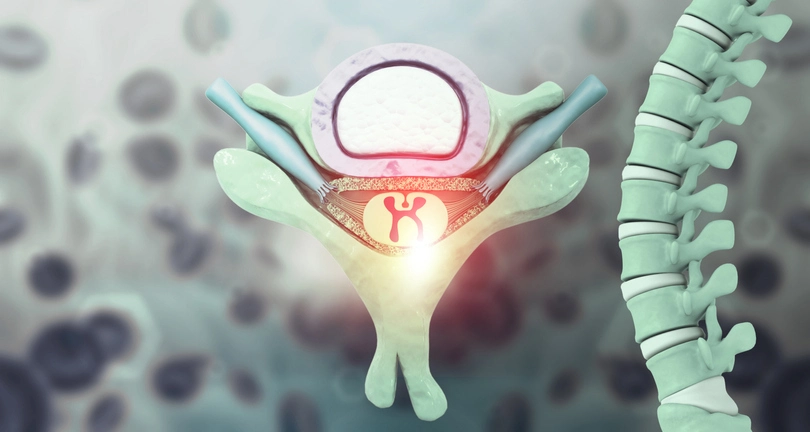
After a spinal cord injury, cells in the brain and spinal cord undergo significant changes to manage stress and facilitate tissue repair. A groundbreaking study from Karolinska Institutet, published in Nature Neuroscience, has identified specific DNA sequences that control this response. This discovery holds potential for developing more targeted treatments for spinal injuries.
The central nervous system’s response to damage, such as spinal cord injuries, involves many cells becoming reactive. This reactivity means they alter their functions and activate genes that protect and repair tissue. Until now, the regulation of this process remained largely unexplored.
Mapping the Genetic Switches
Researchers at Karolinska Institutet have successfully mapped thousands of enhancers—small DNA sequences functioning as “switches” for genes, either activating them or boosting their activity. By analyzing individual cell nuclei from mice with spinal cord injuries using advanced AI models, the researchers discovered that these genetic switches are activated post-injury. They instruct specific cell types to respond, primarily affecting glial cells like astrocytes and ependymal cells, which are crucial for supporting and repairing the nervous system.
New Opportunities for Precision Treatments
Enric Llorens-Bobadilla, a researcher at the Department of Cell and Molecular Biology at Karolinska Institutet, explains,
“We have shown how cells read these instructions through a code that tells them how to react to injury. This code combines signals from general stress factors with the cell’s own identity.”
This revelation opens the door to using the code to target treatments specifically to the cells affected by the injury.
Margherita Zamboni, the study’s first author and a researcher at the same department, adds,
“This opens up the possibility of using the code to target treatments specifically to the cells affected by the injury.”
Collaborative Efforts and Support
The study is a collaborative effort between researchers at Karolinska Institutet and SciLifeLab, with support from the European Research Council (ERC), the Swedish Research Council, and the Swedish Foundation for Strategic Research. The research team includes Margherita Zamboni, Adrián Martínez Martín, Gabriel Rydholm, Timm Häneke, Laura Pintado Almeida, Deniz Secilmis, Christoph Ziegenhain, and Enric Llorens-Bobadilla.
Some researchers have also reported consultancy roles and patent applications related to the technology, indicating the potential commercial and practical applications of their findings.
Implications for Future Treatments
This study represents a significant step forward in understanding how the nervous system responds to injury at the genetic level. By identifying the specific DNA sequences that act as enhancers, researchers can now explore precision treatments that target the exact cells involved in the repair process. This could lead to more effective therapies with fewer side effects, tailored to the unique genetic makeup of each patient.
As the scientific community continues to explore these findings, the potential for developing new treatments that could improve recovery outcomes for spinal cord injury patients is promising. The study’s publication in a prestigious journal like Nature Neuroscience underscores its importance and the high level of interest in this area of research.
Looking ahead, further research will likely focus on translating these findings from animal models to human applications, exploring the full potential of DNA-based therapies in clinical settings. As our understanding of genetic regulation in injury response deepens, so too does the hope for more effective interventions for those suffering from spinal cord injuries.