



An enormous Bowie knife whirls through the air and thuds into a wooden bar, sending a shudder of excitement through the cluster of men wearing leather hats, blue jeans, flannelette vests, and dirty tees carousing in an outback pub. Bursting through the front door, a man follows the knife, seemingly engaged in mortal combat with a saltwater crocodile. But the drinkers erupt with laughter as the “mad bugger” – adorned in crocodile teeth and skin – wrangles the stuffed beast to the bar and orders two drinks: “One for me, one for me mate.”
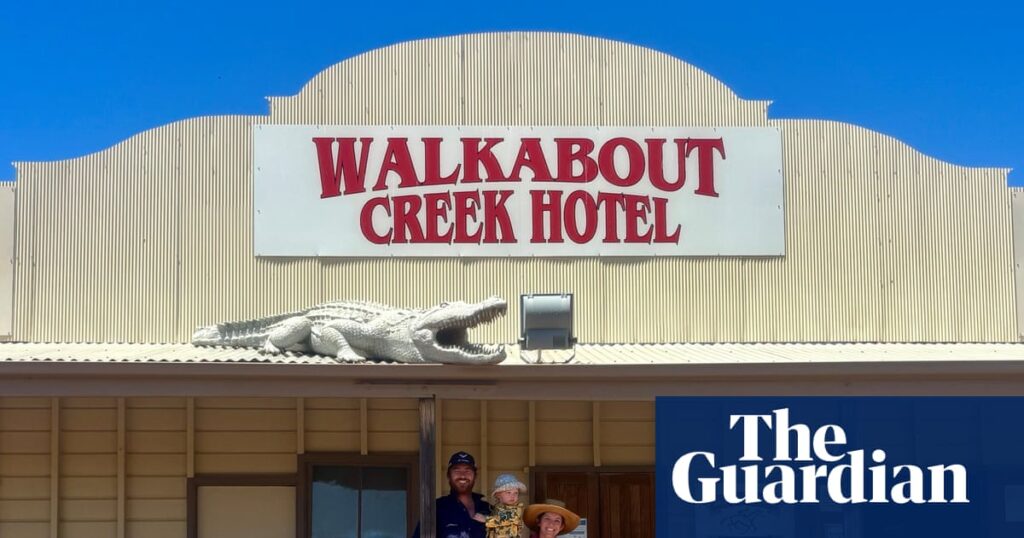
This iconic scene from the 1986 film Crocodile Dundee remains etched in the minds of audiences worldwide. The film, which became Australia’s highest-grossing movie, introduced the world to the rugged charm of the Australian outback and the character of Michael J. ‘Crocodile’ Dundee. Now, 39 years later, the Walkabout Creek Hotel in McKinlay, Queensland, the real-life setting of the film’s legendary pub, is entering a new chapter.
New Ownership and Local Legacy
On Monday, the Walkabout Creek Hotel officially changed hands after being on the market for about three years. The new owner, 33-year-old cattleman Angus Brodie, is no stranger to the legacy of Crocodile Dundee. As a child, he auditioned for a role as an extra in the film’s third installment. Despite not landing the part, Brodie’s connection to the film and the pub remains strong.
“Not many people know about that film,” Brodie admits, referring to the lesser-known sequels. “Probably for good reason.” However, the original film’s impact on the identity of the Walkabout Creek Hotel and the McKinlay community is undeniable.
The Cultural Impact of Crocodile Dundee
Ruari Elkington, a creative and screen industries lecturer at Queensland University of Technology, emphasizes the cultural significance of Crocodile Dundee. “That is a character who would go on to cast a really, really long shadow, culturally, for Australia,” Elkington explains. “Not just for how we are seen by the rest of the world … but also the idea of Australian film.”
“For all those reasons, that moment there in the pub, where we are first introduced to this character, literally clutching a croc as he bellies up to the bar … it’s a pretty iconic moment, in many ways.”
However, Elkington notes that the film’s portrayal of the outback can be misleading. “We cling to the coast,” he says. “So few of us live in this place where this scene is set, so few of us actually visit these pubs, yet it is a big part of our national myth-making.”
A Modern and Inclusive Atmosphere
Despite the film’s depiction, Brodie assures that the Walkabout Creek Hotel today is far more diverse and welcoming. “There’s a little bit less of that,” he laughs, when asked about the film’s bar fights. “It’s not quite as wild west as in the movie.”
The pub attracts a wide range of patrons, from local station workers and passing jackaroos to travelers and families. Brodie, along with his wife Jo Cranney, manages both the pub and a nearby cattle station, all while raising their young family.
“Our clientele, that’s one of the best parts of the pub,” Brodie says. “It’s literally everybody, from every walk of life – which is great – and everyone sits at the bar and has a yarn. Everyone’s welcome.”
Looking Forward
As the Walkabout Creek Hotel embarks on this new era, it retains its historical charm while embracing a modern outlook. Brodie humorously points out one of the film’s inaccuracies: “You’ve gotta go a few hours north of us before you get into saltwater crocodile country. There actually aren’t any crocs here, which is quite ironic, being the famous croc pub.”
The transition of ownership marks a new chapter for the iconic establishment, promising to maintain its cultural significance while fostering a more inclusive and welcoming atmosphere for all who visit.